Real estate, business leaders blast Mamdani’s NYC housing plan as heavy-handed big government
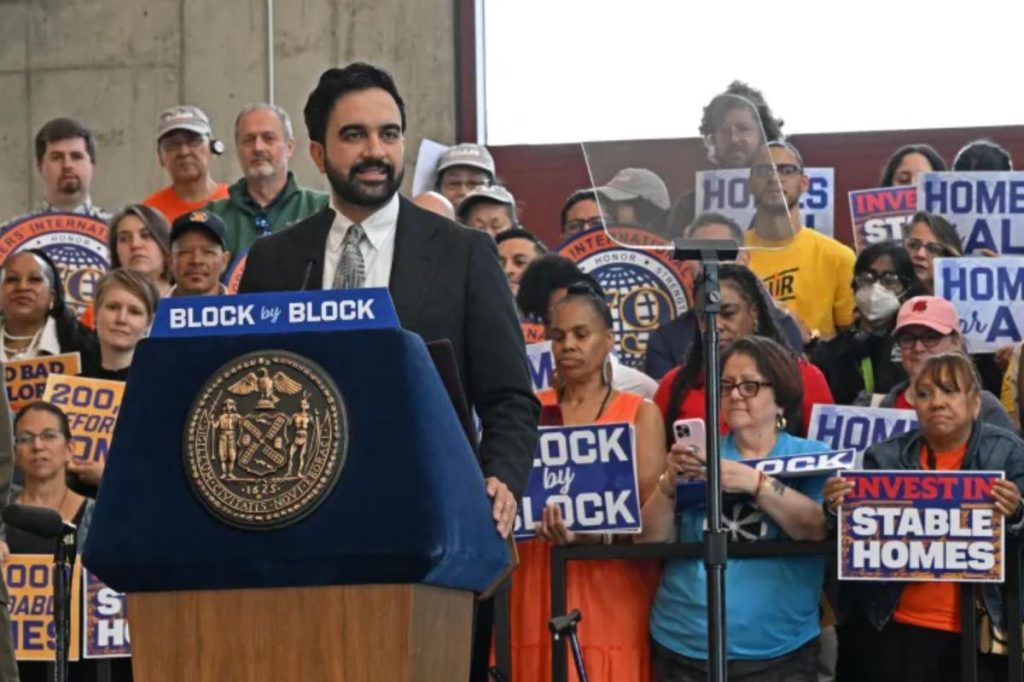
Zo’s building a house of cards.
Big Apple real estate and business leaders blasted socialist Mayor Zohran Mamdani’s freshly unveiled housing plan Tuesday for pressing a heavy government hand on private enterprise.
Mamdani’s goal of building 200,000 new affordable homes is a “moral imperative,” but his decisions to do so by imposing potentially crushing minimum wage mandates and restricting property sales will slow construction and preservation, argued Steve Fulop, president of the Partnership for New York City.
Fulop pointed to the “cautionary tale” of St. Paul, Minnesota, which he claimed saw an 80% drop in construction after aggressive housing regulations.

“St. Paul has since been forced to walk back those policies,” he posted on X. “New York City cannot afford to run the same experiment.
Follow live updates on Mayor Zohran Mamdani’s socialist agenda and the latest in NYC politics
“When government positions itself as the primary driver of housing production and treats private capital as an obstacle rather than a partner, the people who pay the price are the working New Yorkers this plan is trying to help.”
Likewise, James Whelan, the president of the Real Estate Board of New York, contended the plan’s dependence on union-backed project labor agreements will backfire.
“At a time when we need to build as much housing as possible, we question why the City would choose to make projects more expensive to build and finance through the addition of costly and inflexible Project Labor Agreements,” he said in a statement. “New York won’t solve its housing supply crisis by undercutting its own laudable production goals.”
Mamdani’s progressive allies were predictably more bullish on the plan.
“Mayor Mamdani’s housing plan is what a progressive all-of-the-above housing plan looks like,” said Annemarie Gray, executive director of Open New York, in a statement.
“It is very promising to see the Mamdani administration fully embrace an all-of-the-above approach that centers on building more homes, especially in the neighborhoods that have not done enough to be part of the solution, as a critical part of a progressive affordability agenda.”
Source link