Invasive Asian jumping worms inching across US to New York, New Jersey and Connecticut
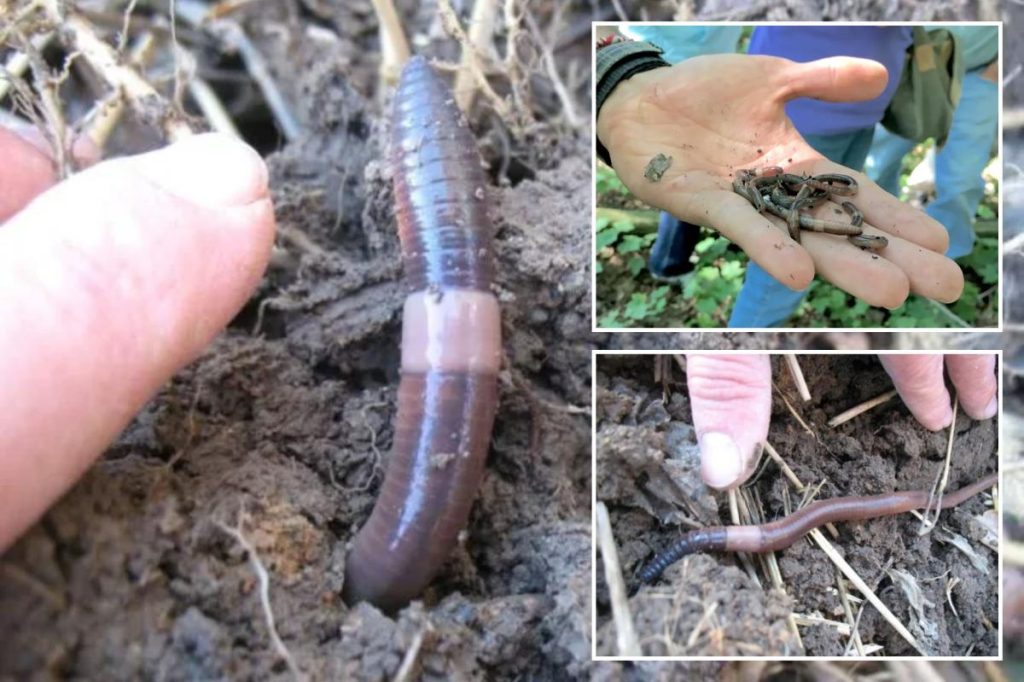
They can flip themselves a foot off the ground, shed their own tails and reproduce without a mate — and right now these invaders are inching their way to your backyard garden or local park.
The Asian jumping worm has made its way from California through 38 states, including New York and New Jersey and Connecticut, according to agriculture experts.
Known scientifically as Amynthas agrestis, these creepy crawlers arrived on ships in the early 1900s in potted plants from the Far East and have picked up a laundry list of nicknames — Alabama jumpers, Jersey wrigglers, snake worms and the oh-so-fitting “crazy worms.”
And they live up to the hype.
Unlike your average garden worm, these things — which can grow to six inches — thrash, twist and literally launch themselves into the air.
They’re smooth, dark gray or brown, with a distinctive white band circling their bodies near the head.
“Asian jumping worms got their name because of the way they thrash around,” Mac Callaham, a USDA Forest Service researcher who specializes in soils, said in a post on the agency’s website. “They can flip themselves a foot off the ground.”
And all that energy requires an endless supply of fuel — like leaf litter and mulch.
“They’re voracious,” said Callaham.
But the real horror is what they do underground.
Unlike helpful earthworms that aerate and enrich soil by eating tiny pieces of fallen leaves — the litter layer — these slimy invaders are never satisfied and devour everything in sight, harming plant roots and leaving behind dirt that looks like dry coffee grounds — rendering the soil useless for growing plants.
“Soil is the foundation of llife — and Asian worms change it,” Callaham said.
They also shove out native species, bulldozing their way through delicate ecosystems.
And they don’t just spread naturally — they hitchhike straight into your backyard or park.
There have been reports from nurseries that this earthworm is abundant in both field and container stock. Presumably it is transported to customers’ gardens in this way, according to the New Jersey Department of Environmental Protection.
“This earthworm is very invasive and considered a forest pest, although few states officially recognize it as an invasive. Part of the problem is that regulators are so focused on insect pests and invasive plants that earthworms simply fall through the cracks.”
And it gets worse. These invaders reproduce on their own. Even a tiny cocoon, hidden in soil or mulch, can trigger a full-blown infestation in a new location.
Scientists are still scrambling to understand them — and there’s no way to fully wipe them out yet.
If you suspect your soil is home to the pests, avoid moving soil, compost or potted plants to another spot, thereby helping them spread. If you find them in your garden, experts say to seal them in a plastic bag and leaving it in the sun for about 10 minutes before throwing it in the trash.
The wiggly creatures can also be drown in soapy water, vinegar or alcohol. If unsure if the worms you see in the garden are “crazy worms,” refer to the NY Invasive Species Research Institute fact sheet.
“The best way to prevent future invasions is to avoid moving earthworms around,” said Callaham.
Source link