World’s Largest Remote-Controlled A380 Boasts 32-Foot Wingspan
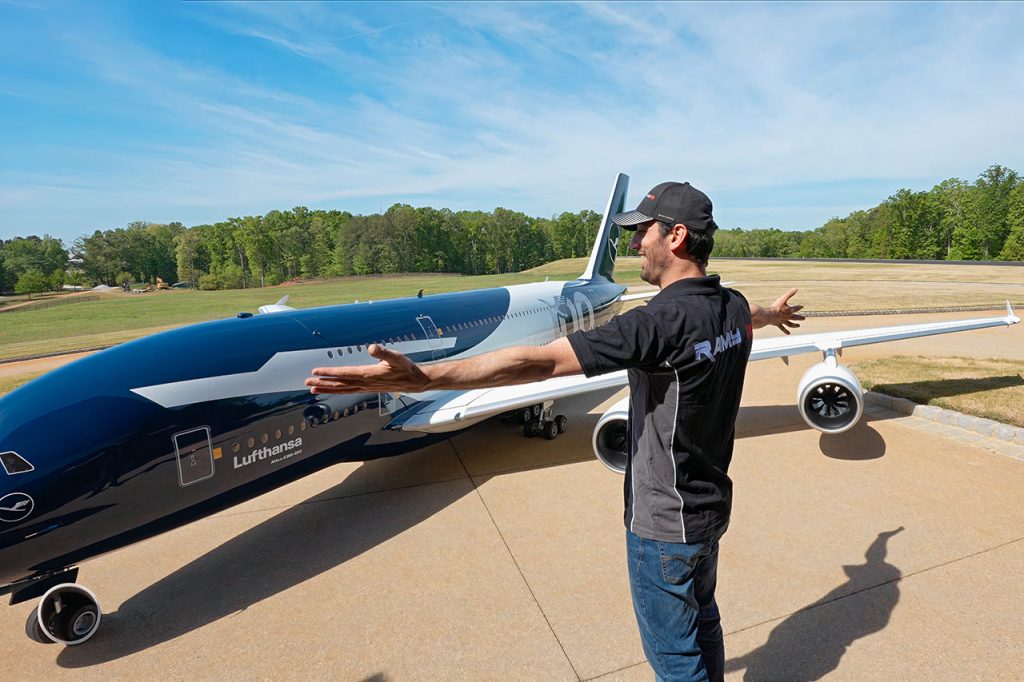
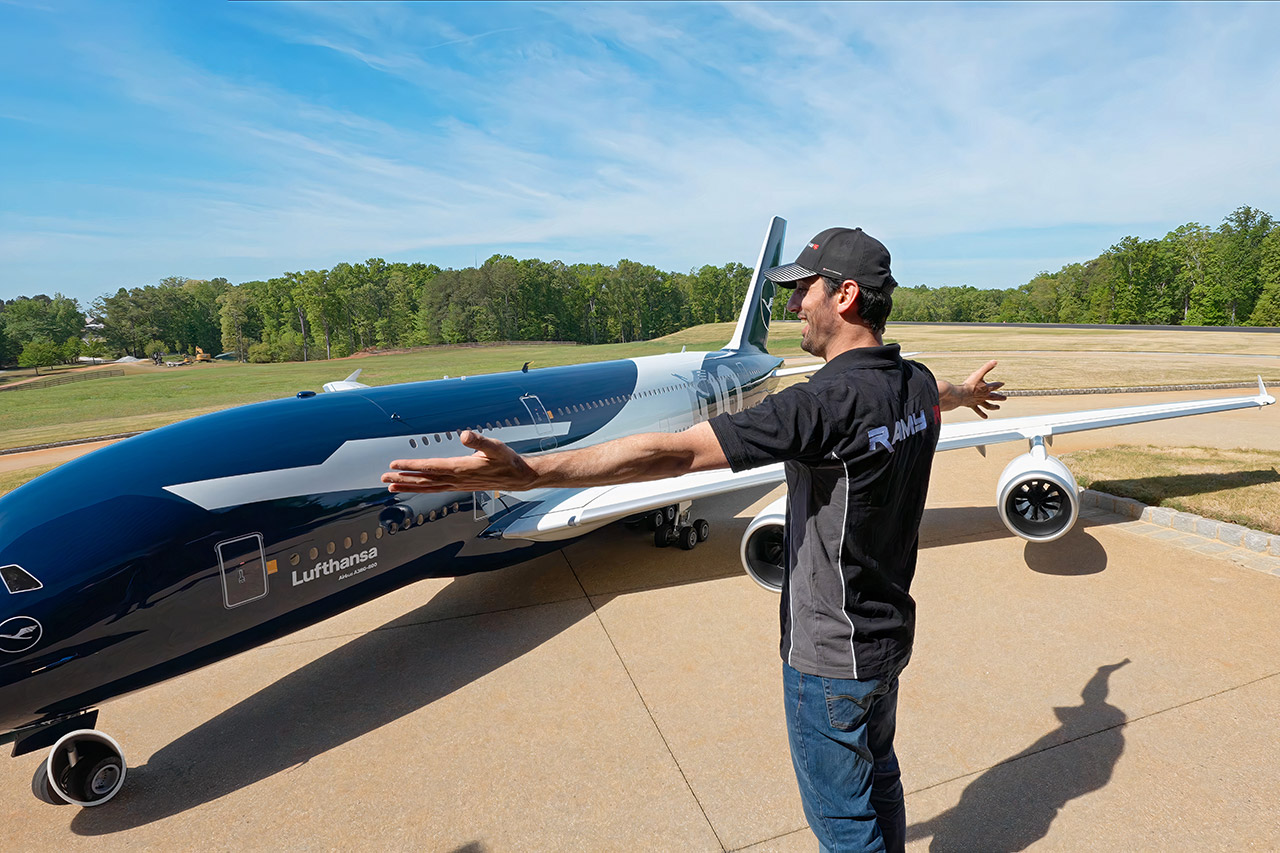
Ramy RC spent months in his workshop piecing together an Airbus A380 that now ranks as the largest remote-controlled version ever built. The finished model carries a striking Lufthansa 100th anniversary livery and recently completed its first public flight in those colors.
The plane, which stands 29 feet tall and has a wingspan of 32 feet, dominates the sky in a way that few hobby projects ever manage to achieve. At 800 pounds, it weighs nearly the same as a small vehicle, but thanks to careful engineering, it lifts off as cleanly as a whisper. Four 250-millimeter electric ducted fans are mounted beneath the wings on tough reinforced pylons, producing an impressive 500 pounds of combined thrust. The unique carbon-fiber nacelles and thrust tubes keep everything neat and appear like a full-size jet.
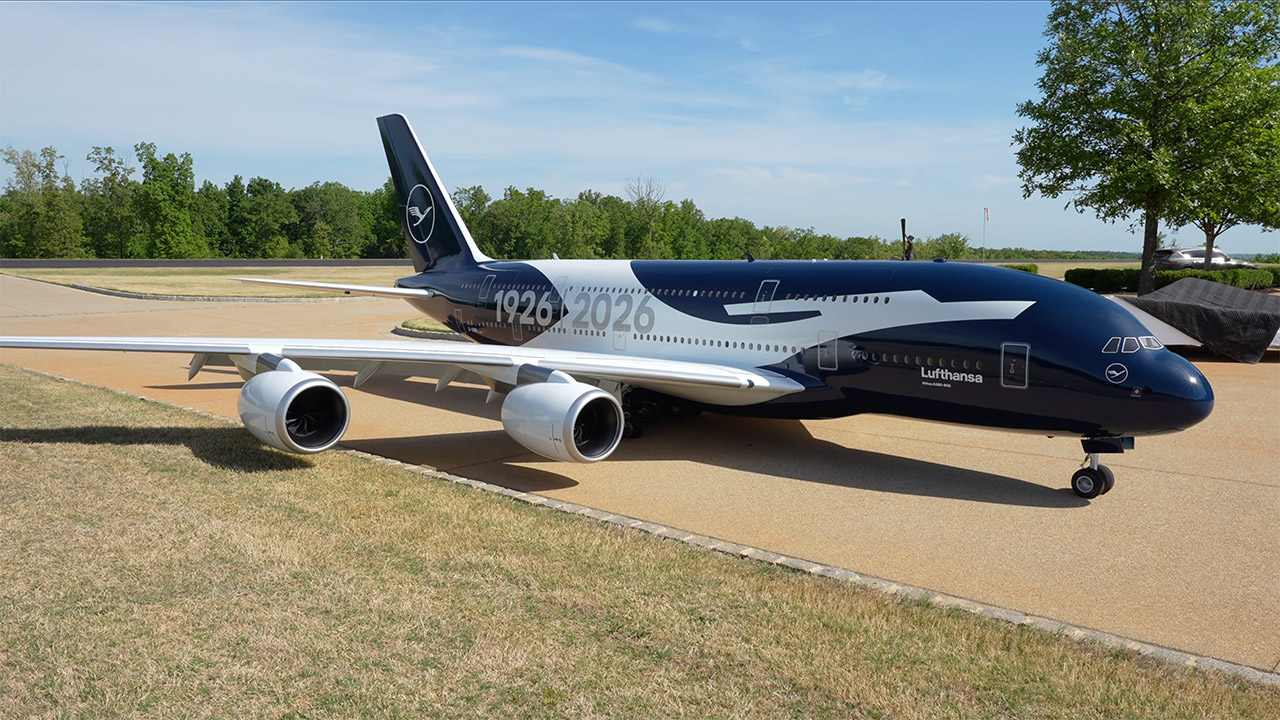
Of course, as more elements were added, weight became an ongoing concern. After installing the engines, the airframe began to flex, so extra carbon layers were applied to strategic areas to tighten it up. Each each addition increased the overall weight, but the structure remained stable. The landing gear doors are built of carbon fiber over a honeycomb core to save as much weight as possible, and the unique wheels include two inner tubes for increased strength. All twelve of them are linked to separate brakes, providing nearly unrivaled ground control.
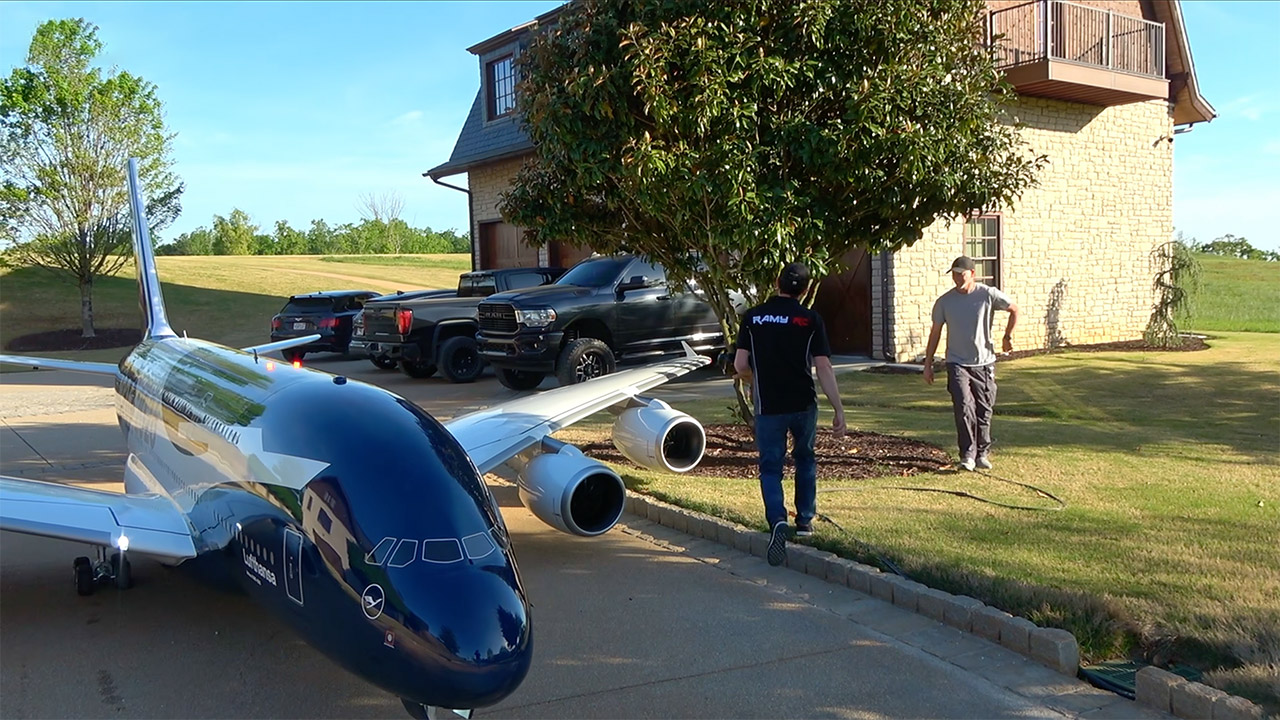
Control surfaces follow after the real-life Airbus configuration, including split parts that change how they respond at various speeds. The high-torque servos, rated between 90 and 190 kg, control flaps, spoilers, ailerons, elevators, and a split rudder, the top half of which disengages in mid-flight. The inner engines even contain operational dummy thrust reversers made of 3D-printed pieces and small servos that replicate full-size movements. Once airborne, the aircraft is stabilized by a gyro system, and electronics connect everything together via some advanced receivers and power boards designed specifically for the large number of servos involved.
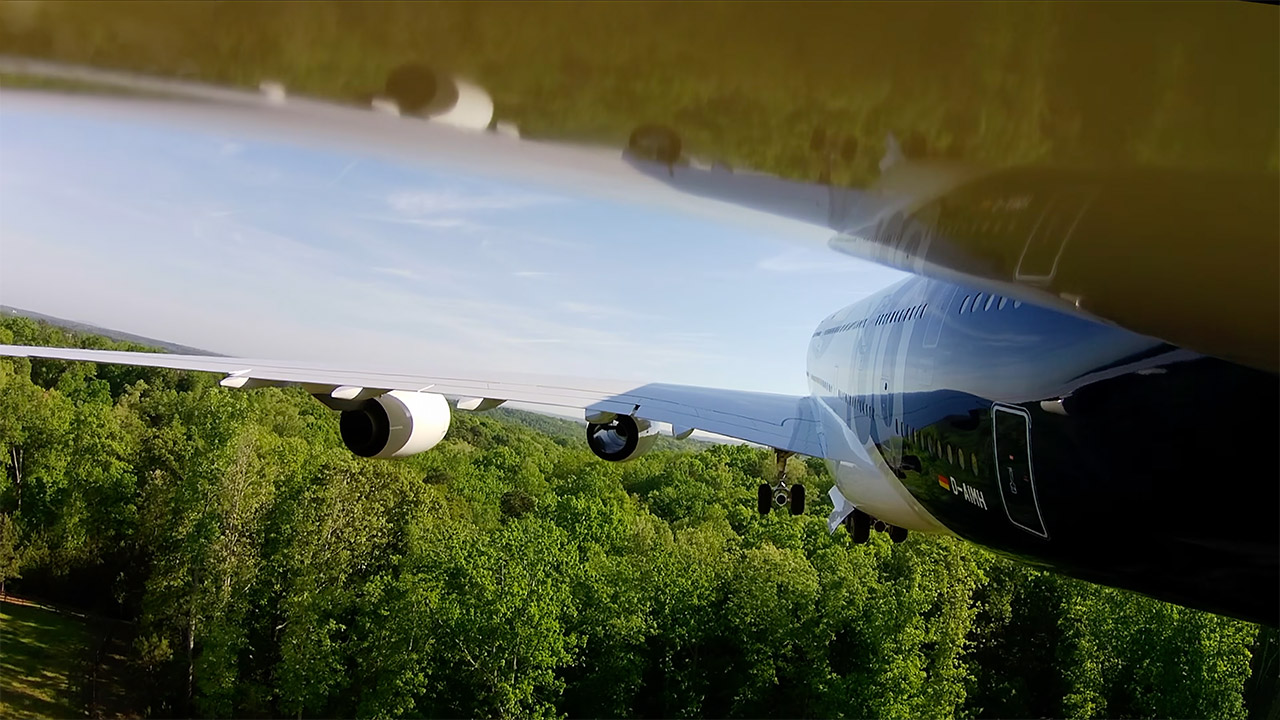
Painting the exterior took a separate crew another month and a half. Mike and his team applied the Lufthansa scheme over the bare carbon and composite surfaces, turning a functional flyer into a polished replica. Before the colors arrived, the model had already flown five times without issue. On the sixth flight, fully dressed in Lufthansa markings, the plane clipped a tree shortly after takeoff. On the sixth flight, completely dressed with Lufthansa markings, the plane struck a tree immediately after takeoff. Fortunately, there was no severe damage, and the pilot was able to bring it in for a safe landing at a controlled speed. The devices indicated a peak speed of approximately 103 miles per hour. The landing lights worked, the flaps deployed at 15 degrees, and reverse thrust even slowed the rollout.
World’s Largest Remote-Controlled A380 Boasts 32-Foot Wingspan
#Worlds #Largest #RemoteControlled #A380 #Boasts #32Foot #Wingspan