How Jack Yearsley is reshaping what it means to be an actor in the modern era
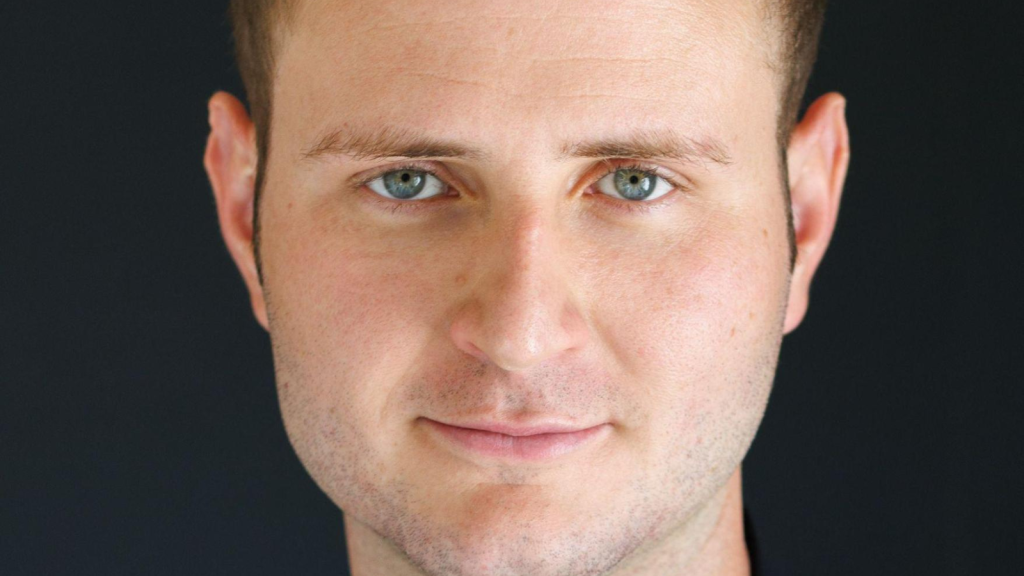
Photo courtesy of Jack Yearsley.
Opinions expressed by Digital Journal contributors are their own.
Actor training has been in a quiet crisis for some time. The dominant systems, rooted in Stanislavski’s psychophysical principles and refined through decades of studio practice, were developed for a different era of performance.
Stanislavski himself introduced the term “psychophysical” to describe the inseparable connection between an actor’s inner psychology and outer physical action, arguing that authentic performance could only emerge when both operated as a single integrated process. That idea became the bedrock of nearly every serious training program in the Western world.
The question that has followed every acting teacher since is more specific and more difficult. How do you make that connection work for the individual performer standing in front of you, rather than the theoretical actor described in a textbook? Jack Yearsley is working on his own answer.
The gap between system and person
Yearsley is a RADA-trained actor, director, and founder of Lion & Swan Productions, an independent theatre company based in London. His performance background covers classical theatre, from Euripideʻs The Bacchae, and newly devised contemporary works designed to challenge conventional audience engagement. But the project he describes with the most precision is the one happening offstage, in the training room, where he is developing a pedagogical approach based on neurosomatic anchoring rather than a fixed system or method.
The issue he is addressing is one that working directors and teachers encounter regularly. Standard training systems, however rigorous, were built around a generalised model of how performers learn and how character takes root in the body. They work well for a certain profile of performer. For those who do not fit that profile, the same techniques can feel borrowed rather than embodied, technically correct but not quite alive.
“Most training systems work brilliantly for a certain type of performer,” Yearsley said. “What I am interested in is what happens when the system does not fit. How do you find a way in for the actor who does not respond to the standard approach?”
Training built around the individual
The foundation of Yearsley’s thinking draws directly on the psychophysical tradition. Stanislavski and Michael Chekhov both understood that physical action and psychological intention function as a single integrated process in the body of a performing artist, not as two separate disciplines to be developed in parallel and then merged. Chekhov, in particular, extended Stanislavski’s ideas into a more imaginative and bodily grounded territory, developing exercises that worked through physical sensation and impulse rather than exclusively through psychological motivation.
What Yearsley is building takes that premise a step further. His developing method focuses on the specific way each individual actor processes and embodies character, the particular relationship between attention, breath, physical impulse, and psychological intention that differs meaningfully from performer to performer. Standard training rarely accounts for those differences. His argument is that it should, and that ignoring them produces performers who can execute technique but struggle to make it feel genuinely inhabited.
Yearsley completed the MA Theatre Lab at the Royal Academy of Dramatic Art, a four-term postgraduate program that engages students in what RADA describes as a total approach to the performer’s process, physical, vocal, and academic, offering a laboratory for independent experimentation with methods and skills in an ensemble context. The program builds on existing training rather than replicating a foundational curriculum, meaning students arrive with experience and are pushed to develop original practice rather than simply absorb received techniques. That environment gave Yearsley both the theoretical grounding and the practical space to begin testing his ideas against demanding material.
“You can see it in rehearsal almost immediately,” he said. “When an actor is able to engage with a practice that actually fits how they work, the performance gets more specific. More alive. The techniques stop being visible because they have reached what some refer to as a deeper flow state.”
Why this work matters now
The performing arts industry is under pressure from multiple directions at once. The State of British Theatre 2025 report, published jointly by the Society of London Theatre and UK Theatre, found that 37 percent of theatre employers are struggling to retain trained staff, while many producing organisations are mounting fewer productions due to rising operational costs. At the same time, the demands placed on working performers have expanded significantly. A stage actor today is expected to move fluidly between classical text, devised work, screen performance, and voiceover without losing precision in any of them.
That range requires a kind of training that most conservatoire programs were not originally designed to provide. Programs built around a single methodology, however sophisticated, tend to produce performers who are highly skilled within a particular mode and less adaptable outside of it. Yearsley’s developing approach addresses that gap directly, not by abandoning foundational techniques but by making the connection between technique and individual performer more deliberate and more specific.
“The industry needs performers who are genuinely available to their own practice”, Yearsley said. “Not actors who can do a bit of everything, but actors who have cultivated their own identity as performers and apply that depth to whatever the work demands. That is what I am trying to develop and teach.”
Through Lion & Swan Productions, Yearsley is beginning to bring this work to students seeking rigorous, individualized instruction. The company’s education offering sits alongside its production and performance services, forming a model in which the training and the professional work inform each other directly. The performers Yearsley trains are being prepared for the same range of demands he navigates himself.
How Jack Yearsley is reshaping what it means to be an actor in the modern era
#Jack #Yearsley #reshaping #means #actor #modern #era