Hubble Marks 36 Years with a Fresh Glimpse into the Trifid Nebula
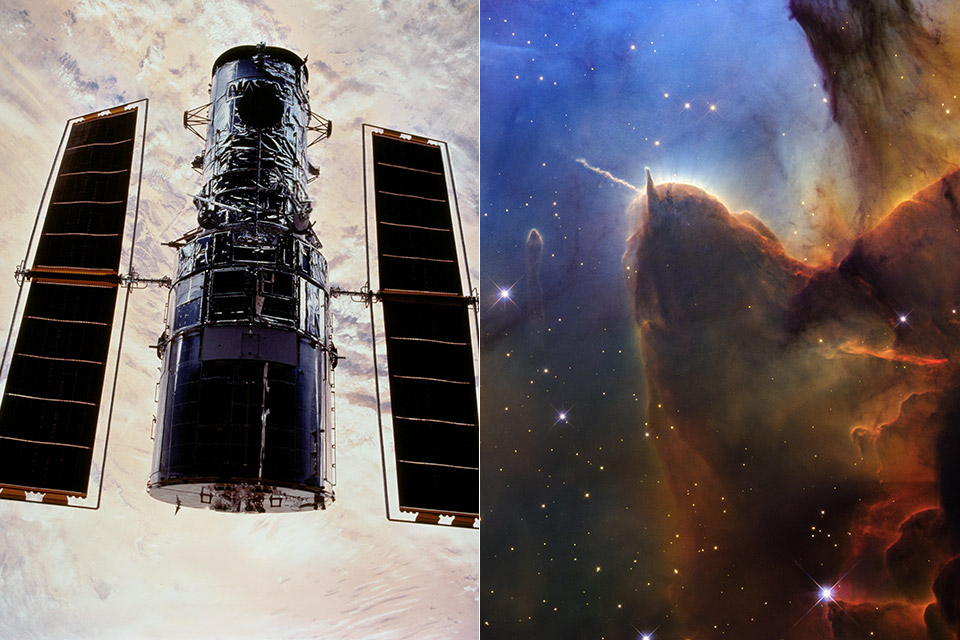
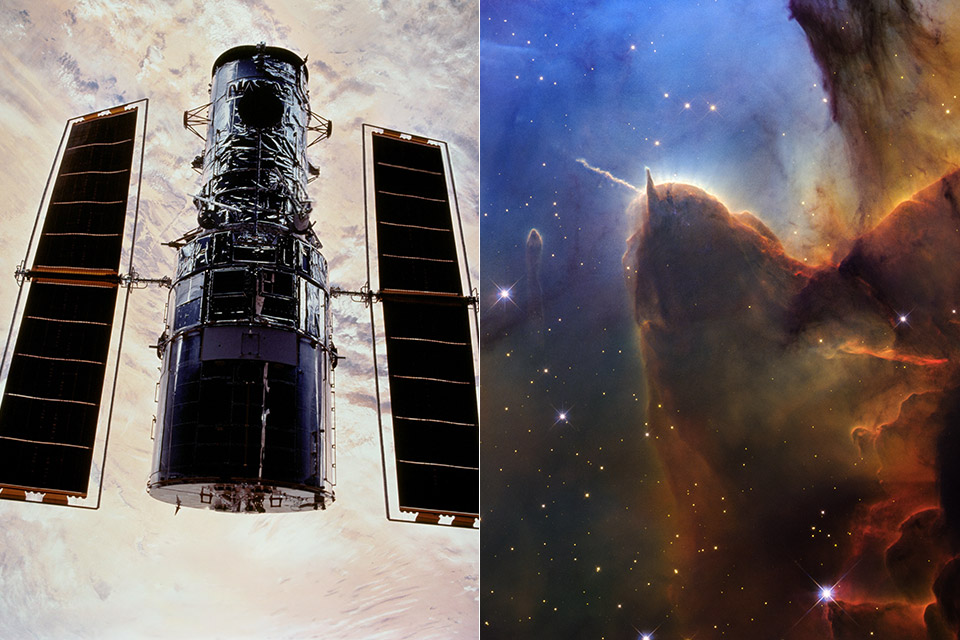
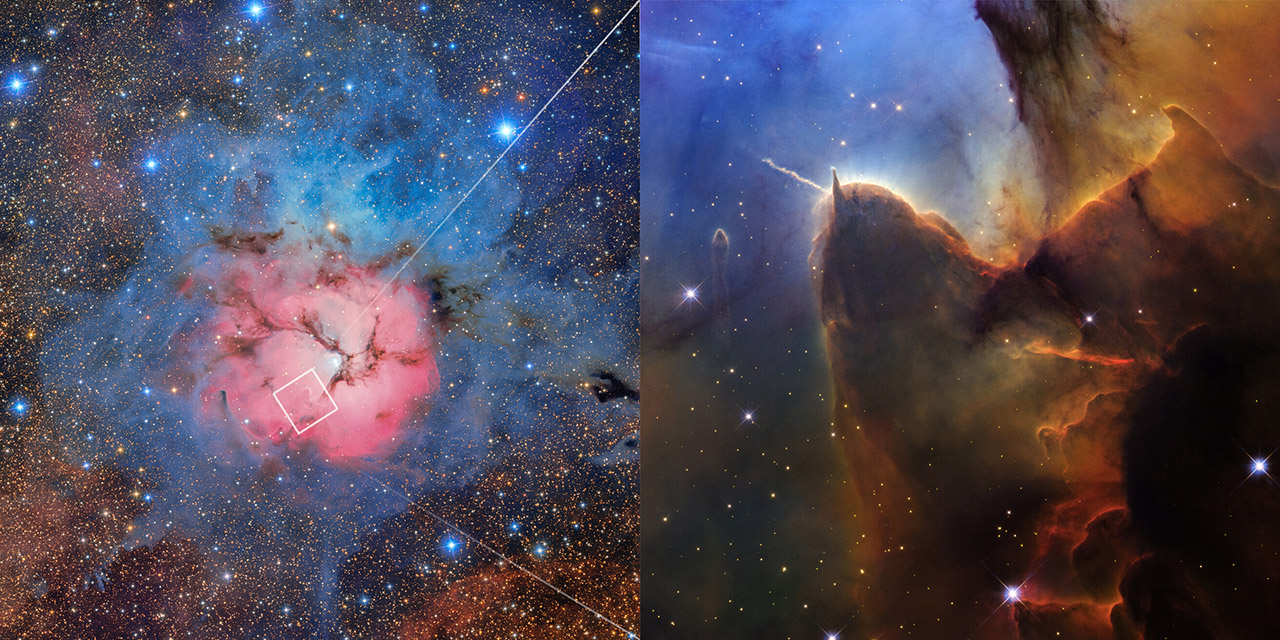
Just a few days before its 36th anniversary, Hubble’s latest image provides a glimpse of a small fraction of the Trifid Nebula, and it is a real stunner…This cosmic marvel is located roughly 5,000 light years away in the constellation of Sagittarius, and it is essentially an active factory for new stars, producing stars left, right, and center from a swirling maelstrom of gas and dust.
Astronomers attempted to photograph the same location in 1997. Hubble returned 28 years later with its Wide Field Camera 3, a real update that allows them to gain a wider vision and detect even the faintest of signals. The new gear enables scientists to observe microscopic changes over time, such as the movement of brilliant jets of material shooting out of nascent stars. These changes are so slow that we can’t notice them, yet they hold the key to understanding how the energy from all these new stars affects the surrounding universe.
Sale

LEGO Technic NASA Mars Rover Perseverance Building Toys – STEM Model Kit for Boys & Girls, Ages 10+ Years…
- Feed a passion for science and technology – Kids can learn more about the challenges of space exploration with this LEGO Technic NASA Mars Rover…
- Conduct a test flight – This advanced building kit for kids ages 10 and up includes a buildable toy version of NASA’s Ingenuity helicopter, which…
- AR brings the mission to life – The accompanying augmented reality app experience lets kids dive into the details of the rover and its mission
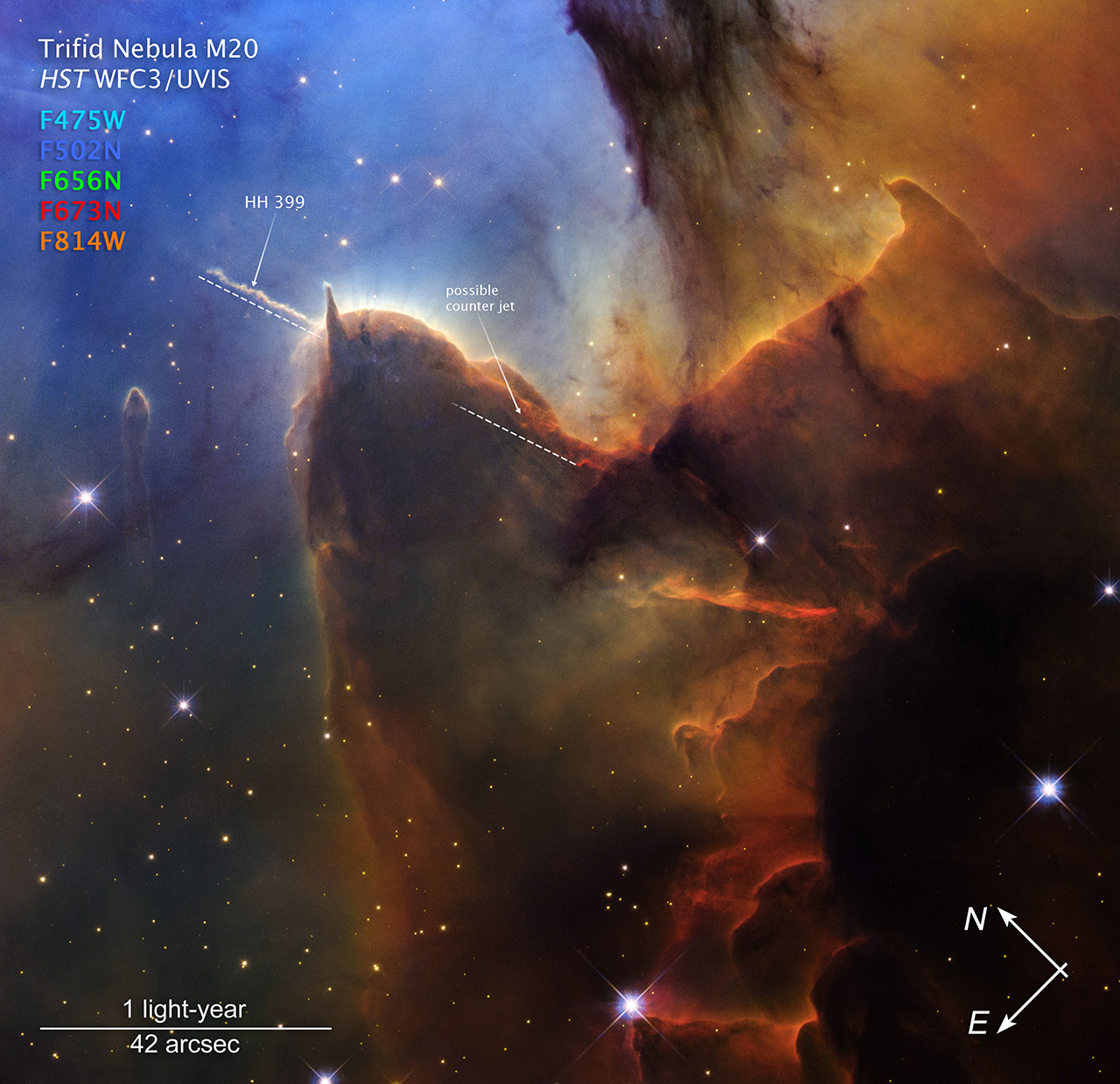
The picture is dominated by one massive feature that resembles a sea creature hanging in water. The rusty color comes from all the blazing gas mixed up with dust, and the overall palette resembles fine silt moving along the ocean. It has been molded by giant stars hiding just out of sight for at least 300,000 years; their fierce winds have carved out a large bubble that is pushing and squeezing material about, triggering a new phase of star formation. The ultraviolet radiation from those stars is removing electrons from atoms, causing the gas to shine a gentle blue near the upper left. Elsewhere in the image, the light is gradually eating away at the darker ridges and slopes, while the heaviest dust pockets will persist for millions of years.
Herbig-Haro 399, a long jet, is located to the left of the main structure. This narrow stream of plasma, which spans many light years, is powered by a newborn protostar trapped deep within the cloud. When the star swings off the scale, it sends things flying away, and scientists can now calculate how quickly the jet is going and how much energy it is injecting into the nebula by comparing it to a previous image. A fainter counter-jet travels along the opposite side, creating a V-shaped pattern against the brown dust. Nearby, another small pillar has been stripped bare, with only the densest material remaining at the summit.
Over on the right, there’s a triangular horn of dust that houses another star in the process of formation. It is distinguished by a faint red dot, a little jet, and a delicate green arc overhead. That arc is most likely a circumstellar disk, a rotating ring of gas and debris in which planets begin to assemble. Nearby giants are steadily eroding the disk down, indicating that this star is nearly completed developing. The bright yellow streaks coming from the top of the main cloud indicate that UV light is breaking apart the dark stuff. Finally, in the upper right corner, there is a zone that appears nearly entirely black; this is simply the densest concentrations of dust, where future stars are quietly accumulating mass in the dark.
Hubble Marks 36 Years with a Fresh Glimpse into the Trifid Nebula
#Hubble #Marks #Years #Fresh #Glimpse #Trifid #Nebula