The next AI advantage is shared intelligence, not better prompts
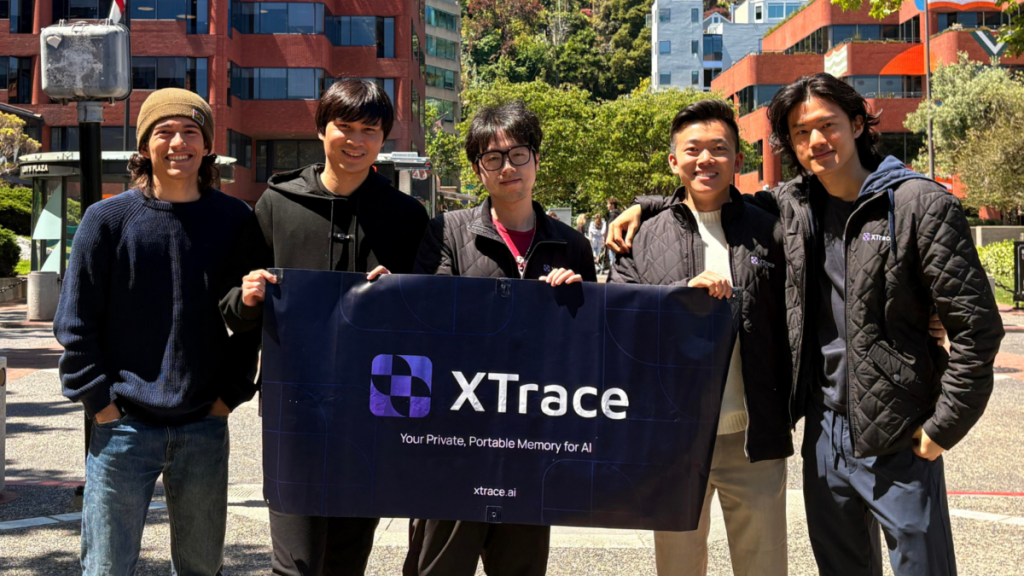
Photo courtesy of XTrace.
Opinions expressed by Digital Journal contributors are their own.
For the last two years, artificial intelligence has been introduced to the market through a promise that feels immediate and personal. A founder can pressure test a strategy before bringing it to the team. A developer can move from concept to execution far faster than before. A knowledge worker who once struggled to begin can now start with language that already has shape. The gain is real and AI can make one person more capable in the moment.
What has been less obvious is whether those private gains have translated into something larger inside the company. XTrace is building around the idea that they often have not. Many organizations have integrated AI into daily work, and many employees are producing more than they did before, yet the organization itself still struggles to preserve context, carry forward reasoning, and build on what it has already learned. Decisions remain buried in private sessions, context gets rebuilt when work changes hands, and teams inherit outputs without inheriting the logic that made those outputs valuable.
That gap is becoming one of the defining business questions of the AI era. The first phase of AI adoption was about access, experimentation, and individual productivity. In many industries, that phase is already underway. The more important question is what happens after adoption, when companies begin to realize that faster output does not necessarily produce stronger continuity.
Why AI adoption has not yet made most organizations more intelligent
The current structure of AI work still favors the individual user. One person opens one session, works through one problem, and leaves with an answer that may be useful or strategic. What often remains trapped inside that interaction is the reasoning that gave the answer its value. The output can be copied into a document or forwarded to a colleague, but the surrounding context rarely moves with it in a form that others can easily inherit or extend.
This is where many companies begin to feel friction. On the surface, they are moving faster. Underneath, they are still rebuilding context. A founder may use AI to sharpen the company’s positioning, but the thinking behind that positioning never fully reaches sales, product, or operations. A team lead may work through a difficult decision with a model, but what gets shared is often a polished conclusion rather than the reasoning that would help other people apply the same logic later. A developer may solve a complex problem with AI assistance, but the judgments surrounding that solution remain scattered across tools, chats, and private notes.
The result is acceleration without accumulation. Companies generate more material, yet they do not necessarily become more coherent. High AI usage can coexist with weak organizational intelligence.
Why better prompts do not solve a team problem
Early AI discourse placed enormous attention on prompting, and for good reason. Better prompts can improve the quality of a single interaction, reduce waste, and produce stronger outputs. What prompts cannot do is solve what happens after that interaction ends.
A company can develop sophisticated prompt habits and still remain weak in the way knowledge moves through the organization. It can create more strategy, documentation, code, and analysis while still forcing employees to reconstruct the same context from fragments every time work changes hands. In that environment, the problem is whether the company can retain that thinking in a form that compounds over time.
That is why the next competitive layer in AI will not be defined by prompting alone. Shared intelligence changes the conditions under which a team works because it determines whether useful reasoning can survive the session, move across roles, and remain available when the next person needs to act.
What XTrace is actually building
XTrace is building a privacy-first infrastructure layer for shared intelligence, giving users, teams, and developers a way to preserve, organize, and control the context they create with AI across tools and workflows. That distinction matters because the company is not focused on simple recall or convenience. Its thesis is that AI becomes far more valuable when context can persist, move, and remain useful beyond a single session, a single user, or a single platform. XTrace is trying to help define the infrastructure that allows intelligence to compound across a team.
Liwen Ouyang frames the ownership question with clarity. “If it’s not encrypted and if it’s not unlockable only by you, then it’s not owned by you,” he said. His point reaches beyond privacy language alone. When the context created through work remains trapped inside closed systems, the intelligence built from that context is never fully under the user’s control.
XTrace’s response is both technical and strategic. The company is building for users and teams that want to manage their AI context directly, while also offering an SDK for developers who want to bring that same continuity into their own products and workflows. The broader claim underneath that approach is that AI should support a layer of working context that can persist over time, move when collaboration requires it, and remain governed by the people creating it.
Why shared intelligence is becoming a category
The phrase shared intelligence matters because older terms have become too blunt to describe the problem now taking shape. Most organizations already have shared information. They have docs, dashboards, chats, call transcripts, wikis, project boards, and archives full of material that can theoretically be accessed by everyone. Yet shared information does not automatically produce shared intelligence.
Shared intelligence points to a more demanding standard. It suggests that context can move across people and tools without losing its meaning. It suggests that prior reasoning remains usable rather than hardening into static documentation. It suggests that an organization can build on what it has already learned instead of repeatedly approximating its own thinking from fragments.
Felix Meng of XTrace describes the current state of AI in direct terms. “Essentially all of your intelligence is owned by the AI agent that you are chatting with,” he said. That observation helps explain why so many companies still struggle to turn strong individual interactions into something that strengthens the team as a whole.
This is why the real market shift is from isolated AI usage to shared intelligence systems. That matters to founders trying to keep strategic reasoning from getting trapped at the top of the company, to developers working across multiple tools and collaborators, and to knowledge workers who are tired of restating the same projects and assumptions every time work begins in a new environment.
Why ownership will shape the leaders in this space
If the most valuable context inside a company remains tied to a single platform, then the continuity created through that context is not fully owned by the company that produced it. It still lives inside a system whose storage rules and incentives were designed somewhere else.
As models become more interchangeable and interfaces improve across the market, the more defensible advantage may not come from the model itself. It may come from the continuity surrounding the model, which includes the judgments, workflows, preferences, and working memory a person or team has accumulated over time.
The companies that lead in the next phase of AI will not stand out simply because they use the tools more aggressively than everyone else. They will stand out because they understand that the deeper shift is from individual output to shared intelligence. XTrace is positioning itself inside that transition. It is building for the idea that AI matters most when it helps teams preserve, share, and extend intelligence in a way that survives the session, the handoff, and the tool itself.
That is why the next AI advantage is not better prompts. It is shared intelligence.
The next AI advantage is shared intelligence, not better prompts
#advantage #shared #intelligence #prompts