3D Printing Pushed This Massive RC Submarine to the Edge of Disaster
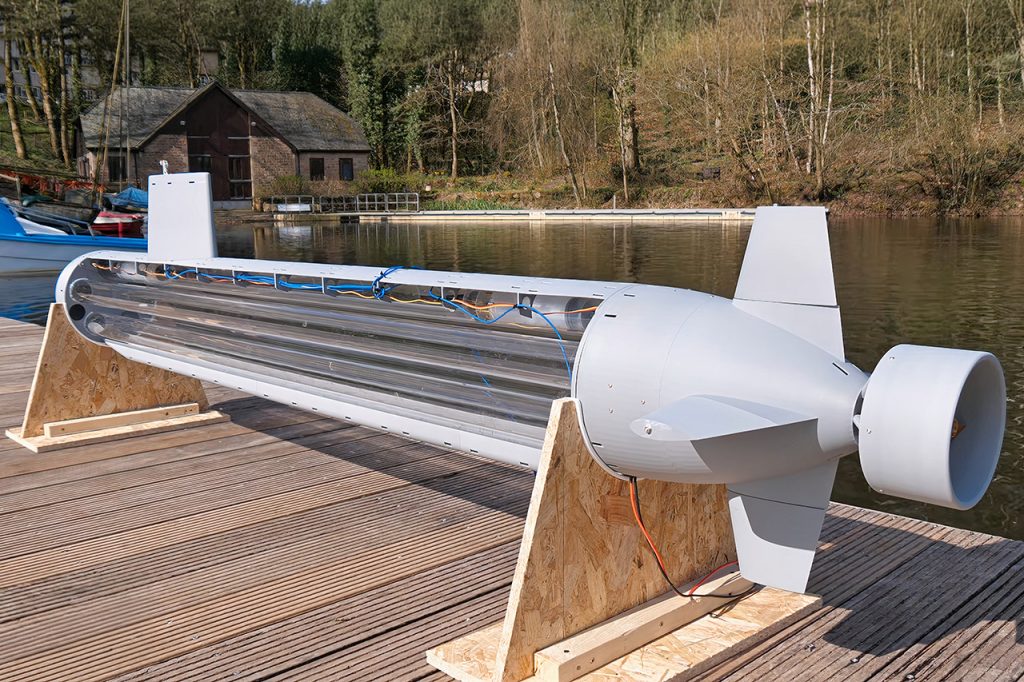
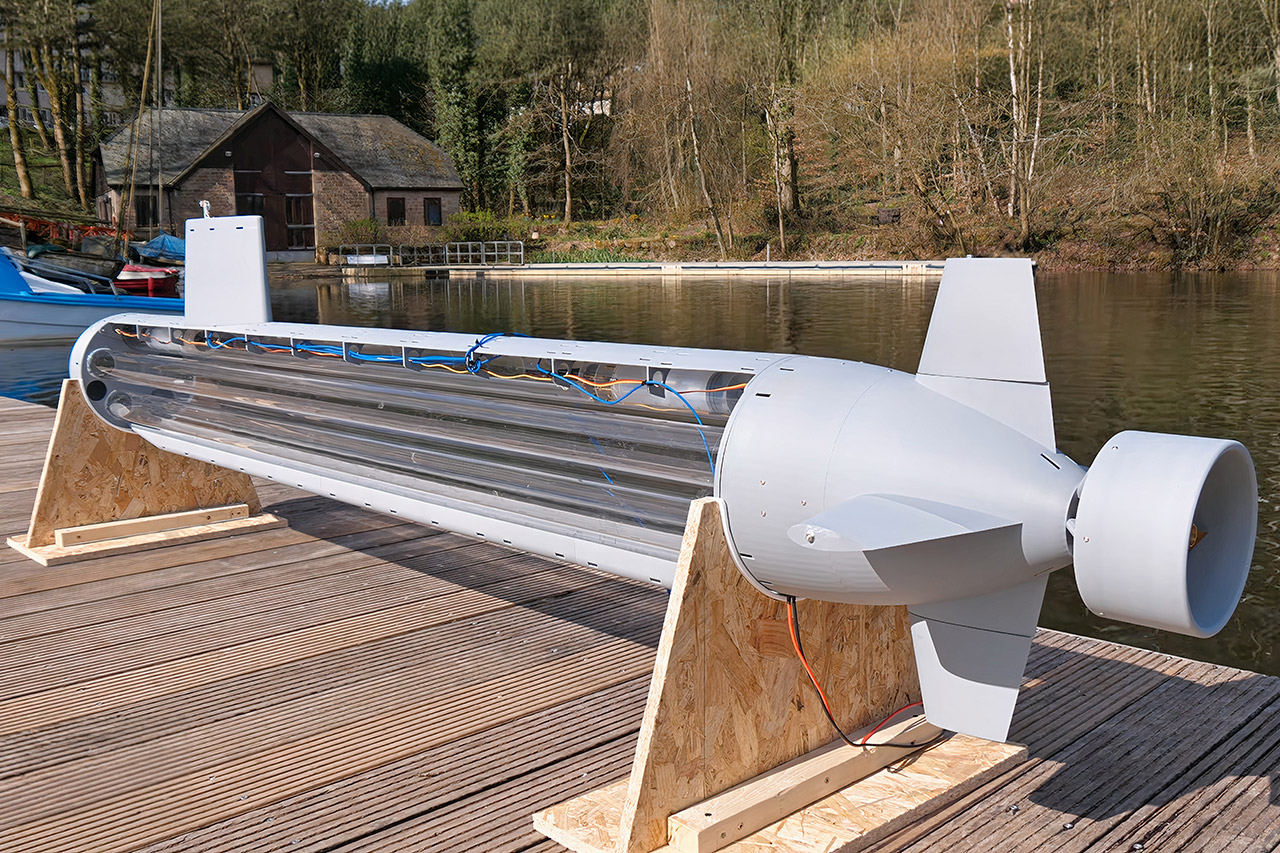
James from ProjectAir set out to build the world’s largest remote-controlled submarine. His finished machine was an impressive 2.7 meters (8.9 feet) long and made extensive use of 3D printing, with the body, fins, propeller, and structural pieces all created using it. You don’t have to be an expert in underwater boat construction to understand how much is at stake: one failure and that pricey toy is resting at the bottom of a lake, with no easy means to retrieve it. James was well aware of the risk, so he began with a much smaller prototype to test every single mechanism before going on to the final product.
The first prototype was a smaller version of the submarine, with a clear acrylic tube for the hull and 3D printed caps on either end. A couple of motorized syringes inside acted as ballast tanks. A high-torque motor on a threaded rod was employed to suck water in or push it out, determining whether the submarine sank or ascended. This was monitored by two linear potentiometers, which tracked the exact position of each plunger and transmitted the data directly to the radio controller, just like a typical servo. It all worked easily in a test tank and then in open water, where the miniature sub dived, hovered, twisted, and returned to the surface on command with no trouble.

Bambu Lab A1 3D Printer, Support Multi-Color 3D Printing, High Speed & Precision, Full-Auto Calibration…
- High-Speed Precision: Experience unparalleled speed and precision with the Bambu Lab A1 3D Printer. With an impressive acceleration of 10,000 mm/s…
- Multi-Color Printing with AMS lite: Unlock your creativity with vibrant and multi-colored 3D prints. The Bambu Lab A1 3D printers make multi-color…
- Full-Auto Calibration: Say goodbye to manual calibration hassles. The A1 3D printer takes care of all the calibration processes automatically…
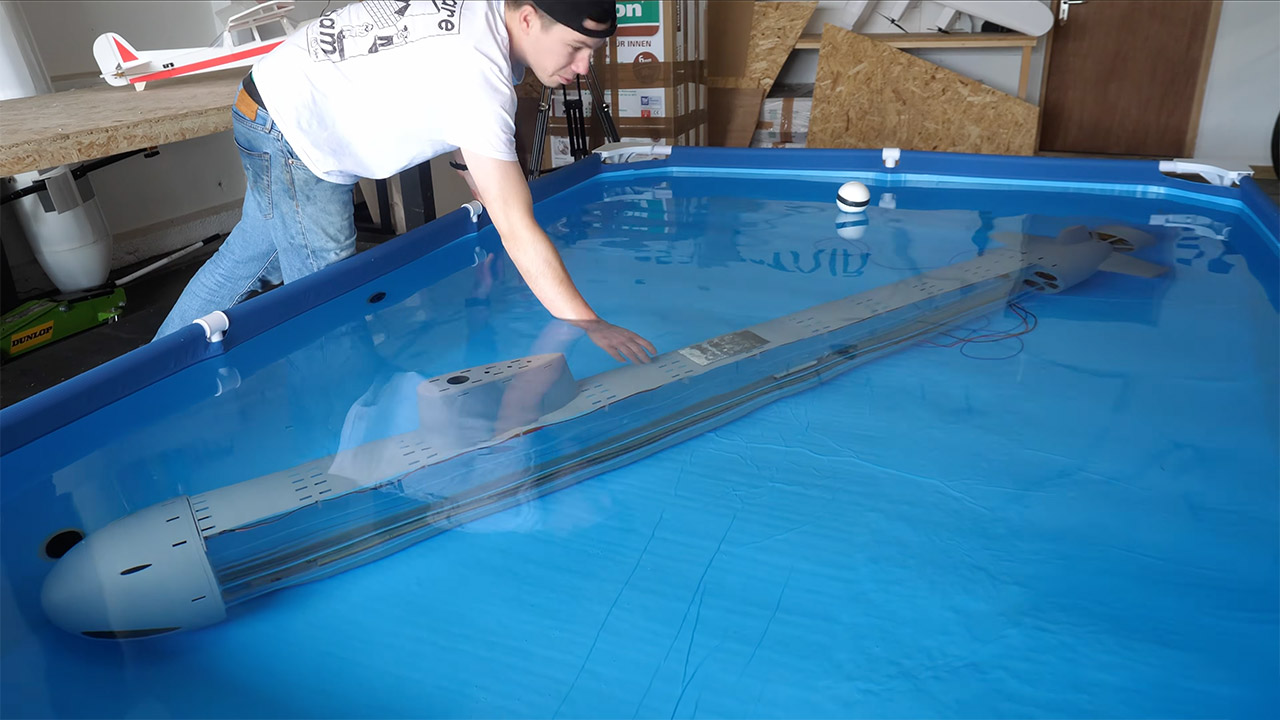
The success of that prototype gave James the confidence to go big, as the larger version used the same syringe-based ballast system but spread the hull across multiple smaller acrylic tubes arranged in a radial pattern. To maintain buoyancy, just the top tube was sealed and filled with air. The rest was left open to the water to keep the weight as low as feasible. It took a week to 3D print the nose cone, tail section, bulkheads, and external fairings, with a whopping 10kg of filament utilized. A brushless motor was used to power a 3D printed propeller in the back, while servo-operated fins handled steering and pitch adjustment.
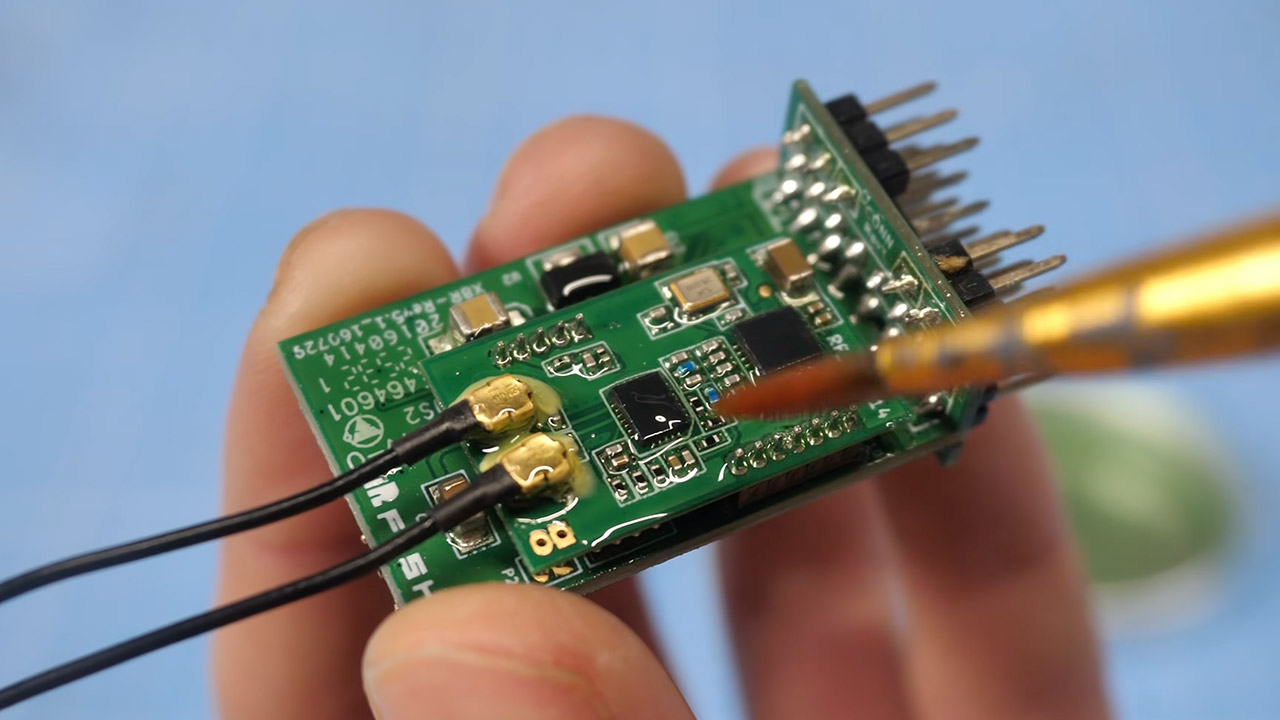
Waterproofing required constant attention, as servos were filled with olive oil and epoxied in place, circuit boards were coated with a protective coating, and some components were inserted into entire epoxy blocks. The radio antenna needed to be taken care of as well, so it was coupled to a tethered surface buoy so control signals could pass through and live footage could be broadcast back from a camera positioned in the conning tower. Initial checks of the vessel were performed in a huge pop-up pool built up at home. Weights were employed to dial in neutral buoyancy, allowing the submarine to sit at a fixed depth without continual power, and to everyone’s delight, it went down and back up on command without incident. Everything seemed excellent for the main test at Rudyard Lake.
Once on the lake, the submarine glided straight as an arrow, turned abruptly with the back fins, and maintained a constant video feed from beneath the water. He felt quite secure after that, and the initial dive command went off with a bang. It sank beneath the surface and remained exactly where the operator wanted it to.
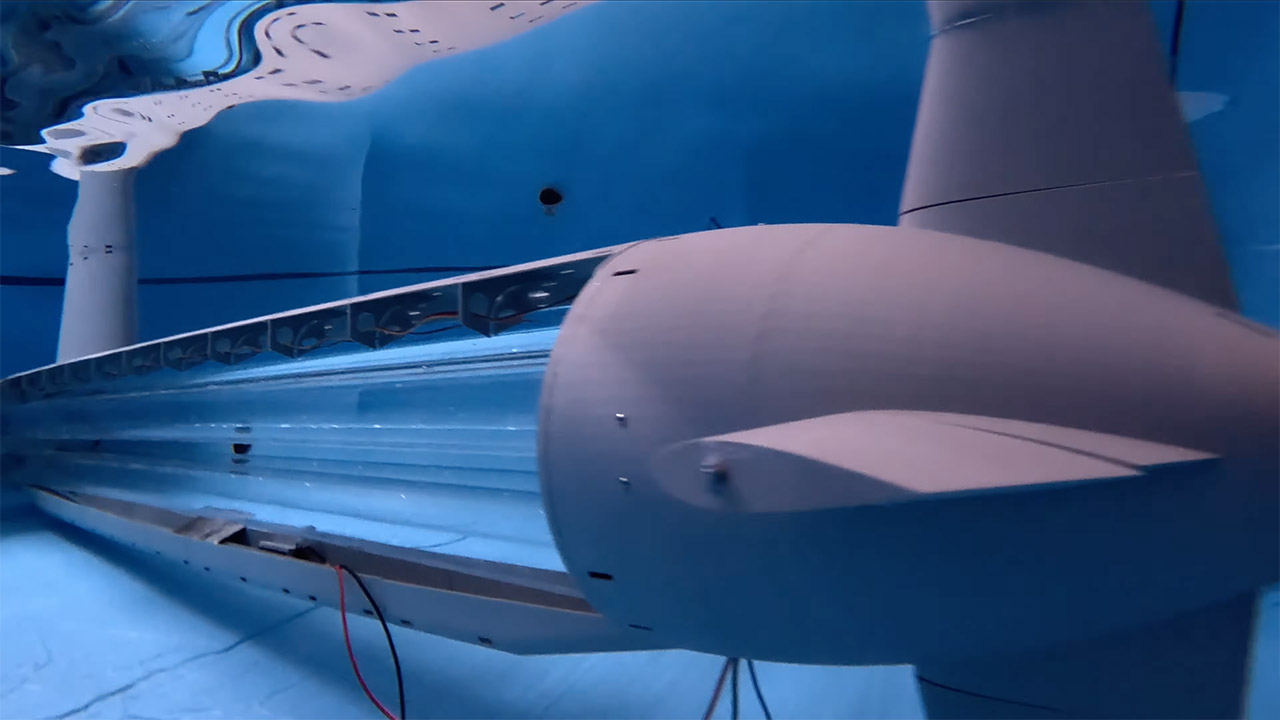
The submarine failed to ascend as intended, resisting attempts to move it into shallower water. James remained calm, maintaining control and guiding the craft while working out how to reach it himself. Once safely back on land, he identified the issue when he found that deep-water pressure had forced water into the infill of several 3D-printed components.
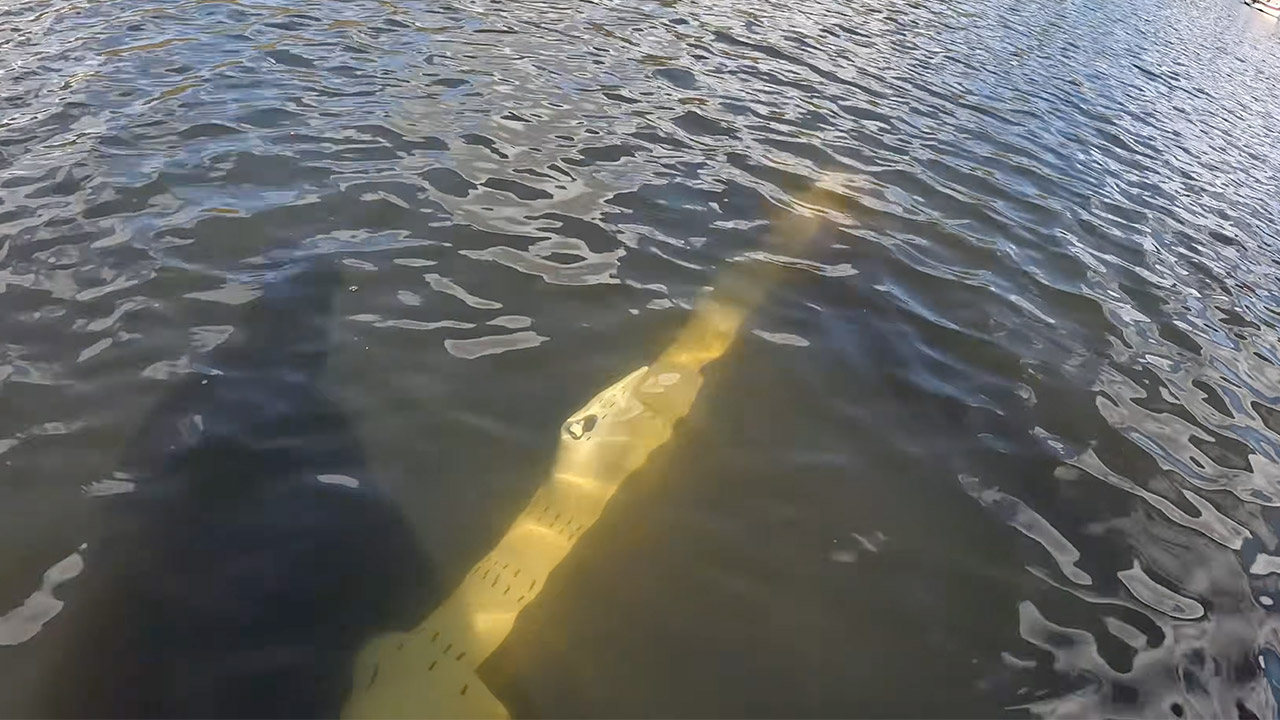
Next, in what was becoming a bit of a trend, a second electronic speed controller failed far too fast, after just approximately 15 minutes of being wet, despite our best efforts to cover it up beforehand. A little epoxy fixed the problem and has kept it from happening again. After that incident, James insisted that all future dives remain in shallow water, where lower pressure meant fewer risks. It was the right call. Back in those conditions, the submarine operated as intended, hovering and maneuvering with ease while its live camera revealed fish as well as nearby dock structures.
[Source]
3D Printing Pushed This Massive RC Submarine to the Edge of Disaster
#Printing #Pushed #Massive #Submarine #Edge #Disaster