Q&A: Beyond launch: The new space economy takes shape in orbit
Getting into space was once the primary challenge. Increasingly, what happens after arrival is becoming just as important. As the space economy matures, customers are looking beyond transportation to a new generation of orbital services. These range from powering and positioning payloads to manoeuvring spacecraft, inspecting other objects, removing debris and supporting manufacturing and assembly in orbit.
To discuss how space technology is evolving, Digital Journal spoke with John Rood, CEO of Momentus Inc. (NASDAQ: MNTS), a leading U.S.-based commercial space company. Momentus specializes in satellite technology, space transportation, and in-orbit services. The company delivers satellite technology and orbital services for the commercial sector, U.S. national security defence, and NASA for communications, missile tracking, and cutting-edge science missions.
Digital Journal: Can you provide a brief overview of Momentus?
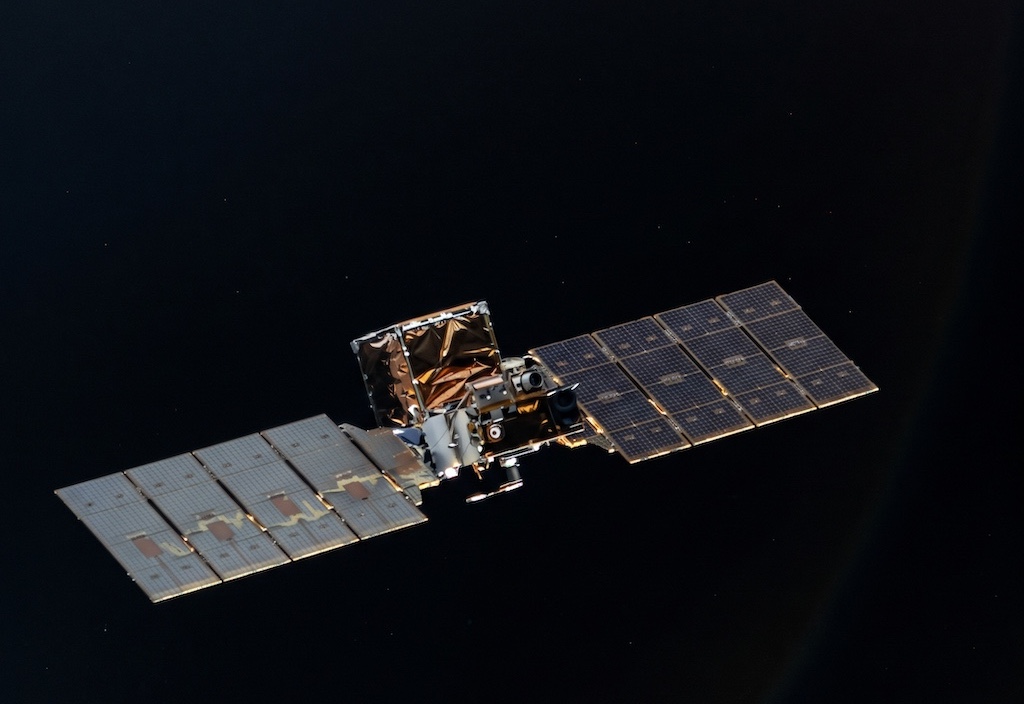
John Rood: Momentus is a commercial space company based in the U.S. that focuses on being a producer of satellites, satellite technology, space transportation, and in-orbit services. We support a wide range of missions across the commercial sector, national security missions, and NASA. Our core product is the Vigoride, which acts as both a satellite bus for a range of missions like communications and tracking, as well as an Orbital Service Vehicle or flexible space tug. In its base configuration, Vigoride is powered by an innovative water-based propulsion system called the Microwave Electrothermal Thruster (MET). Depending on the mission, Vigoride can also be equipped with hall-effect or chemical thrusters.
Vigoride sits at the sweet spot of where the satellite industry has migrated, with the bulk of new satellites falling in the 200-600 kg class. Vigoride has strong capabilities for a satellite of this class with a modular, reconfigurable design, high-power with up to 3 kw of peak power, a pumped fluid cooling system to rapidly dissipate heat and the ability to carry up to 800 kg of payload.
When used as an Orbital Service Vehicle, Vigoride gives us a safe, reliable, and cost-effective way to deliver customer satellites to custom orbits, host complex payloads, and carry out a range of specialized operations in space to support national security and science missions. As the SpaceX Starship launch vehicle begins to offer commercial service, we expect the need for in-space transportation will increase since this launch vehicle will be capable of delivering unprecedented amounts of cargo to space. We expect this to increase demand substantially for transportation of this cargo to specific locations in orbit, much like cargo trucks on Earth deliver cargo unloaded from large container ships at ports to many other locations.
DJ: What are the key services you offer and what organizations do you work with?
Rood: Our capabilities fall into four main areas. First, we provide satellites in the class that is widely proliferating for commercial and national security missions. We focus on customers such as the U.S. Space Force, Space Development Agency, NASA, and commercial companies who own and operate satellites or buy services like communications from satellites. We both offer satellites built for customers to own and operate and communications services from Momentus satellites.
Second, we offer hosted payload services, where we integrate a range of payloads from customers onto Vigoride, manage the launch to orbit, supply power, data links, pointing, and temperature control to the payload so customers can run experiments or operate instruments without building their own satellite. We have supported a range of hosted payloads such as from the U.S. Air Force Research Laboratory, Defense Advanced Research Projects Agency (DARPA), NASA, and commercial customers that generated solar energy in space and beamed the electricity to Earth, assembled complex structures in space, tested new avionics, and other missions.
Third we offer space transportation to deliver satellites to specific orbits. We have the ability to deliver satellites to custom orbits using our water-powered thrusters to move customer satellites from standard rocket drop-off points to their exact required orbits.
Fourth, we support national security missions for advanced orbital operations, including tracking objects and maneuvering in complex environments. On the government side, we work with NASA, the U.S. Space Force, the Air Force Research Laboratory, DARPA, and the Missile Defense Agency. Commercially, our partners range from satellite operators and space tech innovators to hardware suppliers like Velo3D.
DJ: The Vigoride 7 mission represents an important milestone for Momentus. What are you most excited to demonstrate through this mission?
Rood: Vigoride 7 is a clear proof point of how mature and capable our platform has become. What excites me most about this mission is showing off its versatility as a multi-payload operational platform in low Earth orbit. We carried 10 separate commercial and government payloads on this single flight. Beyond demonstrating our modular deck that lets customers easily plug in their tech with minimal friction, we are actively running operational hardware, including an edge computing payload for data storage and software development and a low-cost multi-spectral sensor system built for military use. It shows how our space-proven design helps customers’ active orbital operations efficiently in a way that lowers risk and cost.
Of note, during the Vigoride 7 mission, we successfully completed a Rendezvous and Proximity Operations (RPO) demonstration utilizing low-cost commercial components in a sensor suite in a mission with a NASA satellite. The RPO demonstration showcased the Company’s capabilities to integrate and operate this sensor suite, which produces the high-quality imagery necessary to support autonomous RPO in any lighting environment.
Lower cost autonomous operations conducted at greater scale have significant potential to play a key role in supporting in-space operations like manufacturing, servicing, and habitation in the growing space economy.
DJ: Momentus is partnering with DARPA’s NOM4D program through which a robot is building a large antenna truss directly in low Earth orbit. What is the significance of this initiative?
Traditionally, everything you send into space must fit inside the tight dimensions of a rocket’s nose cone, which means engineers must design expensive, complicated folding and deployment mechanisms. The DARPA NOM4D program aims to change that paradigm entirely. By leveraging Vigoride’s power, manoeuvrability, and flexible payload deck, we are enabling autonomous robotic assembly right in orbit. Moving from folded hardware launched from Earth to assembling structures directly in space has the potential to let you construct massive components like large antenna trusses and other large, complex structures at a scale that would be impossible to launch fully intact. This work sets the groundwork for the future of space infrastructure, supporting everything from high-powered communications, manufacturing and habitation in space, to advanced defence systems.
Momentus is already booking missions into 2027. What are customers asking for today that they weren’t asking for two or three years ago?
Rood: A few years ago, most customers were just looking for basic last-mile transportation to get their satellite to a specific location after a shared rocket launch. Today, the market has matured, and the requests are much more complex. We see a high demand for sustained orbital hosting, where customers want us to provide the integration and launch of their payload and once in orbit to provide power, cooling, communications, pointing, and manoeuvrability so they can focus strictly on using their payload without having to manage getting it into space or flying the satellite platform. Defence clients are asking for secure environments backed by top secret clearances and NSA-certified encryption so they can fly sensitive missions on tight timelines. Finally, customers increasingly want dynamic capabilities, including the ability to manoeuvre, navigate the increasingly crowded and contested environment in space, refuel, deorbit debris, track and inspect other objects, and support in-space assembly and manufacturing.
DJ: What technologies or capabilities do you believe will define the next phase of the in-space economy?
The next chapter of the space economy will be defined by smaller, more capable systems that can rapidly process, store, and transmit data at the speed of light as well as dynamic, flexible, and manoeuvrable platforms that can operate in crowded and contested environments to support a range of military, intelligence, and commercial missions.
In-space manufacturing and robotic assembly will be critical because they allow us to build structures far bigger than any rocket fairing. Sustainability will become a much bigger concern as we increasingly need to deal with debris removal as space becomes much more crowded and provide less-toxic alternatives. We see Vigoride and our follow-on systems playing a key role with our non-toxic, water propulsion system and the ability to inspect, track, refuel, reposition, deorbit, and support in-space manufacturing and assembly.
Q&A: Beyond launch: The new space economy takes shape in orbit
#launch #space #economy #takes #shape #orbit