Years of data cleanup bought this regulator an AI head start
A decision letter from Ontario’s medical regulator can affect a physician’s ability to practise. For years, the people who wrote those letters built each one by hand, some starting from scratch, some from a template, copying material in and out of the file.
Eben Engelbrecht’s team now has AI produce the draft. A decision writer reads it, fixes it and submits it.
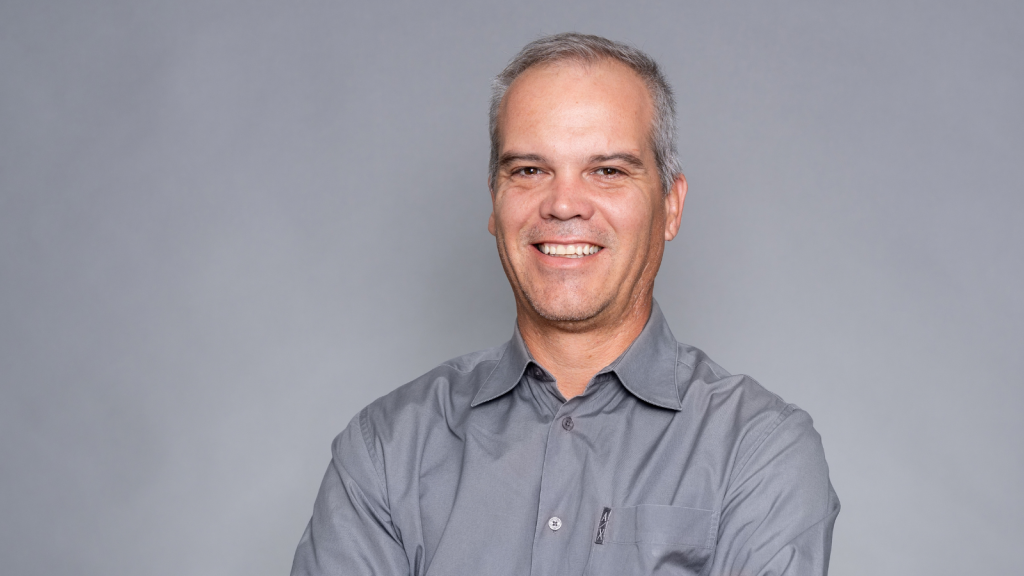
Engelbrecht is director of information technology and facilities at CPSO, and a finalist for CIO of the Year in the not-for-profit category at this year’s CanadianCIO of the Year Awards, hosted by the CIO Association of Canada.
“They’re ultimately responsible still as the drafter to then submit it,” Engelbrecht says. “The AI is not making the decision for them. The AI is purely just giving them the information that already exists. No decision-making is happening.”
Getting there took almost six months of training the model, he says, working through the business until it held up. Accuracy sits in the high 90s, and odd cases still need a person to pull in material the model missed.
Despite having staff out on vacation and parental leave this summer, decision writers stayed on pace with their targets anyway, which Engelbrecht credits to spending less time copying, pasting, and assembling documents by hand.
Reporting drove the data cleanup
When Engelbrecht joined CPSO, the college was running 32-bit Windows machines and WordPerfect, with roughly 700 servers running on Nutanix hardware in an on-site equipment room and no cloud presence.
Moving to a Microsoft cloud environment and a member portal took years, and much of that time went into cleaning up the data.
Every database correction went to one person, who typed it in by hand.
“We had the Yoda sitting at the back end fixing data manually,” Engelbrecht says.
A Yoda is a useful thing to have right up until you need two of them. The record stayed only as consistent as one person could keep it, and it held what Engelbrecht estimates was close to a century of physician registrations.
CPSO needed that data structured to report complaint timelines, physician locations and regulatory outcomes to government and the profession, long before AI had anything to do with the project.
Data cleanup consumed almost half the project time.
When Microsoft ran an AI readiness assessment on CPSO’s systems, the college hit the mark on the strength of work finished years earlier. That result helped make CPSO one of Microsoft’s frontier firms.
“I knew that was going to be the case,” Engelbrecht says. “All the work that we’ve put into our systems unknowingly has resulted in us being an AI early adopter.”
The controls came before the AI
Engelbrecht traces the college’s approach to security back to a cyber incident early in his tenure, while CPSO was still running on-site servers. The systems it hit had already fallen out of active use.
The incident, he says, made the case to his board for investing in cybersecurity.
The first question it asks a prospective vendor is where its data resides. Multi-factor authentication, the second code you enter after your password, rolled out to the physician portal in phases so members could adjust before it became mandatory.
Engelbrecht’s team wrote the governance and policies first. Staff were already experimenting with ChatGPT by the time that work started, and the risk he wanted closed was private physician information going into a public model CPSO didn’t control.
Copilot started as a pilot with staff representing every department. Once that group was comfortable with it, CPSO rolled it out to everyone else.
“We don’t have to rush into AI,” he says.
He credits the lunch and learns for the uptake, saying he could watch adoption move in the data right after each session. Across just under 400 staff, it reached 94% to 95%.
A deadline with no room to miss
In 2025, the Ontario government handed CPSO a legislated deadline to start regulating physician assistants, a new group of roughly 1,000 members alongside the college’s 50,000 physicians.
Engelbrecht’s team adapted the registration system, member portal, and public register already built for physicians, work that predated the legislation by years. The new group was a fraction the size, but Engelbrecht says standing up the same core functions still meant roughly the same amount of work.
“We were really lucky and we were ready when that legislation passed,” he says.
He uses that word a lot.
The cyber incident hit systems it had stopped using, lucky the cloud move was underway, lucky the registration work was built before the legislation arrived. Most of that luck took years to build.
Most of that luck took years to build.
Final shots
- CPSO’s AI readiness came from work that started years before generative AI arrived, including cleaning decades of data, moving systems to the cloud, and tightening security.
- The college is using AI to reduce manual work without handing over the decision. Staff remain responsible for what gets submitted.
- Building reusable systems gave CPSO options when new demands arrived, whether that meant regulating physician assistants on a deadline or integrating AI into existing workflows.
This article is part of a series profiling the finalists for the 2026 CanadianCIO of the Year Awards, not-for-profit sector category, presented by the CIO Association of Canada. The winner will be announced Oct. 1 in Toronto. Digital Journal is the national media partner for the CIO Association of Canada.
Years of data cleanup bought this regulator an AI head start
#Years #data #cleanup #bought #regulator #start