Outsourcing memory: How smartphones are redefining what we choose to remember
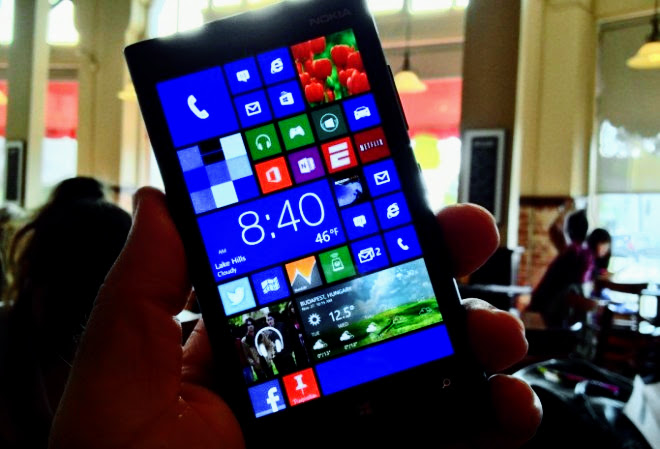
For most of human history, memory was a survival tool. Remembering directions, telephone numbers, appointments, names and practical skills was essential to navigating everyday life. Today, however, an increasing proportion of that knowledge is stored not in our brains but in our devices.
A new international survey from the Cooperative Agency suggests that digital convenience is changing not only how people access information, but also what they believe is worth remembering in the first place. The findings raise interesting questions about the relationship between technology, memory, and modern notions of competence.
According to the survey of 9,284 adults across multiple countries, including Canada, 69% of respondents indicate they now rely on technology for information or everyday tasks that they previously expected themselves to remember. Furthermore, 64% could not confidently recall more than three telephone numbers without consulting a device, while 58% said they rarely attempt to memorise information before searching for it online. The findings point towards a growing phenomenon often described by psychologists as “cognitive offloading”: transferring mental tasks to external tools such as smartphones, computers, calendars and search engines.
The Rise of Digital Memory
Humans have always used external memory aids, from notebooks and diaries to filing cabinets and libraries. What distinguishes the digital age is the speed and ubiquity of access. Today, answers to most questions are available within seconds. GPS systems provide directions instantly. Contact lists store hundreds of phone numbers. Cloud storage retains documents, photographs and personal records indefinitely.
Research into the “Google effect” has shown that people are often less likely to remember information when they know it can easily be retrieved later. Instead of remembering the information itself, people tend to remember where to find it. This distinction is important because it suggests that technology may not simply supplement memory; it may actively reshape the way memory functions.
In practical terms, remembering a relative’s phone number has become less important when every contact is permanently available in a smartphone. Likewise, few people today memorise long routes through cities when navigation apps can provide turn-by-turn instructions.
A Generational Divide
The survey also highlights a significant generational difference. Adults aged 18 to 29 were reportedly more than twice as likely as respondents over 60 to say they never memorise telephone numbers. Younger participants were also less confident using paper maps, writing in cursive, or undertaking basic clothing repairs.
These findings should not be interpreted as evidence that younger generations are less capable. Rather, they reflect changing priorities. Each generation develops expertise adapted to its environment. Previous generations acquired skills necessary for a largely analogue world. Younger adults, by contrast, often demonstrate sophisticated abilities in digital communication, information retrieval, online collaboration and technology management.
As Hint App Managing Director Kirill Liakh notes, access to information is increasingly becoming a substitute for memorisation. The ability to find, evaluate and apply information may be taking precedence over the ability to store large amounts of information mentally.
There are undeniable benefits to digital memory aids. By reducing the need to retain routine information, technology can free cognitive resources for more demanding tasks. A scientist does not need to memorise every published paper in a research field. An engineer does not need to recall every technical specification. Modern knowledge work increasingly depends upon rapid access to reliable information rather than complete memorisation. In this sense, outsourcing certain memory tasks can enhance productivity.
However, there are also potential drawbacks. Memory is not merely a storage system. The process of memorisation strengthens learning, reinforces conceptual understanding and helps establish connections between different pieces of knowledge. When individuals rely exclusively on search engines and digital assistants, they may retain less contextual understanding than if information had been actively learned.
This concern is particularly relevant in education. Some educational researchers argue that foundational knowledge remains necessary because critical thinking depends on a robust base of internally stored information rather than constant external reference. Knowing where to find information is valuable. Knowing enough information to evaluate whether that information is accurate may be even more important.
Another consideration is resilience. Reliance on technology assumes continuous access to devices, power supplies and internet connections. When systems fail, gaps in retained knowledge can become apparent. Many people can no longer navigate unfamiliar locations without GPS assistance. Others struggle to recall important telephone numbers during emergencies because those numbers exist only in a smartphone contact list.
A further interesting finding from the Hint App survey is that technology may be changing the threshold for what individuals consider worth remembering. Historically, memorisation was constrained by necessity. Today, people increasingly make conscious decisions about which information deserves mental space. This represents a subtle but important shift. Memory is becoming less about retention and more about prioritisation. Rather than storing every detail, individuals may increasingly focus on understanding concepts, relationships and problem-solving strategies while leaving factual retrieval to digital systems.
Whether this trend ultimately strengthens or weakens human cognition remains open to debate. Most likely, it will do both. Some traditional skills may decline, while new forms of digital competence emerge. The broader implications extend beyond personal convenience. As artificial intelligence, wearable technologies and digital assistants become more deeply integrated into everyday life, the boundary between human memory and technological memory will continue to blur. Future generations may regard memorising telephone numbers in the same way that many people today view memorising horse-and-cart routes: once essential, now largely unnecessary.
Outsourcing memory: How smartphones are redefining what we choose to remember
#Outsourcing #memory #smartphones #redefining #choose #remember