Saskatchewan tells new data centres to bring their own power
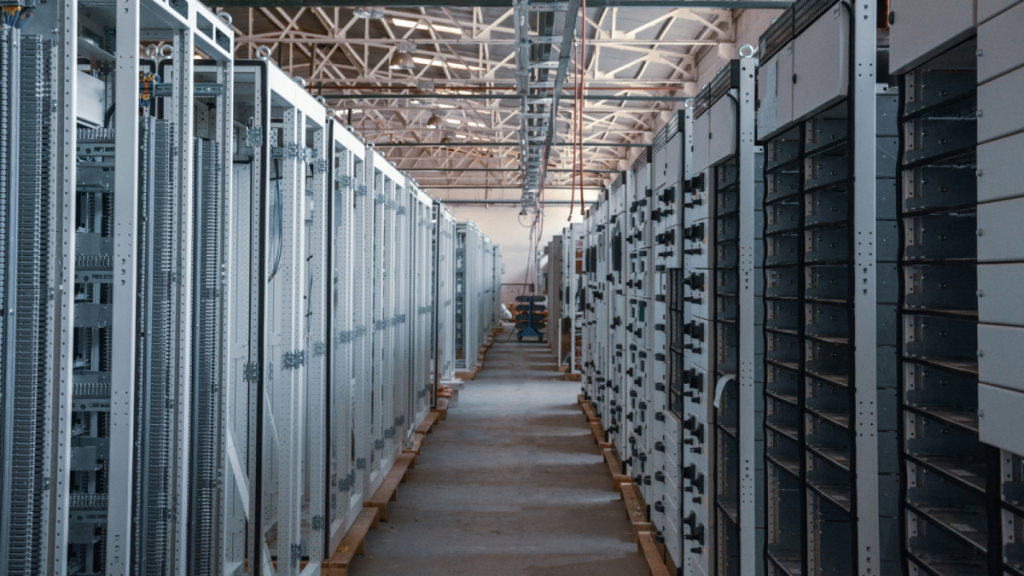
Jeremy Harrison announced Saskatchewan’s new data centre rules on Thursday from the site of a data centre those rules won’t touch.
Harrison, the minister of Crown Investments Corporation and the minister responsible for SaskPower, stood at Bell Canada’s 300-megawatt (MW) AI campus under construction near Regina and released a framework that requires any new data centre to supply its own electricity.
The written framework lists Canadian ownership as one of six guiding principles and says the province is focusing on Canadian-owned and headquartered businesses.
Speaking to reporters at the site, Harrison went further, saying only Canadian companies will be allowed to build data centres in the province.
Bell’s arrangement predates this new framework. Its project has access to 300 MW of SaskPower electricity and isn’t subject to the new self-supply rule.
“This particular project is unique because we actually were in a position to supply that power from SaskPower,” says Harrison. “But any further investment into data or AI infrastructure will be a requirement that companies bring their own power and produce that power at their own cost, behind the fences.”
Requiring self-supply is Saskatchewan’s answer to a question the provinces have been handling differently.
Digital Journal compared four of them recently. Alberta gives priority to data centres that bring their own generation and makes the others wait for grid access. Saskatchewan is telling new proponents not to count on the provincial grid at all.
A June brief from the University of Regina’s Johnson Shoyama Graduate School of Public Policy worked out how much of the province’s power Bell’s centre would use.
Once the campus is fully built, its planned 300-megawatt draw would equal roughly 9% to 12% of Saskatchewan’s seasonal demand, which runs between 2,600 and 3,500 MW, and is comparable to the BHP Jansen potash mine, one of the largest industrial builds in the province’s history.
Saskatchewan says the self-supply rule keeps new demand from taxing the grid or displacing power the province exports. More than 30 new data centre applications are now in the queue, all to be assessed under the new framework.
Jobs are part of that assessment. Harrison has pointed to Bell as the model for what the province wants from future projects. Bell has projected at least 800 jobs in trades and engineering, a minimum of 80 permanent positions, and as many as 750 more in the community.
The Johnson Shoyama authors found the 80 permanent roles consistent with what data centres employ elsewhere. The 750 community jobs, they said, haven’t been defined or substantiated.
Consultation is the other unresolved piece. NDP tech innovation and AI critic Brittney Senger said the framework does little to address how the Bell project was handled.
“Instead, what Saskatchewan people got was a six-point infographic and more lies from a minister who has demonstrated time and time again that he can’t be trusted,” says Senger.
Asked why the framework only appeared after Bell was approved and construction was underway, Harrison said the province had the guidelines in mind throughout the process and had worked with Bell from the start.
That hasn’t stopped criticism, though.
Nearly 200 people rallied at the Regina legislature in April over the lack of consultation on the project, and seven families living next to the site spent months pressing the rural municipality for answers on water, noise, and property values.
“At every stage of this process our concerns have been deferred, reduced, or ignored,” the group wrote to council.
Bell says it continues to engage with neighbouring landowners and run water testing as construction proceeds. The province confirmed earlier this month that no environmental impact assessment was done for the project.
An elder from George Gordon First Nation, which signed an agreement with Bell focused on Indigenous participation and workforce development, told CBC that most community members had no input into the decision.
Other provinces have drawn the line elsewhere.
Manitoba Premier Wab Kinew rejected a hyperscale project in June, citing “a big threat to the environment and not much benefit to the economy.”
The developers had said that project would supply its own power, the one thing Saskatchewan now requires, and Manitoba turned it down anyway.
British Columbia has gone the other way, running a competitive call for up to 400 MW of BC Hydro power. As of the time of this reporting, it has drawn 15 bids totalling close to 800 MW, roughly twice the power available.
Saskatchewan has answered the power question, and left itself harder ones.
What qualifies as Canadian ownership, how it measures jobs and sovereignty, and how local concerns figure into a decision will become clearer when the province rules on the applications now in the queue.
The framework was unveiled at a construction site, but the test comes later.
Final shots
- Saskatchewan’s power rule is clear enough for any new applicant to plan around. How the province measures jobs, sovereignty, and community benefit is much harder to see from the public framework.
- Bell got its SaskPower arrangement before the province’s new rules were formally introduced. The next approvals will show how Saskatchewan applies the framework when economic benefits and local concerns pull in different directions.
- Canada isn’t settling on one model for data centres. Saskatchewan is making developers bring their own power, B.C. is rationing access to its grid, and Manitoba has shown that self-supply alone doesn’t guarantee a project gets approval.
Saskatchewan tells new data centres to bring their own power
#Saskatchewan #tells #data #centres #bring #power