Bird’s eye view: Canada’s drone economy is taking off
When most people hear the word “drone”, they often think of military applications. Yet the most significant growth in Canada’s drone sector is occurring elsewhere. Across agriculture, mining, infrastructure inspection, construction, logistics and environmental monitoring, drones are becoming an increasingly important business tool.
The transition is being driven by three factors: improved sensor technologies, more flexible regulations, and growing demand for data-driven decision-making. For Canada the commercial case for drones has become particularly compelling.
Canada has spent the past decade building one of the world’s more structured regulatory frameworks for remotely piloted aircraft systems (RPAS). Recent regulatory developments have expanded opportunities for medium-sized drones and certain beyond visual line-of-sight (BVLOS) operations, opening the door to more advanced commercial services.
The significance of these reforms should not be underestimated. Many commercial applications become far more economically viable when operators can conduct longer-range missions without maintaining direct visual contact with the aircraft. This is particularly relevant in sectors such as agriculture, pipeline monitoring, forestry and mining, where sites may extend across hundreds of square kilometres.
Agriculture is becoming a major growth area
Perhaps nowhere is the commercial drone revolution more evident than on Canadian farms. Modern agricultural drones can create high-resolution field maps, detect crop stress, identify pest infestations, monitor livestock, assess soil conditions and optimise fertiliser application. Multispectral and thermal sensors allow farmers to identify problems before they become visible to the naked eye, enabling earlier intervention and reducing costs.
Industry groups such as the Canadian Agricultural Drone Association (CADA) see drones as a key component of Canada’s precision agriculture future. Their vision centres on reducing input use, improving yields and supporting more sustainable farming practices. The technology is particularly attractive in regions where labour shortages and rising operating costs are putting pressure on farm profitability.
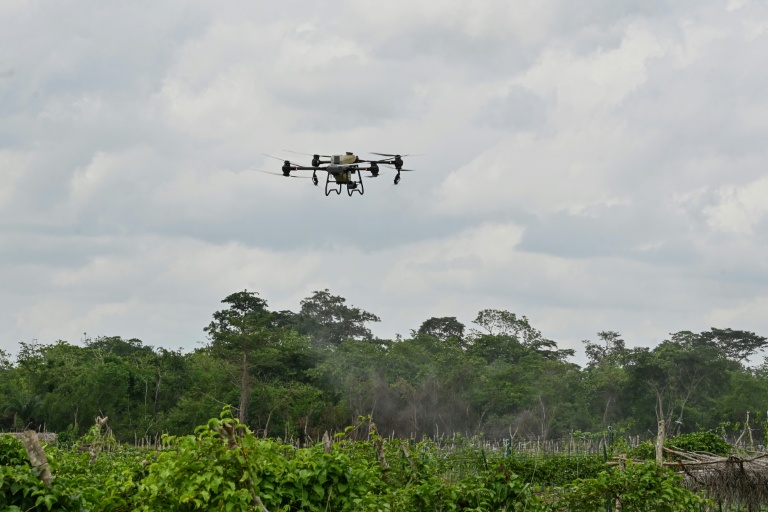
Canadian regulators are also considering wider use of drones for crop protection applications. If regulatory approvals expand as anticipated, drone-based spraying could become an important tool in precision agriculture, reducing chemical usage while targeting interventions more effectively.
Mining embraces aerial automation
Mining has emerged as another strong market for drone technologies. Canada’s mining industry frequently operates in remote, difficult-to-access locations where transportation costs and safety risks are significant operational concerns. Drones are increasingly being used for surveying, stockpile measurement, slope stability assessment, tailings monitoring and logistics support.
One particularly promising application is cargo delivery. Companies such as Drone Delivery Canada are promoting drone systems capable of transporting supplies between facilities, reducing reliance on conventional vehicles and improving access to isolated sites. In an industry where equipment failures can result in costly downtime, rapid delivery of replacement parts can have substantial economic value.
Safety is another important consideration. By allowing aerial inspections of hazardous environments, drones can reduce worker exposure to risks associated with unstable terrain, confined spaces and heavy machinery operations.
Inspecting critical infrastructure
Infrastructure inspection is becoming one of the most commercially valuable drone markets. Traditionally, inspecting bridges, transmission lines, storage tanks, flare stacks and industrial facilities often required scaffolding, rope access specialists or helicopter support. These approaches are expensive, time-consuming and potentially hazardous.
Drone-based inspections offer a different model. Equipped with high-resolution cameras, thermal imaging systems, LiDAR and non-destructive testing sensors, drones can collect large amounts of inspection data quickly while assets remain operational.
Transport Canada has itself explored the use of innovative drone platforms for ship inspections and infrastructure assessments. Trials involving GPS-denied navigation and LiDAR mapping have demonstrated how drones can perform inspections more rapidly while reducing risks to personnel. The resulting digital datasets also support predictive maintenance programmes, allowing organizations to detect deterioration before failures occur.
Bird’s eye view: Canada’s drone economy is taking off
#Birds #eye #view #Canadas #drone #economy