Four provinces set different rules for data centres
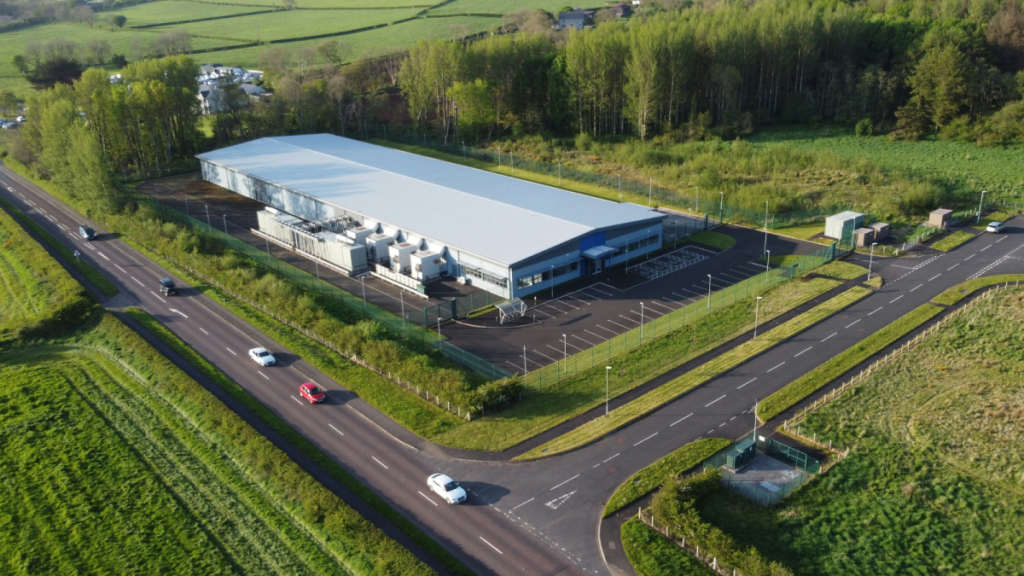
Before anyone pours concrete, a Canadian data centre proposal comes with a bevy of local questions.
Can it get enough power? What will that power cost? Who controls the data? And who gets to say yes?
Ontario added its own on Aug. 13 with a draft Data Centre Playbook.
Alberta, Quebec, and B.C. already have their own rules, and they all look pretty different.
Ontario is proposing to charge new data centres a premium for electricity. Any data centre pulling more than one megawatt (MW) would pay more than the province’s largest factories.
Ontario isn’t offering subsidies, just faster permitting and what it calls white glove service.
Energy and Mines Minister Stephen Lecce said the plan makes data centres pay for “every single cent” of the power they use.
Paying up is only part of it. Projects would be judged on the benefit they bring the economy, the investment they make locally, and their plan to keep Canadians’ data in Canada, according to the government.
Ontario calls the playbook an early part of its coming AI strategy, and pitches that strategy as $122 billion in economic growth by 2035 and 17,000 jobs a year.
That last pillar puts the big U.S. cloud providers on watch, and it’s a harder promise than it sounds.
Data sitting on Canadian soil isn’t automatically beyond American reach.
Under the U.S. CLOUD Act, a U.S.-based provider can be compelled to hand over data it controls wherever that data physically sits. Who controls the provider matters more than where the building is.
All of this is still a proposal. Ontarians have until Sept. 12 to tell the province what they think.
Alberta, Quebec, and B.C. drew three different lines on power
A single large AI data centre can draw as much power as a city, and the requests are arriving faster than any province wants to approve them blindly.
Alberta, Quebec, and B.C. are each sorting them in different ways.
Alberta gives priority to data centres that bring their own power. Those projects move to the front of the line, and the developer pays for whatever grid upgrades their power needs.
Normally a data centre deals with the grid operator, the energy regulator, and the local municipality separately. Alberta’s concierge program, as the province calls it, gives them one provincial point of contact instead.
The largest project to break ground is Meta’s $13 billion campus in Sturgeon County, its first in Canada.
Bigger builds have been announced, including a $70 billion project near Grande Prairie, but many are still in the planning stage.
Meta’s first phase is expected to connect up to 970 MW to Alberta’s grid. Its dedicated gas plant, a 932 MW facility being developed by Pembina Pipeline and its partners, doesn’t open until the second half of 2030.
Alberta Technology and Innovation Minister Nate Glubish said the province used no grants, tax credits or incentives to land Meta.
“We did not want to be first and rush in blindly,” he said at the Calgary announcement in July. “We wanted to be smartest.”

The Pembina Institute warns that Alberta’s reliance on natural gas could raise consumer electricity costs and make them more volatile. But the province points to a different line in the bill, saying Meta is covering its own transmission costs and could lower the transmission portion of other customers’ bills.
Quebec markets some of the lowest power rates in North America to data centres. Now it wants to charge the large ones more, roughly doubling the rate for any new data centre over 5 MW to about 13 cents a kilowatt-hour, so it can save that cheap power for the users it wants most.
Operators are already lining up to fight the increase at the province’s energy regulator this fall, since low-cost hydro has been one of Quebec’s main draws.
B.C. makes data centres compete for a limited slice of power, and it keeps its big resource industries out of the contest.
AI and data centre proposals are competing for a capped pool of about 400 MW over two years.
The province scores those bids partly on data sovereignty and First Nations participation. It says data centres deliver fewer jobs and less revenue than natural-resource projects, so traditional industries like mining, forestry, and LNG sit outside the competition altogether.
Energy Minister Adrian Dix said B.C. built it that way because the province “learned from other jurisdictions that have had an extremely negative economic effect.”
South of the border, some Americans are already paying more because of them.
Right now, everyone else gets stuck with the bill. The fight is over whether data centres ever do.
All four governments want data centres to cover their own power costs. They’re going about it differently, of course, with Alberta using its own-power priority, Quebec its pricing, B.C. its rationing, and Ontario a separate rate. Whether it holds at this scale is untested.
None of this is a sure thing, either.
Companies love to announce capacity they haven’t built yet. The industry even has a word for it, bragawatts, the megawatts that live in a press release and never get built.
In B.C., Conservative MLA David Williams, the party’s critic for BC Hydro and electricity self-sufficiency, calls the process rationing, one that in his words “avoids the root problem” of a province without enough power to go around.
Skipping consultation is what stops these projects
Even where a province says yes, a local council can still say no, and many residents are asking them to.
Oakville became the first Ontario municipality to pass a one-year moratorium on new data centres, two days before the province released its playbook. Hamilton said no to a similar freeze while Mississauga is preparing its own, and residents in Toronto are fighting two projects over water and noise.
Ontario now holds the final say on grid connections, but municipalities still control zoning and development approval. No project has yet tested what happens when the province says yes to the grid and a municipality says no to the site.
Communities fight these projects when they see the risks landing on them (the water, the power bills, the emissions) while the payoff goes somewhere else.
In Manitoba, Premier Wab Kinew said no to a gas-powered AI data centre near Île-des-Chênes, saying it threatened the environment with little economic upside, as a petition against it passed 13,500 signatures.
The energy sector spent 60 years learning this, and its veterans brought the lesson to the AI industry at Upper Bound in Edmonton earlier this year.
“The person who doesn’t get a cheque has the ability to disrupt the whole project,” said energy economist Peter Tertzakian. “It’s a big learning for AI.”

The developers who get ahead of it build the community into the deal.
In Alberta, Woodland Cree First Nation holds 51% of a proposed data centre on its traditional territory that is planned to reach 650 MW, with revenue funding housing, education, and elder care. A few hundred kilometres away, Sturgeon Lake Cree Nation is in court challenging a water licence tied to Wonder Valley, arguing Alberta failed to consult it. The Nation also says it was not consulted on the land sale.
Same province, same technology, and a very different answer on who got a say.
The frameworks for doing it already exist. Canada spent a decade building them for pipelines and mines, through Indigenous equity ownership and community benefit agreements, and the First Nations Major Projects Coalition that advises on them now represents 186 First Nations.
The data centre industry can use that playbook or repeat the fights.
Burlington Mayor Marianne Meed Ward, who chairs Ontario’s Big City Mayors, wants consistent federal and provincial rules so individual councils aren’t writing data centre policy from scratch.
Ontario’s comment window closes Sept. 12, and the province says the final playbook will support its AI Industrial Strategy this fall.
Four provinces have staked out their terms. What no one can say yet is which of these projects gets poured, powered, and switched on.
Final shots
- The province a company builds in sets its power cost, its approval odds, and who can legally reach its data.
- Data on Canadian soil can still fall under U.S. law. Provider ownership and control belong in the vendor contract.
- Grid approval can still leave a project facing a municipal vote or a court challenge.
Four provinces set different rules for data centres
#provinces #set #rules #data #centres