Hidden flaw in next-generation EV batteries uncovered: New research points to longer-lasting electric vehicles
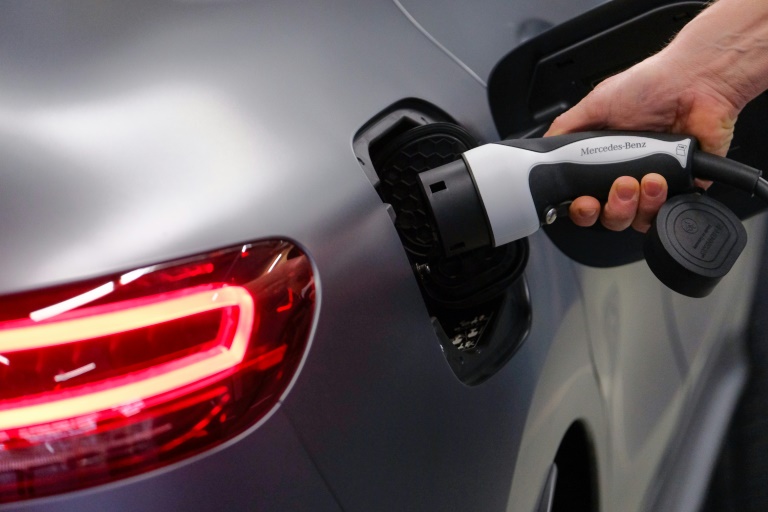
As electric vehicles (EVs) continue their march toward mainstream adoption, battery technology remains at the centre of efforts to improve vehicle range, reduce costs, and lessen dependence on critical minerals. Now, new research from South Korea has revealed a surprisingly simple factor that could significantly influence how long next-generation EV batteries last: exposure to air during manufacturing.
The study, conducted by researchers at Hanyang University and published in the journal Energy & Environmental Science, identifies a hidden degradation mechanism affecting high-nickel cathode batteries, a technology increasingly viewed as a promising alternative to traditional cobalt-containing battery chemistries. The findings also offer manufacturers a practical pathway to improve battery durability without expensive redesigns or additional protective coatings.
The race for better EV batteries
The global battery industry is under pressure to build batteries that are more powerful, more sustainable, and less reliant on expensive raw materials. One important development has been the emergence of high-nickel cathode batteries, which can store more energy than conventional lithium-ion batteries. These batteries help extend vehicle driving range while reducing the industry’s dependence on cobalt, a mineral associated with supply chain challenges, geopolitical risk, and environmental concerns. Many next-generation designs use a nickel-rich core surrounded by a manganese-rich protective shell. Manganese is intended to stabilize the cathode material and improve battery performance. However, the new research suggests that this protective layer can sometimes become part of the problem rather than the solution.
The Hanyang University team, led by Professor Jin Ho Bang and doctoral researcher JinHa Shim, discovered that precursor materials used to manufacture these battery cathodes can undergo subtle but damaging chemical changes when exposed to air before synthesis. Specifically, air exposure causes oxidation of manganese on the surface of precursor particles. This process creates defective regions containing so-called Jahn-Teller distorted manganese species, which are chemically unstable and highly reactive.
While such microscopic defects might appear insignificant, their impact on battery performance is substantial. The researchers found that these altered surfaces accelerate electrolyte decomposition, promote transition-metal dissolution, and trigger damaging reactions with the graphite anode. Over time, these effects degrade battery performance and shorten operational lifespan. Perhaps most notably, the defect nearly doubled the rate of battery capacity loss during long-term cycling tests in nickel-rich battery systems.
Battery longevity is becoming an increasingly important metric for EV adoption. Consumers often focus on vehicle range when purchasing an electric vehicle. However, battery durability may prove equally important as automakers seek to reassure buyers that their vehicles will maintain performance over many years. A battery that degrades rapidly can reduce driving range, lower resale value, and increase ownership costs. For commercial fleets, public transportation operators, and logistics companies, battery degradation directly affects economic viability.
The new findings therefore have implications extending far beyond laboratory chemistry. As governments worldwide continue investing heavily in transportation electrification, advances that improve battery lifespan can help reduce both environmental impacts and total lifecycle costs. Longer-lasting batteries mean fewer replacements, lower resource consumption, and reduced waste generation.
What makes the Hanyang study particularly significant is that the researchers identified a relatively simple solution. Rather than requiring manufacturers to redesign battery architectures or adopt costly coating technologies, the researchers found that increasing the amount of excess lithium used during synthesis suppressed formation of the defective manganese-rich surface phase. This adjustment restored more stable manganese-oxygen bonding and dramatically improved battery durability.
Modified cathodes retained more than 90 percent of their capacity during extended cycling tests, representing a major improvement in long-term performance compared with materials affected by air-induced defects. Professor Bang explained the significance of the finding:
“We found that a manganese-rich shell, which is normally introduced to protect high-nickel cathodes, can instead become a catalyst for degradation if the precursor chemistry is not carefully controlled. Even small variations in precursor storage history can substantially affect battery stability.”
Manufacturing may be as important as chemistry
The study highlights an often-overlooked reality within advanced manufacturing: production conditions can be just as important as the materials themselves. Battery innovation is often portrayed as a quest for entirely new chemistries. Yet this research demonstrates that handling, storage, and production controls can significantly influence performance outcomes even when using established materials.
The findings also echo previous research showing how moisture exposure can affect nickel-rich cathode performance. Together, these studies suggest that precursor handling may represent a critical but underappreciated variable in large-scale battery production. For manufacturers, that insight could be valuable. Rather than waiting for breakthrough battery technologies that may take years to commercialize, companies could potentially gain immediate improvements through better process control and optimization of synthesis conditions.
The research is particularly relevant as Canada continues developing its EV battery ecosystem. Federal and provincial governments have invested billions of dollars to attract battery manufacturing, critical mineral processing, and EV supply chain projects. Canadian deposits of nickel, lithium, manganese, graphite, and other battery materials are increasingly viewed as strategic assets in the transition to electrified transportation.
Improving high-nickel battery performance could enhance the competitiveness of North American battery manufacturing while reducing reliance on more expensive raw materials such as cobalt. As battery factories come online across Canada and the United States, findings of this nature may help manufacturers improve product performance without substantial capital investment.
The Hanyang University study demonstrates how small chemical changes can have major practical consequences. By identifying air exposure as a previously underappreciated source of degradation and providing a workable mitigation strategy, the researchers have offered battery manufacturers a potentially valuable tool for improving EV battery longevity.
Hidden flaw in next-generation EV batteries uncovered: New research points to longer-lasting electric vehicles
#Hidden #flaw #nextgeneration #batteries #uncovered #research #points #longerlasting #electric #vehicles