Canada’s minerals are becoming the foundation of its technology economy
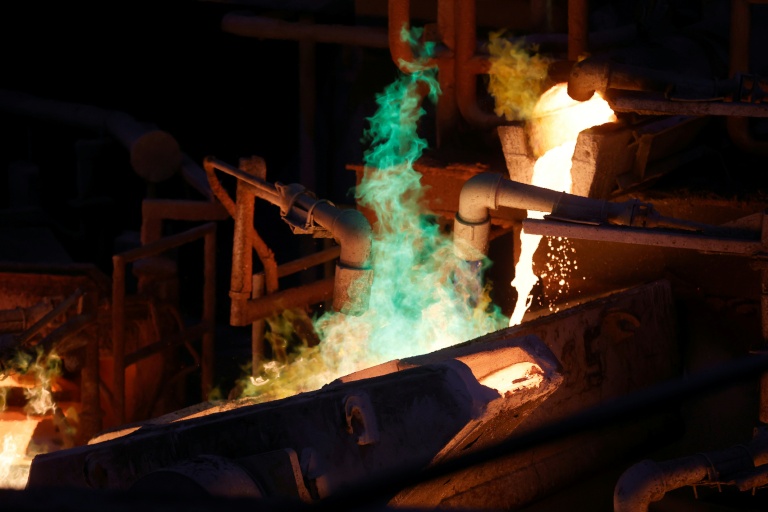
Canada’s next technology story may not begin in a software lab, but in a mine, a refinery, or a remote exploration camp. As the world accelerates towards electrification, digital infrastructure, artificial intelligence, battery storage and advanced manufacturing, Canada’s long-established mining sector is being recast as a technology enabler rather than simply a supplier of raw materials. The country’s critical minerals strategy positions minerals as the “building blocks” of the green and digital economy, spanning exploration, extraction, processing, product manufacturing and recycling.
This shift is important because modern technologies are mineral-intensive. Lithium, nickel, cobalt and graphite are central to many battery chemistries. Copper underpins power transmission, electric motors and data infrastructure. Rare earth elements are used in magnets for wind turbines, electric vehicles and defence technologies. Silicon metal, gallium and germanium support semiconductors, solar cells and optical technologies. Canada’s official critical minerals list includes 34 minerals, reflecting the breadth of materials now considered important for economic security, clean technology and strategic supply chains.
Historically, Canada’s strength has been upstream: finding, mining and exporting minerals. The newer industrial objective is to capture more of the value chain inside Canada. The federal Critical Minerals Strategy is framed “from exploration to recycling,” and its progress update emphasises domestic production, processing capacity, economic resilience, Indigenous partnerships and international collaboration. As of March 2025, Canada reported 56 active mines producing critical minerals, 31 critical mineral processing facilities and 171 advanced critical mineral projects, including 28 processing projects.
The technology connection is most visible in electric vehicles and batteries. Canada has attracted global attention because it combines mineral resources, clean electricity, automotive manufacturing capability and proximity to the U.S. market. BloombergNEF ranked Canada first in its 2024 global lithium-ion battery supply chain ranking, citing raw material resources, manufacturing progress, ESG credentials, integration with the U.S. automotive sector and policy support. In 2025, China regained the top position, but BloombergNEF still described Canada as a raw materials powerhouse with a stable investment environment.
End-to-end EV capability
The policy ambition is to move beyond extraction into battery-grade materials, cathodes, anodes, cells, packs, vehicle components and recycling. Invest in Canada describes the country as having end-to-end EV battery capabilities, from mining to EV and vehicle parts production, and notes that Canada offers the critical minerals required to produce EV batteries at scale. It also highlights major investments involving companies such as Volkswagen-backed PowerCo, NextStar Energy, Stellantis, LG Energy Solution and Umicore.
One practical example is cobalt processing. In May 2026, the Government of Canada announced a $20 million investment in Electra Battery Materials to support a $99.4 million project in Temiskaming Shores, Ontario, to produce battery-grade cobalt sulphate. The government said the site would be North America’s first cobalt sulphate refinery and, at full capacity, could supply cobalt sulphate equivalent to the needs of up to one million electric vehicles annually.
The same convergence can be seen in automotive manufacturing. In January 2025, Canada announced up to $169.4 million for Linamar’s Innovation Driving Green Technology Project, focused on EV parts manufacturing and semiconductor packaging methods for EV batteries. The project is expected to involve more than $800 million in private investment, create around 2,000 full-time jobs and 300 co-op positions, and support next-generation EV and battery technology parts.
This illustrates a broader point: minerals are no longer separate from advanced manufacturing. They are embedded in product design, supply chain resilience and industrial strategy. The same nickel, lithium, cobalt, graphite and copper that begin as geological resources can become battery precursors, battery cells, electric powertrains, semiconductors, grid storage systems and renewable energy infrastructure. The fusion of mining and technology is therefore not metaphorical. It is physical, chemical and commercial.
There is also a technological transformation occurring inside mining itself. Canadian mining is increasingly adopting automation, drones, remote sensing, advanced analytics, artificial intelligence and robotics to improve productivity, safety and environmental performance. Mines Canada identifies science, technology and innovation as a strategic direction, with areas of action including digital disruptive technologies, next-generation geoscience, water treatment, tailings management, mining value from waste and mining in deep, remote and extreme environments.
In July 2026, Canada announced federal support of $6.7 million for two Canadian-led mining innovation projects valued at $19.8 million. One project, led by Novamera, is advancing “Surgical Mining” technology using subsurface imaging, artificial intelligence, robotics and conventional drilling to target critical mineral deposits more precisely. The other, led by Koonkie Canada, is developing an AI-powered platform integrating environmental DNA, soil health data, remote sensing and Indigenous ecological knowledge to support ecological restoration and biodiversity monitoring at mine sites.
Mining, Canada, and the digital economy
These examples matter because they show mining becoming part of the digital economy in two directions. First, minerals enable technology products. Second, digital tools make mineral extraction smarter, safer and more selective. Novamera’s approach, for example, is presented as a way to access narrow or difficult deposits while reducing waste and environmental disturbance. DIGITAL says its supported projects are intended to move technologies from development to real-world adoption, helping Canadian firms commercialise mining technologies domestically and globally
Canada is also attempting to build an innovation ecosystem around mining technology. The Mining Innovation Commercialization Accelerator, or MICA, was created through a $40 million federal Strategic Innovation Fund investment and is described as a $112.4 million pan-Canadian initiative to accelerate commercialisation of technologies that make mining more productive and sustainable. Current MICA challenges include tailings dewatering, Monte Carlo simulation planning and machine-based drill rod and inner tube handling, all of which point to a mining sector
The future potential is significant, but not automatic. Canada’s advantage is that it has many of the ingredients required for a complete technology-minerals ecosystem: geological resources, mining expertise, low-carbon electricity, a skilled workforce, automotive manufacturing, research institutions and access to North American markets. Invest in Canada points to 3.4 million STEM graduates, world-class labs and universities, and a strong research ecosystem supporting battery technologies.
However, Canada faces constraints. Battery supply chain success depends on permitting speed, infrastructure, processing capacity, cost competitiveness and the ability to scale manufacturing. BloombergNEF’s 2025 ranking noted that Canada’s slower progress on scaling battery manufacturing weakened its advantage relative to China. Canada’s own progress update emphasises the need to promote domestic production and processing, safeguard value chains and partner with Indigenous groups and allies, suggesting that the challenge is not only geological but also logistical, social and geopolitical.
Infrastructure is especially important. Critical mineral deposits are often located in remote areas where roads, power transmission and clean energy systems are limited. Canada’s whole-of-government approach includes a $1.5 billion Critical Minerals Infrastructure Fund to support clean energy and transportation infrastructure projects, while the strategy also refers to regulatory pathfinding, Indigenous participation and coordination across more than 15 federal departments and agencies.
Embracing telecommunications
Another future opportunity is recycling. The most resilient technology economies will not rely solely on fresh extraction. They will recover valuable materials from spent batteries, electronics, mine waste and industrial residues. The National Research Council says it is supporting research across processing, manufacturing and recycling, while Canada’s strategy is explicitly framed as a value chain running from exploration to recycling. This circular approach could reduce waste, improve resource security and create new technology markets in materials recovery
For digital technologies, the mineral link extends beyond electric vehicles. Data centres, telecommunications networks, smartphones, defence systems, renewable power generation and AI infrastructure all rely on secure supplies of metals and high-purity materials. Canada’s critical minerals strategy identifies high-potential value chains including clean technologies, advanced manufacturing and information and communications technology.
The business implication is that mining companies may increasingly resemble technology companies, and technology companies may become more directly interested in mineral sourcing. Automakers, battery firms, semiconductor companies and clean energy developers are already looking upstream to secure supply. At the same time, mining firms are adopting software, robotics, AI, geospatial imaging and environmental monitoring platforms.
For Canada, the opportunity is to avoid the historic trap of exporting raw materials and importing finished technologies at a premium. If the country can integrate responsible mining, domestic processing, advanced manufacturing and recycling, it can capture more economic value while providing allied nations with secure, lower-carbon supply chains. This is why critical minerals are now discussed not only as commodities, but as strategic assets.
The future products manufactured from Canadian minerals may include EV batteries, grid-scale storage systems, fuel cells, wind turbine components, solar technologies, semiconductor packages, aerospace materials, defence systems and medical technologies. The Electra cobalt refinery announcement, for example, explicitly links battery materials to EVs, defence manufacturing, semiconductors and emerging medical technologies.
Canada’s minerals are becoming the foundation of its technology economy
#Canadas #minerals #foundation #technology #economy