Simulating the noisy quantum future: New algorithm may unlock fault‑tolerant quantum computing
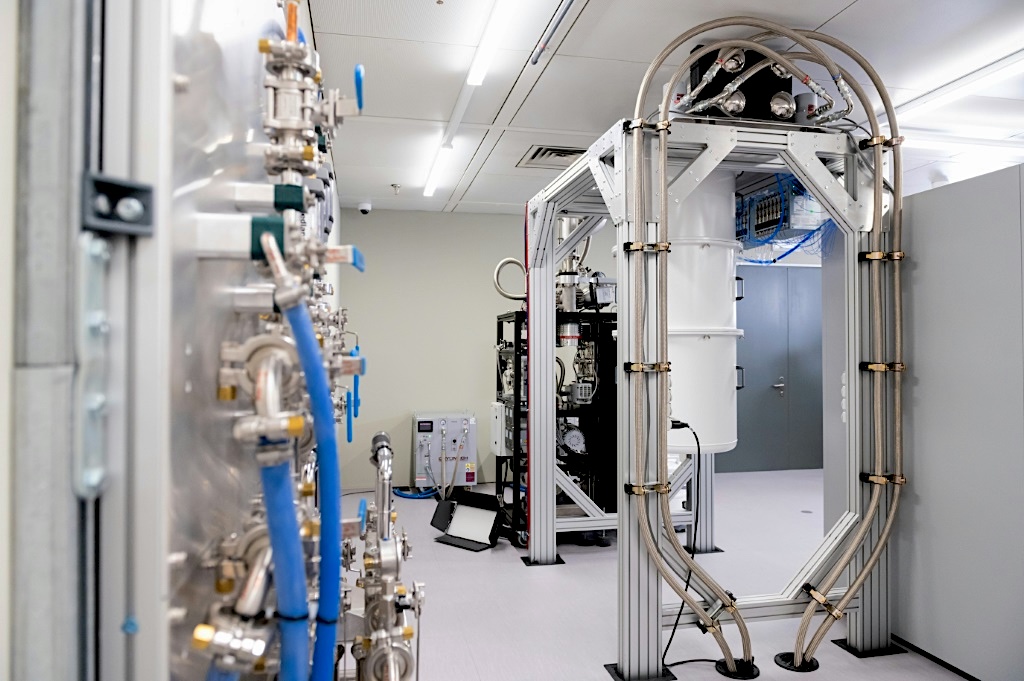
Quantum computing is often described as the next great technological frontier—offering the promise of solving problems beyond the reach of classical machines. Yet despite rapid advances in hardware, a stubborn obstacle remains: noise. Real quantum systems are fragile, prone to errors caused by interactions with their environment, imperfect controls and interference between qubits. Managing this noise is one of the defining scientific challenges of the field.
Now, researchers from Quantum Elements and the University of Southern California (USC) have reported a new approach that could significantly aid this effort. Writing in Physical Review Letters, the team describes a refined Quantum Monte Carlo (QMC) algorithm capable of simulating noisy quantum circuits more efficiently on classical computers. The development, while technical in nature, has potentially far-reaching implications for how quantum systems are designed, tested and ultimately scaled.
The noise problem in quantum computing
Unlike classical bits, which can be reliably set to 0 or 1, qubits exist in delicate superpositions that are easily disrupted. Sources of noise include thermal interactions with the environment and crosstalk between neighbouring qubits.
These effects introduce errors that accumulate rapidly as systems scale. Without effective correction, even the most advanced quantum processors cannot maintain reliable computation for long periods.
To tackle this, researchers are pursuing quantum error correction, using multiple physical qubits to encode a single “logical qubit” that is more robust. However, designing such systems requires detailed understanding of how noise behaves in real devices, a task that is considerably complex.
Why simulation matters
Before building quantum hardware at scale, scientists rely heavily on classical simulations to model system behaviour. One widely used method is density matrix simulation, which tracks both the quantum state and its interaction with the environment.
The problem is that this approach scales poorly. The computational cost grows exponentially with the number of qubits, quickly becoming impractical even for moderately sized systems.
This is where the new work comes in. The Quantum Elements–USC team reports a QMC algorithm that compresses the simulation task, enabling researchers to model noisy quantum circuits using significantly fewer computational resources while still preserving key system dynamics.
At its core, the approach addresses a long-standing difficulty in quantum simulations known as the “sign problem”, which is a mathematical issue that causes simulations to become unstable or inefficient. By suppressing this problem in real-time calculations, the new algorithm achieves a balance between accuracy and computational feasibility.
Digital twins for quantum systems
One of the most intriguing aspects of this research is its application to “digital twins”—a concept borrowed from engineering and increasingly adopted in advanced technology sectors.
A digital twin is a virtual replica of a physical system, calibrated using real-world data. In this context, it refers to a classical simulation that mirrors the behaviour of a quantum device, including its noise characteristics.
The new QMC algorithm provides a more robust foundation for building these models.
In a recent collaboration involving AWS, USC, Harvard and Quantum Elements, the method was used to simulate a 97-qubit surface code, a leading architecture for quantum error correction. Notably, the simulation was performed on classical high-performance computing infrastructure in roughly an hour, whereas a traditional brute-force approach would have required tracking an astronomically larger dataset.
A trend across the quantum field
This work aligns with a broader shift in quantum research toward hybrid approaches that combine classical and quantum computation. Similar developments include tensor network methods, that are used to approximate large quantum systems by exploiting structure in entanglement.
Another area is with variational quantum algorithms, where classical optimisers guide quantum circuits. A third area is in the form of noise-aware simulators, developed by companies such as IBM and Google to model device imperfections.
Each of these approaches reflects the same underlying reality: classical computation is still essential for advancing quantum technologies.
Importantly, major technology firms are investing heavily in such hybrid strategies. IBM’s Qiskit platform, Google’s quantum simulation tools and Microsoft’s Azure Quantum ecosystem all provides frameworks for modelling and testing quantum behaviour before hardware implementation.
The ultimate goal of quantum computing is fault tolerance, which refers to the ability to perform reliable computation despite noise and errors. Achieving this requires accurate models of real-world noise. The new QMC method contributes to this by enabling more detailed and scalable simulations of noisy systems.
As Izhar Medalsy, CEO of Quantum Elements, notes, fault tolerance will depend on a “tight feedback loop” between hardware, control systems and simulation. In other words, progress in quantum computing is no longer just about building better qubits—it is about understanding them in unprecedented detail.
While the immediate application of this research is in quantum hardware design, the broader implications extend into several areas of technology. These include:
High-performance computing (HPC)
The ability to simulate complex quantum systems efficiently highlights the continuing importance of classical HPC infrastructure. Cloud providers such as AWS are already positioning themselves as key players in this hybrid ecosystem.
Algorithm development
Advances in Monte Carlo methods have relevance beyond quantum computing, including statistical physics and financial modelling. Improving how these algorithms handle complex probability distributions has cross-disciplinary significance.
Engineering digital twins
The concept of digital twins is rapidly expanding in sectors such as aerospace, manufacturing and healthcare. Applying this idea to quantum systems reflects a larger trend toward simulation-driven engineering, where virtual models guide real-world design.
Despite the promise of this new approach, significant challenges remain on the path to practical quantum computing, including scaling limitations. Even improved simulation methods will eventually encounter limits as systems grow larger.
What this research ultimately represents is an incremental step toward understanding quantum systems as they exist in reality, not just in idealised theory. By improving how noisy circuits are simulated, the new QMC algorithm helps bridge the gap between experimental hardware and the theoretical models needed to make sense of it. In doing so, it supports the development of digital twins that can guide the design of future fault-tolerant systems.
In a field often characterised by bold claims and long timelines, such progress may seem understated. Yet it is precisely these advances in modelling, simulation and algorithm design that are likely to determine how quickly quantum computing moves from promise to practical utility.
Simulating the noisy quantum future: New algorithm may unlock fault‑tolerant quantum computing
#Simulating #noisy #quantum #future #algorithm #unlock #faulttolerant #quantum #computing