A spider’s eye view could transform machine vision
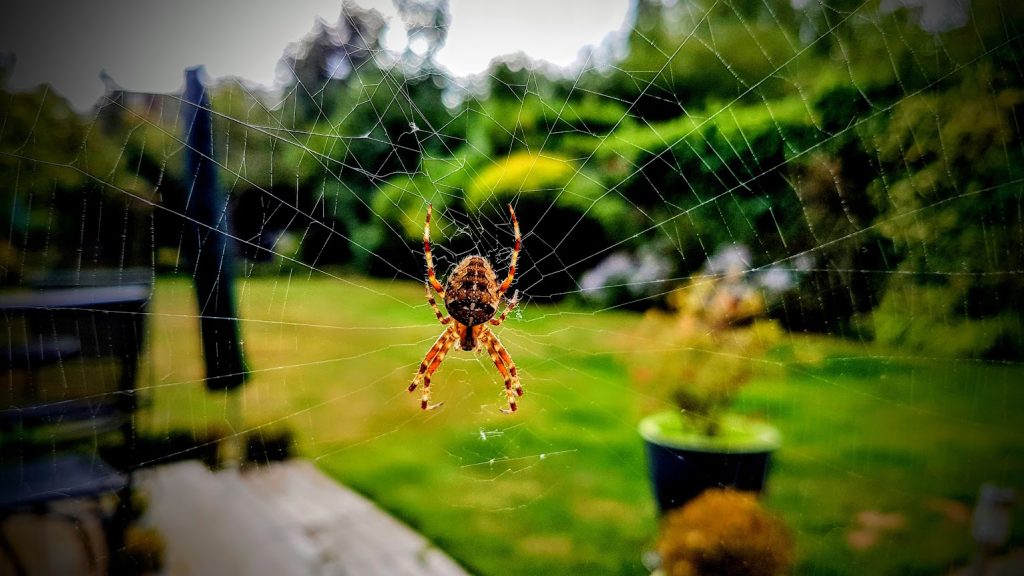
Jumping spiders are not the obvious place to look for inspiration in advanced imaging technology. With brains no larger than a poppy seed, these small predators nonetheless perform remarkably sophisticated visual calculations, judging distances with enough precision to execute pinpoint leaps between surfaces. Now, engineers have adapted this biological trick to create a new type of ultra‑efficient 3D camera and one that could reshape how machines perceive depth in energy‑constrained environments.
The device, dubbed SpiderCam, has been developed by researchers at Northwestern University and offers a striking demonstration of how biological systems can outperform engineered ones when it comes to efficiency. Rather than relying on complex sensor arrays or active illumination, the camera mimics the visual strategy of jumping spiders, producing real‑time three‑dimensional maps while consuming less than a watt of power—comparable to a small nightlight.
At the heart of the innovation lies a deceptively simple principle: blur. Most modern 3D imaging systems estimate depth either by comparing two images captured from slightly different viewpoints—stereoscopic vision—or by projecting light and measuring how it reflects back. While effective, both approaches demand significant computational resources and energy, and often require specialised hardware.
Jumping spiders, however, take a different approach. Their eyes contain multiple retinal layers, each tuned to a slightly different focal distance. As a result, any given object appears sharp in one layer but blurred in another. By comparing these differences in focus, the spider’s nervous system can infer distance without needing multiple viewpoints or active sensing. It is a form of depth perception that trades computational intensity for optical ingenuity.
Two images of the same scene simultaneously
The Northwestern team has now recreated this principle in silicon. SpiderCam captures two images of the same scene simultaneously, each with a slightly different focus setting. A dedicated algorithm then examines how edges and textures shift in sharpness between the two images, translating those variations into depth information. The result is a continuously updated 3D map of the environment.
What makes the system particularly notable is not simply its function, but its efficiency. The entire processing pipeline runs on a field-programmable gate array (FPGA), a type of chip that can be configured for specific tasks and operates with far lower energy requirements than general-purpose processors. The prototype achieves real-time performance, at about 32 frames per second, while consuming roughly 624 milliwatts of power.
That figure places it in a markedly different category from conventional depth-sensing technologies. Systems such as LiDAR or structured-light sensors, often used in autonomous vehicles and robotics, typically require far greater power and more complex integration. In contrast, SpiderCam demonstrates that meaningful 3D perception can be achieved with a fraction of the energy budget.
Emma Alexander, who led the research, frames the work as an exercise in understanding how nature solves constrained problems. Small animals do not have the luxury of energy-intensive computation, yet they still perform tasks that would challenge many engineered systems.
Biology to hardware
Translating these biological solutions into hardware could open up new design pathways for engineers, particularly as devices become smaller, more mobile and more power-limited.
The implications are wide-ranging. One immediate application lies in wearable technology, where battery life is a persistent constraint. Augmented reality headsets, for example, require an accurate understanding of the surrounding environment to overlay digital information effectively. Yet current depth sensors can be bulky and energy-hungry. A compact, low-power alternative could accelerate the development of lightweight, always-on AR systems.
Similarly, small robots and drones stand to benefit. These platforms often operate in environments where power is limited and recharging is not readily available. A camera capable of providing real-time depth information without significantly draining the battery could extend operational lifetimes and enable more autonomous behaviour. In field settings—such as environmental monitoring or disaster response—this becomes particularly valuable.
There is also a broader engineering lesson embedded in the design. The traditional trajectory of technological development has often favoured increasing computational power to solve complex problems. SpiderCam suggests an alternative route: redesign the sensor itself to reduce the need for computation. By embedding intelligence into the optics and hardware, rather than relying solely on software, systems can become both simpler and more efficient.
The researchers are already looking ahead to further refinements. Improvements to the optical system could increase the camera’s field of view, while custom-designed chips may cut power consumption even further. There is also scope to integrate the technology into compact devices, moving it from laboratory prototype to real-world application.
In a field where progress is often measured in incremental improvements to resolution or processing speed, SpiderCam represents something different—a shift in perspective. By borrowing from the visual strategies of a tiny arachnid, engineers have demonstrated that sophisticated perception need not come at a high energy cost.
As artificial intelligence and autonomous systems continue to proliferate, such efficiency gains are likely to become increasingly important. Whether in wearable devices, miniature robots or distributed sensor networks, the ability to “see” the world in three dimensions without expending significant energy could prove of interest to science and business.
A spider’s eye view could transform machine vision
#spiders #eye #view #transform #machine #vision