Airbus puts a price on Canadian jet fuel security
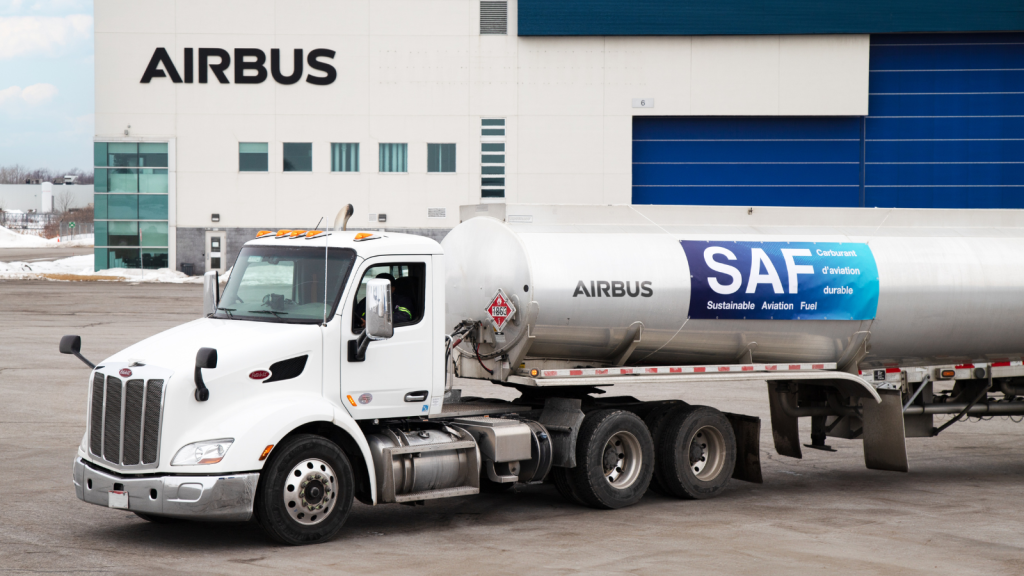
Sustainable aviation fuel costs two to 10 times more than conventional jet fuel. Yesterday at the Farnborough International Airshow, Airbus put a number on what it would take for Canada to build an industry anyway.
Airbus commissioned consulting firm ICF to model what it would take to build a domestic sustainable aviation fuel (SAF) industry in Canada. The answer is about $1.15 per litre in additional policy support on top of what already exists.
That could scale domestic production to 40% of the country’s jet fuel supply by 2040. ICF projects $32 billion in cumulative GDP, 140,000 job-years (about 9,300 net jobs annually), and $13.9 billion in tax revenue between 2026 and 2040.
Saskatchewan, Alberta, and Quebec see the largest projected gains, thanks to a mix of canola production, refining capacity, and forestry resources that varies by province.
Canada already imports roughly 35% of its conventional aviation fuel. Without more domestic production, the ICF study projects Canada could rely on imports for more than 65% of the biofuel needed to meet projected demand by 2030.
For a country that spent the past two years learning hard lessons about supply chain vulnerability, that’s a pretty pointed number.
“Securing energy sovereignty requires decisive action,” says Guillaume Chevasson, CEO of Airbus Canada. “Fostering a domestic SAF industry is not just an environmental imperative, it could become a powerful economic engine for Canada’s future.”
A separate PwC report the company commissioned last week found it spent $2.2 billion with 970 Canadian suppliers in 2025, employs 5,300 people in Canada, and generated $8.4 billion in GDP over 2023 to 2025.
Its employees earn 60% above the Canadian average salary. Canada is Airbus’s largest industrial footprint outside Europe, according to the report, and the company is making its industrial policy case with the supply chain to back it up.
Both studies were commissioned by Airbus and are not independent research.
B.C. is the only jurisdiction in North America with a SAF blending mandate. Under the province’s Low Carbon Fuels Act, fuel suppliers must blend 1% SAF by 2028, rising to 3% by 2030. The EU’s ReFuelEU Aviation regulation started at 2% in 2025 and scales to 70% by 2050.
Canada has no federal mandate.
The same week at Farnborough, Air Canada and Airbus announced plans for a co-investment platform of up to $13.7 million aimed at pushing a Canadian SAF project toward a final investment decision.
The platform can move one project closer to construction, but it doesn’t close the industry-wide cost difference identified by ICF.
Airbus also signed a five-year agreement to buy SAF environmental attributes through Air Canada’s Leave Less Travel Program, tying the deal to its corporate travel emissions.
“The countries that move early to establish SAF industries will be best positioned to capture the economic, strategic, and environmental opportunities that follow,” says Dan Galpin, global aviation lead at ICF.
For companies buying SAF credits or setting business travel targets, the unanswered question is whether voluntary contracts can support Canadian production before government policy closes the cost difference.
Final shots
- The $1.15-per-litre figure gives governments and industry a number to argue over. The next question is who pays it? Producers, airlines, taxpayers, or passengers.
- Airbus and Air Canada can help a project reach an investment decision. Building an industry requires policy that survives beyond one project and one federal budget.
- Companies buying SAF attributes should ask whether their money is supporting new Canadian production or purchasing credits tied to fuel made elsewhere.
Airbus puts a price on Canadian jet fuel security
#Airbus #puts #price #Canadian #jet #fuel #security