Creative director Sishuang Wu on protecting human expression in the age of AI illustration
Opinions expressed by Digital Journal contributors are their own.
The award-winning illustrator and motion designer makes the case that the future of her field depends on what only people can bring to an image.
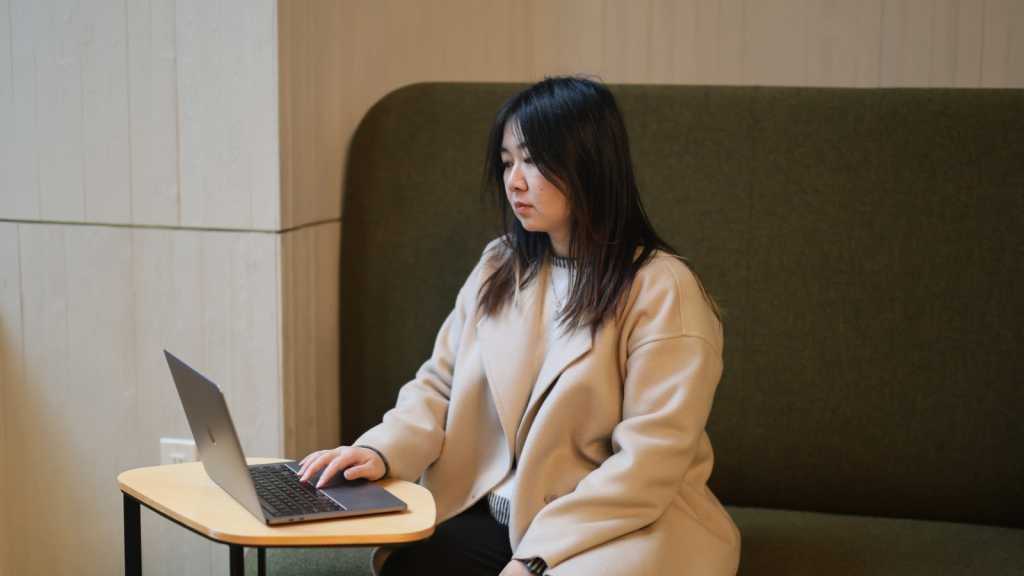
Sishuang Wu has built her career between two disciplines. She works as a creative director at an advertising company, where animation and motion graphics fill most of her days. Away from client deadlines, she keeps returning to the practice that started everything for her: illustration.
Drawing came first. Wu used illustration to express what she felt long before she learned to animate, and she still treats it as the root of her other work. “For me, illustration is where every creative journey begins,” she says. “It is the source of inspiration and the foundation of my motion design work.”
That conviction has gained new weight as artificial intelligence (AI) changes how images are made. Where some illustrators see a threat, Wu sees a question worth answering with care. She does not believe the real contest is about whether a person or a machine draws better. Her reasoning is straightforward: A tool, however capable, has nothing it needs to say. The meaning in a piece still has to come from a person, and that is the part Wu thinks artists should defend. “AI itself has no desire to express. In the end, it is a highly efficient tool,” she says. “The spiritual core a person wants to express, combined with AI’s execution, can create excellent work.”
She sees a few clear paths forward for illustrators who think this way. One is building original characters and intellectual property that carry a recognizable point of view. Another is working across animation, games, and interactive media, where an illustrator’s sensibility can travel between formats. A third is handing execution to AI while the artist sharpens the judgment, taste, and direction behind it. Motion graphics, the field Wu already works in, strikes her as a natural space for illustrators to expand into.
“If this is an irresistible trend, then we should understand it as early as possible, apply it, and grow together with it,” she says.
How Sishuang Wu works
Wu’s illustrations tend to start with a feeling rather than a plan. Joy, sadness, anxiety, or a reaction to something happening around her will settle in her mind until she has to put it on paper. She begins with pencil sketches, gathering visual references as she goes, then moves the work onto a tablet, where loose ideas tighten into something deliberate.
“The sketching stage is filled with freedom, imagination, and discovery,” she says. “As the work moves onto my tablet, the ideas become more refined and intentional.”
Inside her advertising work, almost everything she creates is for clients. Illustration is the part she keeps for herself. “It gives me space to pause, reconnect with myself, and create purely for personal expression,” she says. “There is something deeply satisfying about making art without worrying about whether others will like it.”
Earning recognition
On April 17, 2025, Wu was named a Chosen Winner of American Illustration 44, one of the longest-running juried programs in the field. Her piece was selected by the program’s jury for The ARCHIVE, AI-AP’s permanent online collection, an honor reserved for a select group of professional illustrators each year. She drew the winning work by hand. The major illustration awards do not accept AI-generated entries, at least for now, so the recognition also makes a point Wu cares about: the piece is entirely her own, not machine-generated. For an artist who treats illustration as personal rather than commercial, the recognition confirmed that work made for herself could stand alongside the best in her profession.
Works that show her range
One of Wu’s recent projects began with a meal. A friend visited during a stretch of hot weather, and Wu cooked her a favorite cold dish. Her friend liked it enough to ask for the recipe. Instead of writing it out, Wu turned it into an animated recipe for Pig Ear in Chili Sauce, a traditional Chinese cold dish meant for summer. The illustrations she made functioned as style frames, the visual blueprint for the animation that followed. The project shows how she moves an idea from a small personal moment into a finished piece of motion design.
A second project, Extinction: Save the Planet, grew out of the pandemic and now appears on the art platform Gallerium. During that period, the fear of death felt to Wu like an approaching apocalypse. She thought about how ancient viruses can surface from oceans, melting glaciers, and the damage people do to the natural world. Life has returned to normal, she notes, but the work asks whether the next disaster is only a matter of time, and whether humans will always sit at the top of the food chain. It is a heavier register than the recipe project, and together the two pieces show an artist who can move between warmth and warning without losing her own voice.
What comes next
Wu intends to keep illustrating for years, whatever happens to the tools, and she has a clear sense of the path she wants to take. It starts where her work always has, with a feeling or an emotion she needs to get onto the page. From there, she brings illustration together with motion graphics, letting the two disciplines feed each other. She also sees a place for AI in that process, using it to work more efficiently and to strengthen the visual result rather than to replace the idea behind it. If AI becomes a lasting part of how illustrators work, Wu is ready for it, so long as the human intention stays at the center.
Creative director Sishuang Wu on protecting human expression in the age of AI illustration
#Creative #director #Sishuang #protecting #human #expression #age #illustration