Canada’s hidden treasure: Why rare earth minerals could become the country’s next economic powerhouse
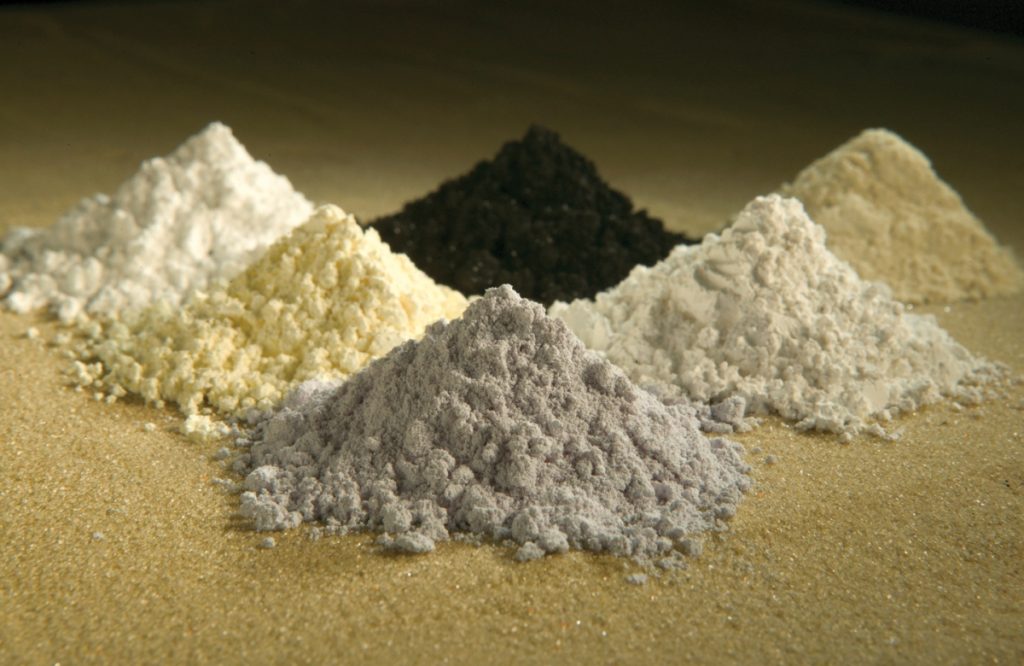
Canada is often associated with vast reserves of oil, gas, potash, uranium and precious metals. Yet one of its most strategically important resources lies largely hidden beneath remote regions of Quebec, Labrador, British Columbia and the Northwest Territories. These are the rare earth elements (REEs), a group of 17 metals that have become indispensable to electric vehicles, renewable energy systems, military technologies, artificial intelligence infrastructure and advanced electronics.
Despite their name, rare earths are not necessarily rare in geological terms. What is rare is finding economically viable deposits containing sufficient quantities of the most valuable elements, especially the so-called heavy rare earths such as dysprosium and terbium. These metals are increasingly viewed as strategic assets as Western countries seek alternatives to China’s dominant position in the global supply chain.
Rare earth elements are considered by some as the “vitamins” of modern industry. Because of their unique magnetic, heat-resistant, and luminescent properties, they enable technologies to become smaller, lighter, and more energy-efficient.
That geopolitical backdrop is transforming Canada’s mining sector and creating what could become one of the country’s most important economic opportunities of the coming decade.
The rarest of the rare
Among rare earths, several elements stand out for their scarcity and industrial importance. Dysprosium and terbium are particularly critical because they are used to produce permanent magnets capable of operating at high temperatures. These magnets sit at the heart of electric vehicle motors, wind turbines, defence systems, robotics and advanced manufacturing technologies.
While neodymium and praseodymium often attract headlines because they are key ingredients in EV magnets, many industry experts regard dysprosium and terbium as the true bottleneck minerals. Without them, manufacturers struggle to produce high-performance magnets capable of functioning under demanding operating conditions.
Rare earth minerals are often presented as a “green” solution because they are essential for electric vehicles, wind turbines and renewable energy technologies. However, extracting and processing them can have significant environmental consequences.
Certainly the environmental impact depends less on the rare earth element itself and more on the geology of the deposit, the processing technology used, and the quality of environmental controls. Canada generally has the advantage of operating under stricter regulatory requirements than many competing jurisdictions.
Strange Lake: A globally important deposit
The most important rare earth project currently under development in Canada may be the Strange Lake deposit, located on the Quebec-Labrador border. The project contains substantial quantities of both light and heavy rare earths, including dysprosium and terbium. It is unusual because more than half of its rare earth inventory is reported to consist of heavy rare earth elements, which is a characteristic rarely found outside China
The strategic significance of the deposit has attracted government attention. In late 2024, Natural Resources Canada announced funding support for infrastructure associated with the Strange Lake project, highlighting the deposit’s importance to future supply chains for clean technology, defence and advanced manufacturing. The government specifically identified dysprosium, terbium, neodymium and praseodymium as strategically important elements within the project.
Recent reports indicate that Strange Lake could become one of North America’s largest heavy rare earth operations if development proceeds as planned.
Another major project is Nechalacho in the Northwest Territories. The project made history as Canada’s first commercial rare earth mining operation and demonstrated that rare earth extraction could become a viable industry within the country. Like Strange Lake, Nechalacho contains important heavy rare earth elements including dysprosium and terbium.
Although the project has faced operational and market challenges, it represents an important proof-of-concept for Canada’s rare earth ambitions. It also highlights the reality that success depends not only on mining but also on processing and refining capability.
Historically, many countries have exported rare earth concentrates for separation and processing elsewhere, often to China. Canada is now attempting to build a complete value chain, from mine development through separation and final product manufacturing.
Processing capacity emerges
One of the most significant recent developments has been Canada’s investment in domestic processing capability. In 2024, the federal government announced support for Saskatchewan Research Council projects aimed at producing dysprosium oxide and terbium oxide at commercial scale. The goal is to reduce dependence on foreign processors and establish Canadian participation throughout the supply chain.
Such initiatives reflect a broader recognition that the real economic value lies not merely in extracting ore but in producing refined materials that can be incorporated into magnet production, electronics and clean technology manufacturing.
The shift mirrors wider developments across North America and Europe as governments seek to reduce supply-chain vulnerabilities exposed during recent geopolitical tensions and export restrictions.
The economic implications could be substantial. Natural Resources Canada estimates that the country possesses more than 15 million tonnes of rare earth oxide resources, placing it among the world’s most significant holders of these critical minerals
Developing these resources would create direct employment in mining, engineering, metallurgy, transportation and advanced manufacturing. It could also stimulate infrastructure investment in remote northern regions and support Indigenous partnerships connected to project development and long-term operations.
Beyond mining itself, Canada’s rare earth sector could help attract investment from automakers, battery manufacturers, magnet producers and defence contractors seeking secure supplies outside China. This would strengthen Canada’s role in global clean technology supply chains at a time when demand for critical minerals continues to rise.
Canada’s hidden treasure: Why rare earth minerals could become the country’s next economic powerhouse
#Canadas #hidden #treasure #rare #earth #minerals #countrys #economic #powerhouse