Op-Ed: Australia vs AI copyright theft and data centres blow by blow
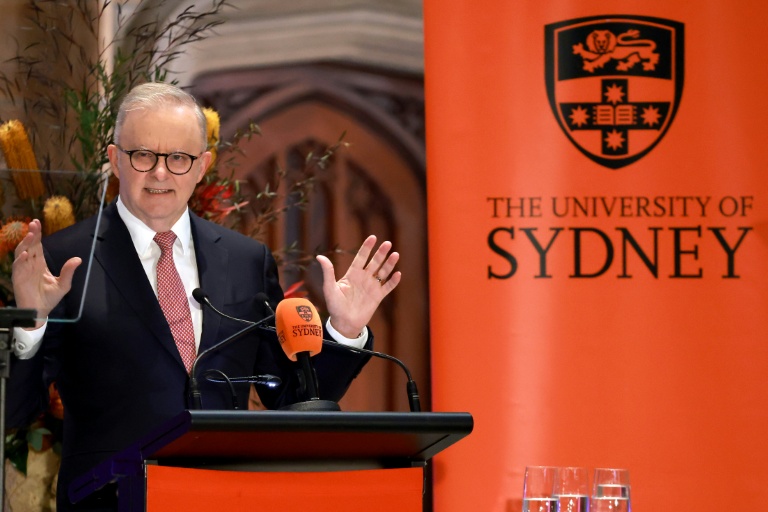
Sydney: Prime Minister Anthony Albanese outlined the government’s response to local copyright issues and data centres in a speech at the University of Sydney yesterday. The Australian government is trying to draw a firm defensible line against AI encroachments on physical and intellectual property.
This is new territory for Australian legislation, and it’s in the face of massive AI uptake and investment in Australia. This is also the first definite indicator of the government’s position. It comes after strong lobbying for the protection of the arts and the rise of many local issues raised by data centre developments.
The other big, unavoidable issue is copyright. Australian copyright law is an average international standard and just as vulnerable to data theft and AI scraping. It was never designed to manage AI phenomena. There’s been scathing criticism of the lack of action on AI regulation.
There is even supposed lobbying to “legalise copyright violation” and blurring of IP rights. The government will inevitably have to codify and rule on these issues. Without statutory law, courts can only do so much, and they can’t do much.
Australia is a test case
The rest of the world has the same problems, but Australia is unique as a test case for managing AI. There’s a big market overlap with international IP. Australian made products are marketed outside Australia under license, and copyright materials are published and distributed overseas.
These very high value intellectual properties must therefore be protected. AI effectively undercuts the creative process, devaluing the IP. The AI products in turn also compete in the same markets.
Australia’s big advantage is to be able to start from scratch managing these issues. There’s no existing specific AI legislation or regulation. An entire regulatory system can be constructed and tested for effective application.
AI regulation vs existing laws
Existing copyright laws do help to a point, but not enough:
Copyright materials are properties, and their ownership is not negotiable. Ownership is attributed to a legal entity by default. Ownership rules don’t need to be “fixed” but enforced.
AI is not a legal entity in the same sense as a natural person or corporation. It can’t own or hold property.
Any use whatsoever of copyrighted materials is covered by existing laws. If you want to use it, you buy the right to use it, whether it’s a textbook or a comic book.
AI can’t claim to have created IP. By definition, it sources what it makes from copyrighted materials. That’s the exact opposite of ownership. It’s direct proof of non-ownership.
The major problems come with “scraping” in the course of training AI. This involves training LLMs on vast amounts of data, much of it commercial copyright. This is usually done without the consent of copyright owners or any compensation.
The content derived from scraping feeds back into the same markets from which training materials are sourced. AI is “diluting” these markets directly. It’s generating a lot of largely useless AI slop at the expense of the producers of the copyrighted materials.
Markets vs laws
The biggest problem with AI scraping is the lack of movement on the part of AI developers. They have resisted any sort of acknowledgement of basic copyright laws.
This entire situation could be completely avoided with definitive laws. In theory, all current copyright laws cover scraping simply due to the direct use of IP in scraping. In practice, none of these laws work at all, nor are they being made to work. Test cases against AI scraping are many, but there are so far no clear decisions. These endless disputes are simply dragging the chain. It’d be simpler and far cheaper to just hammer out a workable deal for copyright owners.
This is where Australia can get ahead of the disasters and deliver straightforward statutory solutions. The alternative is a legal mess with incredibly slow turnaround times for decisions.
An important AI reality that’s being overlooked
AI LLM training is a major, expensive process, but it pays back in many ways. The values derived from this training extend well beyond writing a book, doing someone’s homework, and compromising the whole future of higher education.
The real value of AI training has very little, if anything at all, to do with stealing creative content anyway. This training, particularly at the language level, delivers major efficiencies. It delivers the linguistic fluencies, and dynamic skill sets AI needs. The training is critical to AI performance and future development.
By comparison, the value of creative content is simply training the AI to learn those skills. A price can easily be set and standardized for general use.
Should a textbook have a price? It does, so what’s the problem? Do you, or can you, own the content of the textbook? Only if you buy the rights. Do you need to own that content? No. You’re just paying for the use of the content.
The world needs to get on board with AI regulation
Australia is trying to take a step forward in cleaning up this legalistic mess and making it manageable. Copyrights are gigantic assets worldwide. International laws need to be on the same page to work.
AI vs copyright disputes are achieving nothing and are far too slow in this environment. Most copyright laws can simply be adjusted to define copyright ownership rights in relation to AI. It’s time for AI to learn to respect property rights.
Op-Ed: Australia vs AI copyright theft and data centres blow by blow
#OpEd #Australia #copyright #theft #data #centres #blow #blow