MIT’s New Flapping Robot Flies, Swims, and Launches From Water Like a Puffin
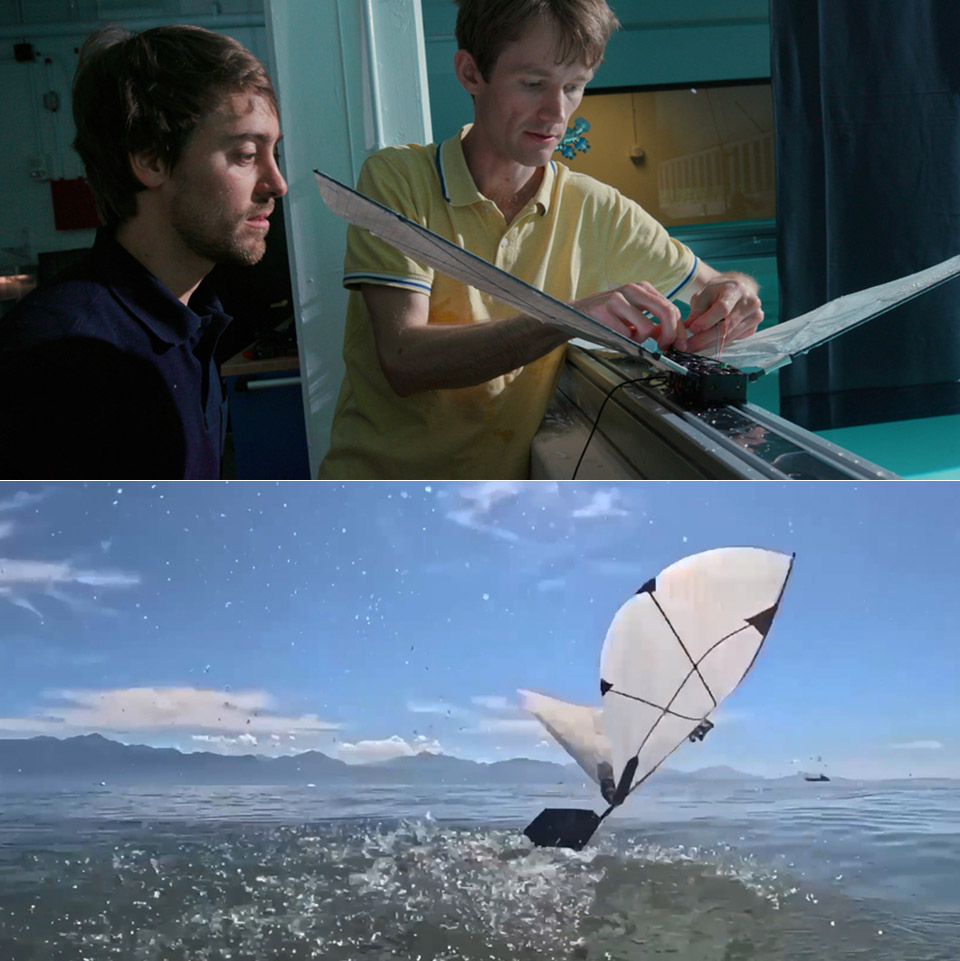
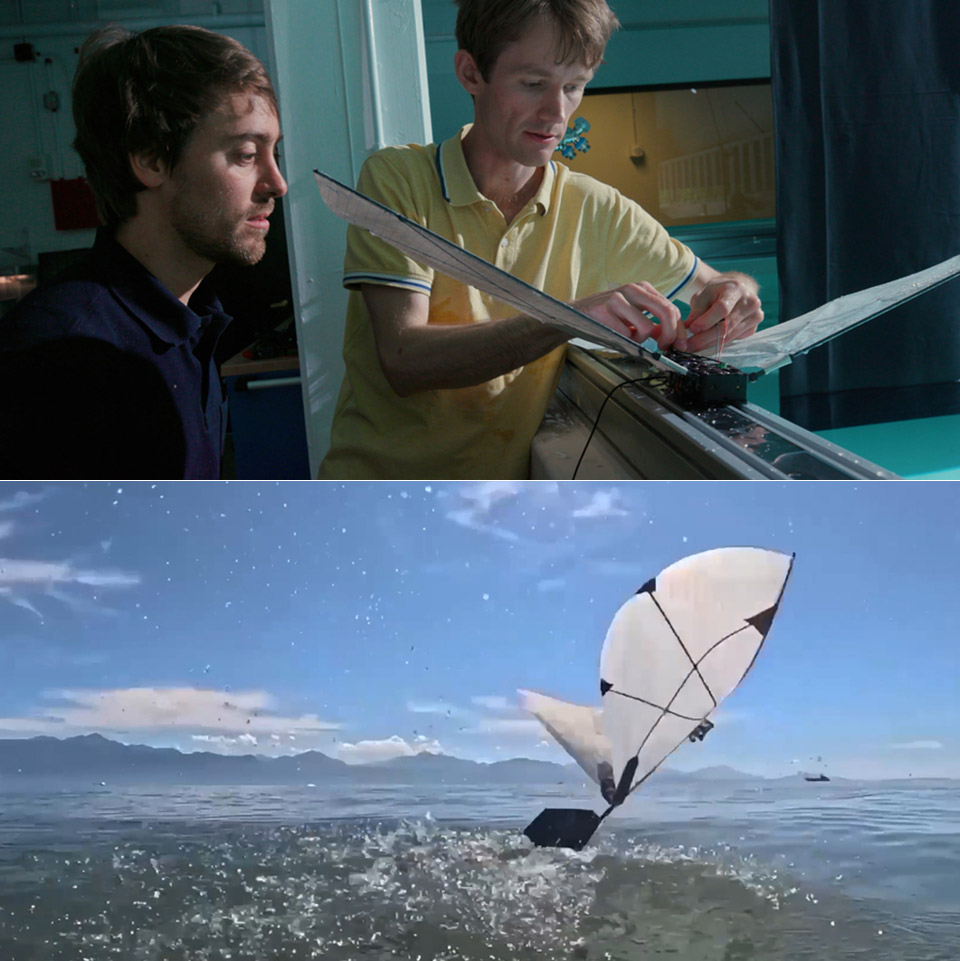
Photo credit: Raphael Zufferey / John Freidah
Engineers at MIT have built a compact machine that flaps its wings to travel through air and water with equal capability. The device tips the scales at 250 grams and reaches flight speeds near 6 meters per second while managing almost 1 meter per second when submerged. It also exits the water by angling its body and pushing straight into the air without any paddling or extra propulsion.
Puffins and other diving birds provided them with a pattern to follow. These birds fly with only one pair of wings, both in the air and in the dense water. The MIT team set out to replicate that feat in a robot, but without the complexity that comes with legs or folding wing portions, as many birds do. To do so, they began with a long, thin waterproof body as the base. Inside, they installed a battery, an electric motor, and a crankshaft, with the engine driving the wings in a steady up and down motion at around 5 flaps per second.
Sale

DJI Neo, Mini Drone with 4K UHD Camera for Adults, 135g Self Flying Drone that Follows You, Palm Takeoff…
- Due to platform compatibility issue, the DJI Fly app has been removed from Google Play. DJI Neo must be activated in the DJI Fly App, to ensure a…
- Lightweight and Regulation Friendly – At just 135g, this drone with camera for adults 4K may be even lighter than your phone and does not require FAA…
- Palm Takeoff & Landing, Go Controller-Free [1] – Neo takes off from your hand with just a push of a button. The safe and easy operation of this drone…
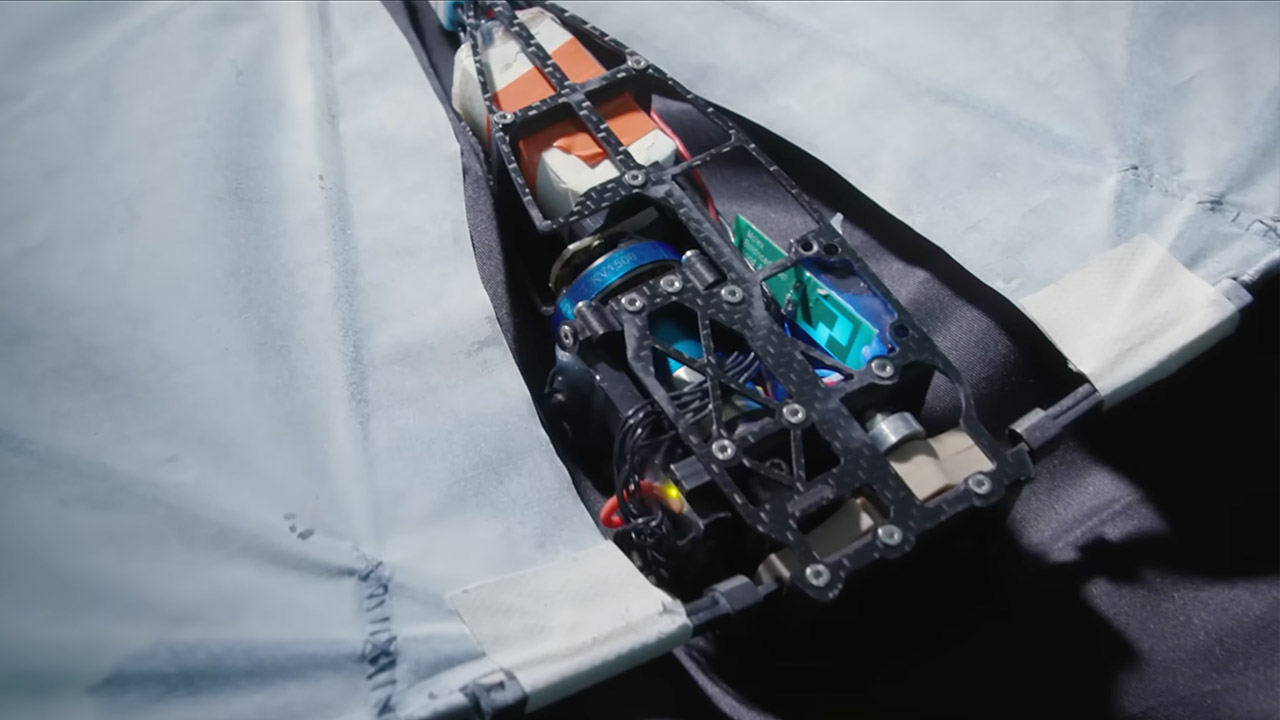
A powered tail at the back allows the vehicle to tilt to adjust its pitch, allowing it to ascend or descend in water or air with ease. However, getting the wings correct proved to be a significant task. The scientists coated them with a water-repelling coating and employed very thin membranes that were reinforced to withstand the weight. In the water, the wings flex and bend when loaded. That flexibility reduces the amount of labor required by the motor to move them, as well as protecting the entire system from harm. They retain their shape well in the air, allowing the robot to lift off and remain upright for an extended period of time. It took them a while to find the perfect wing size, as they experimented with several various sizes before landing on 80 centimeters as the sweet spot for completing all of this without fail.
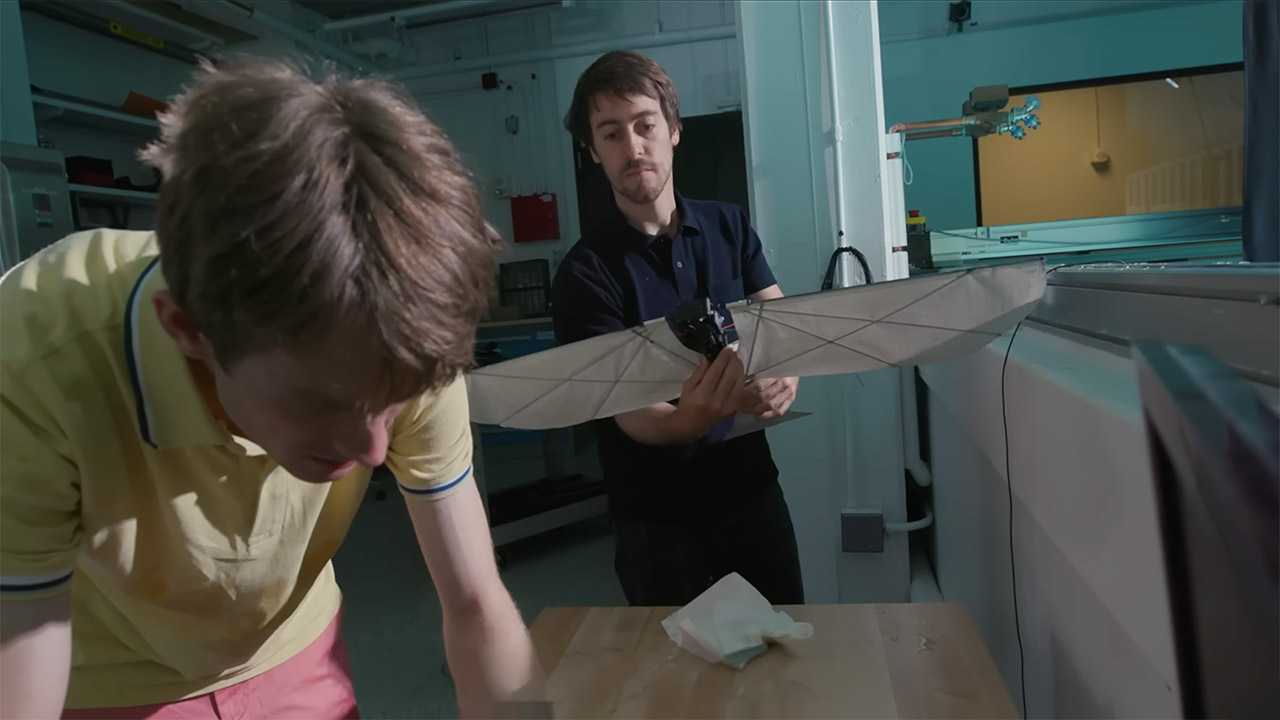
Getting the robot out of the water and into the air without stalling or flopping around required serious fine-tuning. They had to make sure it pitched its body up to around 70 degrees right before the wings reached full speed, which lifts the wing tips out of the water and allows them to resume creating lift without getting tangled up. Their testing show that the entire transition from submerged to stable flight takes less than a second. They first tested it in a large tank before moving on to Lake Geneva, where they experimented with different wing sizes, flap rates, and tail placements to determine what worked best. It turned out that medium-sized wings were the way to go, providing exactly the perfect combination of suppleness underwater and rigidity in the air.
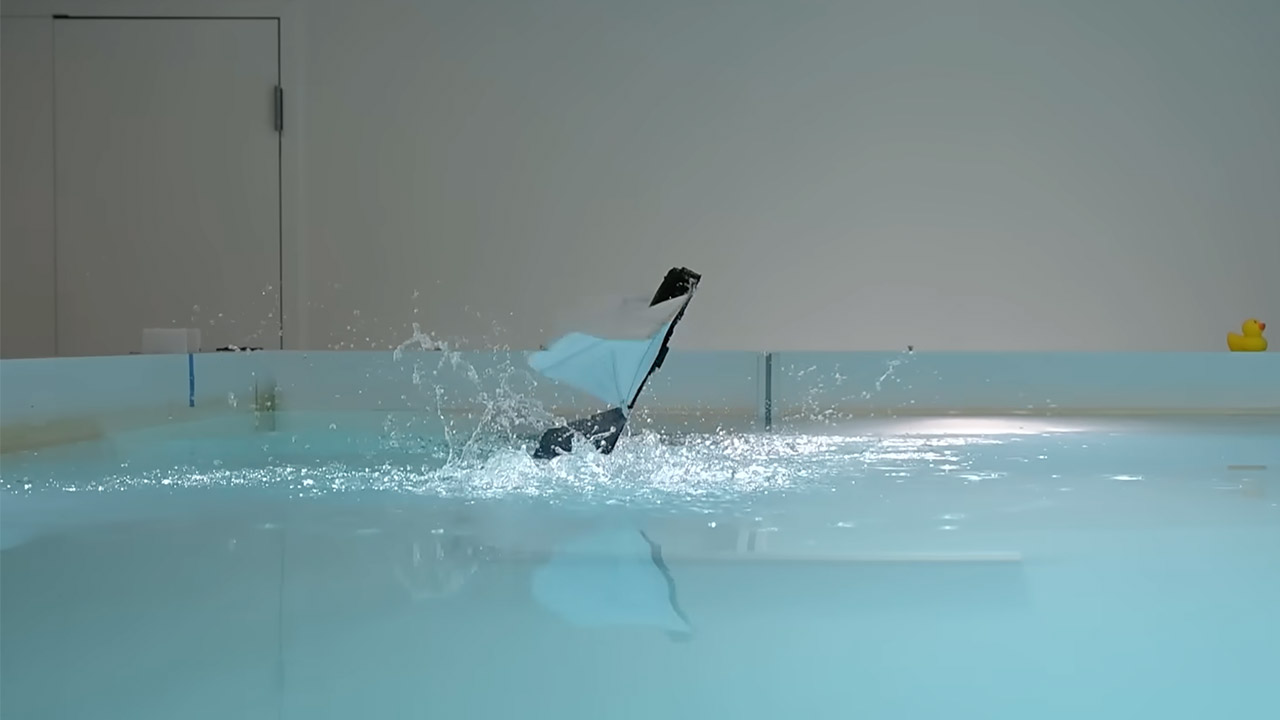
A single battery charge allows the robot to fly a few kilometers or swim roughly 2 kilometers. That means a single machine might leave from a boat or the coast, travel to a remote location, dive down and collect data or samples, then return and repeat the process all day. That’s exactly what the lead researcher, Raphael Zufferey, wants to do: provide oceanographers and marine biologists with a tool that allows them to take numerous readings all over the place at a low cost and with a high frequency. They may use the robot to monitor algae blooms, inspect ports or reefs, or simply keep an eye on wildlife without having to send out a large crewed boat and the associated inconvenience and expense.
[Source]
MIT’s New Flapping Robot Flies, Swims, and Launches From Water Like a Puffin
#MITs #Flapping #Robot #Flies #Swims #Launches #Water #Puffin