The tech build hiding inside Ottawa’s pipeline deal
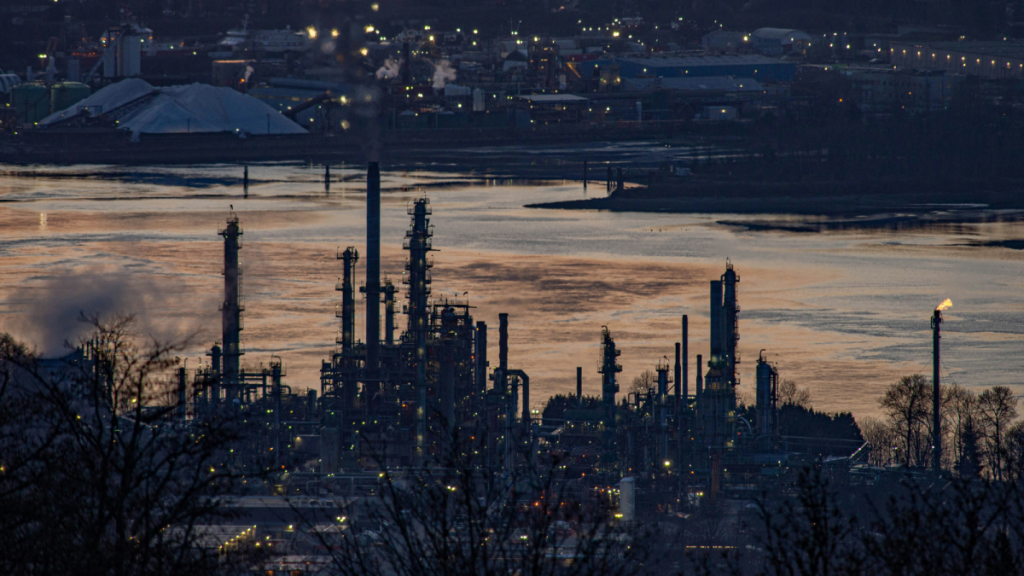
If this one sounds familiar, it should. Ottawa and Alberta announced a proposal for a new west coast oil pipeline on July 2, this time along the Trans Mountain corridor, with a carbon capture deal attached.
Prime Minister Mark Carney made the announcement in Calgary alongside Alberta Premier Danielle Smith. The pipeline would follow the existing Trans Mountain corridor from the Bruderheim area of Alberta to a marine terminal in southern B.C.
Canada and Alberta will be equal public-sector partners in the project, with Pembina Pipeline Corporation holding a 10% economic interest through construction and the opportunity to add up to another 10% once the line enters commercial operation.
Trans Mountain Corporation will lead development and operations. A separate equity stake has been reserved for Indigenous participation, with consultations starting immediately. Alberta’s submission estimates the cost at $35.2 billion to $43.7 billion, according to the province. Under the current framework, Canada and Alberta would carry most of the ownership during construction.
Smith said the pipeline would support Alberta’s goal to double oil production to eight million barrels per day over the next 10 to 15 years.
“We’ve agreed that … the best route for a new pipeline is one that goes through one that already exists, so through the Trans Mountain Corridor to our Pacific coast, the gateway to the world’s fastest growing markets,” said Carney.
Building that supply chain means building the systems to run it.
Trans Mountain already runs a SCADA (supervisory control and data acquisition) system to monitor pipeline operations from a centralized control centre in Edmonton. Its expanded system also includes fibre optic sensing for leak detection and intrusion monitoring.
A parallel pipeline means replicating or extending that architecture across similar terrain.
Then there’s the Pathways Project, a carbon capture and storage network paired with the pipeline as a condition of the deal.
The Oil Sands Alliance, whose five member companies (Canadian Natural, Cenovus, ConocoPhillips Canada, Imperial, and Suncor) operate more than 20 oil sands facilities across northeastern Alberta, signed a memorandum of understanding with Ottawa and Alberta setting a target of 16 million tonnes of annual emissions reductions through Pathways projects and other emissions-reduction commitments.
The emissions target is being negotiated alongside Alberta’s stated goal of doubling oil production to eight million barrels per day over the next 10 to 15 years.
The Pathways Project would connect capture facilities operated by individual oil sands producers to a carbon dioxide transportation network of more than 650 kilometres and a storage hub near Cold Lake, Alta., where carbon dioxide would be injected into sandstone formations between 1,000 and 2,000 metres underground.
That is, if it gets built.
The Oil Sands Alliance has been talking about the project for years. It still has to move from campaign language to construction.
Between the pipeline and the carbon capture network, this is also a monitoring, controls, and reporting build.
The memorandum of understanding breaks the 16 million-tonne target into phases. Six million tonnes of carbon capture and storage capacity must be operational by 2035.
The remaining 10 million tonnes would come through expansion or other emissions-reduction technologies, with five million tonnes online by 2040 and another five million by 2045.
In exchange, firms building and operating the Pathways Project would get a slower tightening rate under Alberta’s Technology Innovation and Emissions Reduction system, known as TIER. From 2031 to 2040, their benchmark would tighten by 1% a year instead of the 2% rate applied to large oil sands facilities.
The Major Projects Office will consider listing the pipeline as a project of national interest under the Building Canada Act by Oct. 1, 2026. Listing would consolidate all federal approvals into a single streamlined review.
The office is already advancing 23 nation-building initiatives across nuclear, LNG, critical minerals, and transportation, representing over $135 billion in investment.
Two of those projects, the Contrecœur Container Terminal and the Nouveau Monde Graphite facility in Quebec, broke ground less than seven months after referral, though Contrecœur already had federal environmental approval and committed financing when it arrived at the office, and this pipeline has neither.
The government projects 175,000 jobs at peak construction across both initiatives and approximately $200 billion in catalyzed investment. Definitive agreements for the Oil Sands Alliance memorandum of understanding are expected this fall.
Whether the timelines hold is another question. Canada has a habit of announcing infrastructure at national scale and then spending a decade arguing about it.
Final shots
- The combined build would extend pipeline monitoring and control systems along the Trans Mountain corridor, while adding emissions measurement and verification obligations across 20+ oil sands facilities run by five separate companies, 650+ km of CO2 pipeline, and a deep geological storage hub.
- The Major Projects Office process could move quickly, but the projects that have advanced fastest arrived with more approvals and financing already in hand.
- Participating Oil Sands Alliance members get a slower benchmark-tightening rate from 2031 to 2040, a direct financial incentive tied to building and operating Pathways.
The tech build hiding inside Ottawa’s pipeline deal
#tech #build #hiding #Ottawas #pipeline #deal