Ottawa backs a Quebec steelmaker’s $52M automation bet
ADF Group has been automating steel fabrication for 15 years. Now Ottawa is writing a cheque to help it go further.
The federal government announced a $12.5 million investment today through the Strategic Response Fund in ADF Group Inc.’s $52.3 million project to upgrade its fabrication plants in Terrebonne and Métabetchouan, Que.
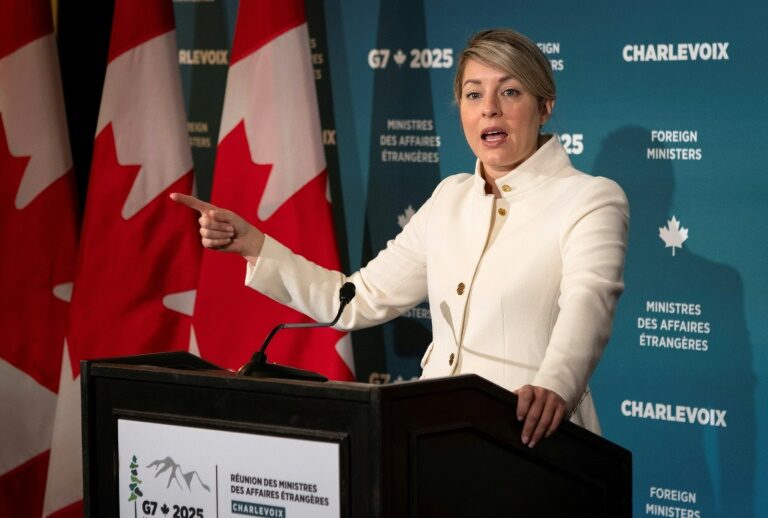
“Canada’s steel industry is a cornerstone of our economic strength and a driver of our industrial future,” says Minister of Industry Mélanie Joly. “This investment in ADF Group Inc. aligns with our government’s plan to support Canadian workers, strengthen domestic manufacturing and build economic resilience.”
The Terrebonne facility is getting new equipment to fulfill a multi-year Hydro-Québec power pylon contract. The Métabetchouan plant, home to recently acquired subsidiary Groupe LAR, is being modernized for heavy steel structures in the hydroelectric sector. The government says the project will create at least 100 jobs and maintain more than 525.
What the press release doesn’t mention is the technology foundation underneath. ADF has invested $30 million in robotization over 15 years and says it became a North American pioneer in automated steel fabrication.
Its Terrebonne plant has 10 production bays, one of them fully automated. The company says its robotic equipment is meant to increase productivity, use raw materials more efficiently, and expand production capacity.
Its most recent quarterly earnings disclosed $9 million in capital expenditure that included an ERP software overhaul alongside the physical expansion.
ADF’s backlog is now 72% Canadian, a useful shift after the company said tariff uncertainty weighed on revenues in the comparable quarter last year.
The Groupe LAR acquisition, which closed in September 2025, brought an order book of $104.5 million and positioned ADF for Hydro-Québec’s Action Plan 2035, which calls for up to $185 billion in total energy infrastructure investment over the next decade.
“In the current context of U.S. tariffs, it’s more important than ever to strengthen our supply chain and support our manufacturers so that they remain among the best performing in North America,” says Quebec Minister of Economy Bernard Drainville.
The federal money is flowing through the Strategic Response Fund, which backs automation, AI, and advanced technologies alongside traditional industrial capacity.
In May, the same fund put $76.2 million into Tenaris for a $305.9 million steel modernization at Sault Ste. Marie, Ont. In each case, the federal money followed private capital that was already committed.
Across the broader economy, only 12% of Canadian businesses used AI in production between mid-2024 and mid-2025, while 27% of manufacturing workers are 55 or older, with 40,000 retirements expected annually through 2031.
The federal co-investment followed 15 years of robotics spending. ADF had the automated floor when the contracts came.
Final shots
- ADF Group has invested $30 million in robotics over 15 years. The $52.3 million upgrade extends a technology foundation that was already in place, not a greenfield bet.
- The Strategic Response Fund backs automation, AI, and advanced technologies alongside physical industrial capacity. The Tenaris and ADF investments show the money is moving.
- Tariff uncertainty hurt ADF’s comparable quarter last year. Its latest backlog, now 72% Canadian, shows why domestic capacity is becoming more than a political talking point.
Ottawa backs a Quebec steelmaker’s $52M automation bet
#Ottawa #backs #Quebec #steelmakers #52M #automation #bet