Gamze Dinckok Yucaoglu: Why community is essential when navigating career transitions
Opinions expressed by Digital Journal contributors are their own.
Career reinvention is becoming one of the defining challenges of the age of longevity. While policies and systems are catching up to support the individual, today, most people in midlife are left alone to navigate their career change. A lot is being written about this lately. While a majority of conversations about career change focus on skills, education and strategy, one factor is often overlooked: community.
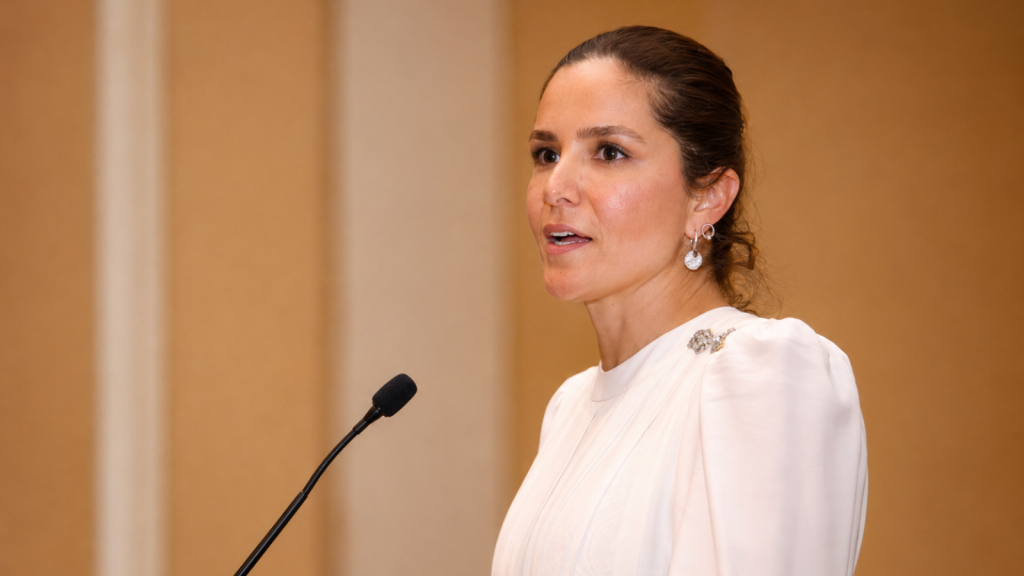
For Gamze Dinckok Yucaoglu, Co-Founder of the What’s Next Initiative, the ability to successfully navigate a career change is rarely a solo endeavor. “The in-between state when you leave a career behind, but have not yet embarked on the new one, is full of uncertainty. The unknown can get scary,” she says. “This is where self-doubt and self-criticism may creep in.” As longevity reshapes expectations around work, Yucaoglu argues that community may be one of the most valuable assets professionals can lean on and cultivate.
Isolation makes career change harder
One of the most common mistakes professionals make during transitions is attempting to maintain the appearance of certainty. Yucaoglu experienced this firsthand when she left her family’s energy business and moved into academic research and writing. During that period, she concealed much of the uncertainty and anxiety she was experiencing, even from those closest to her. “I was actually trying to navigate it all by myself and make everything look all under control,” she says. Looking back, she believes the effort to keep up appearances created an additional burden. Instead of accessing support, she became disconnected from the very people who could have helped.
For those navigating career change, community provides reassurance that uncertainty is a normal part of growth. Whether driven by automation, changing market conditions, or shifting personal priorities, transitions often trigger feelings of vulnerability. Today, as technology accelerates disruption and industries evolve, many professionals face involuntary career pivots. “Having people to talk to and them saying, ‘I know exactly what you mean, I’ve been there,’ helps a lot,” says Yucaoglu. “Having someone who has experienced what you are feeling, who has since made it to the other end makes a big difference.” Yucaoglu continues, “By keeping our experience silent, we are doing a disservice to those who can be inspired by our stories and learn from our mistakes. It takes vulnerability to talk about it, but we owe it to each other. In the end, we are the first generation to have the longest careers to date.”
Career reinvention is about more than changing jobs
The complexity of career transitions is often underestimated because people view these periods as simple employment decisions. In reality, changing careers often involves redefining identity, routines, future aspirations, and even relationships. Often a career influences how people introduce themselves, who they spend time with, and how they understand their place in the professional landscape. As such, leaving an established career behind in midlife can feel far more disruptive than at an earlier time in life.
Yucaoglu says, “The traditional idea of a linear career path is giving way to what we at the What Next Initiative call a perennial career—one built around cycles of growth, reinvention and renewal. In this framework, we see career transitions as a natural part of a long working life and we are all of owning it.” She adds, “When you are changing a career, you are changing much more than changing jobs.” “You’re leaving behind the track that you have dedicated many years of your life. You’re changing networks. For some people, you’re changing the way you dress to work. You are essentially shedding one working identity for another.”
The two communities every career changer needs
For those considering career reinvention, Yucaoglu believes there are two essential forms of community. The first is a personal support network, or what she describes as a personal board of advisors. These are trusted individuals who provide honest feedback, challenge assumptions, and offer accountability throughout the transition process. The second is a broader professional network that creates access to new ideas and opportunities. Whether someone is exploring options or pursuing a specific direction, relationships can accelerate learning and reduce uncertainty. “You can find inspiration in any person,” Yucaoglu says. “You just need to go out there and meet new people.” Yucaoglu thinks that having a support community keeps one grounded, while cultivating new networks opens one up to new possibilities.
Today, work longevity and the future of work are forcing many professionals to rethink what success looks like across a longer horizon. Meanwhile organizations are trying to figure out how to restructure career paths, enable multigenerational workforces, and upskill and reskill their employees. During this time, community may become one of the most important competitive advantages available. Career transitions will never be free of uncertainty. But building a longer more meaningful working life becomes significantly easier when people stop navigating change alone.
Gamze Dinckok Yucaoglu: Why community is essential when navigating career transitions
#Gamze #Dinckok #Yucaoglu #community #essential #navigating #career #transitions