Big money, a growing horde of humanoid robots, no standards, and it’s coming soon enough
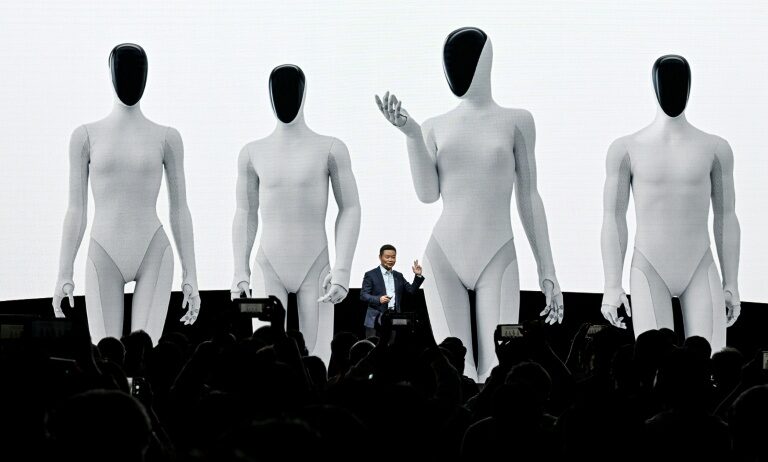
If you’re trying to keep track of the rise of the humanoid robots, good luck with that. The entire spectrum of these robots is on the rampage. Even an overview of the current state of play is an epic of information in itself. They are coming to the mass market. The only question is when.
Everything else is highly questionable, particularly at this point in history. How do you fit vast numbers of domestic robots in the enchanted, financially carefree human world of 2026? How do you pay for them with an income lost to AI and living costs based on an economy that seems to be turning into an Ouija board?
Can you visualise robot butlers in a dilapidated shanty town, with some guy with a screwdriver in a hut keeping them all running? What kind of world can it be? A Disney movie where the kids leave home with their robot because their robot is due for a recall?
That’s not a problem for the kind of money pouring into humanoid robots and the entire supply chain for what is effectively a whole new industrial sector. Investment is growing almost as fast as the diversification of robots and robot types.
An emerging market with Big Capital in charge and China on the horizon
One look at the top investors in humanoid robots says it all. Tesla, NVIDIA, and Hyundai are leaders in the West. Chinese robots are now firmly lodged in the DNA of the Chinese economy, and they’re already selling products directly in the domestic market as well, for relatively low prices. There are no clear product standards, just mutterings about “safety”, whatever that turns out to mean.
China already dominates the “embodied AI” robots. This is the epitome of crossover tech, in multiples. There’s a direct link in the roles of industrial robots and the more domestic variety, sharing skill sets and sensory requirements. This is a major policy issue for China, and they’re launching a major training programme for robots to transition them into domestic roles.
According to the South China Morning Post, this initiative has serious official weight behind it:
“By the end of 2026, key humanoid robot products will complete application verification and regular deployment in a number of representative scenarios, entering ‘work mode’,” the Ministry of Industry and Information Technology and the State-owned Assets Supervision and Administration Commission said in the document.”
That’s a good definition of the new frontier for trade in AI robotics, too. Again, China is leading. Dominating the robotics market would gather a huge share of global trade. China’s ability to develop, produce, and rapidly deploy technologies is a fait accompli for competitors.
The visible side of humanoid robots
Humanoid robots have yet to actually enter the marketplace in significant volumes, but the groundwork is already well underway. The public image of humanoid robots is a psychology PhD in progress. They’re being made to look good, and there’s already more than a hint of “new car status symbol”. It’s a messy mix of something between the cartoonish form of humanoid robots and soft-tissue humans with credible facial expressions. Some try to be cute, and some try too hard to be futuristic.

The very human-looking robots, it must be said, are pretty creative and have real visible character. If nothing else, it’s good art, and images range from the garish to the downright folksy.
Robotic roles dictate design as well as the market range. There are far too many roles for a simple generic model. Some are purely utilitarian, on wheels, confined to a specific space, and others are “free range” bipeds with autonomous navigation and Cloud links for behaviour.
The agility of the biped robots is remarkable, particularly the Chinese models. Not so long ago, just walking was a major issue. Now, without operators, they can autonomously and collectively do Kung Fu, “drunken boxing”,run up walls and do backflips, and even imitate the famous Monkey King.
Reality has to intrude somewhere, even when it conflicts with realism. The image is all hard sell. Expect hype in previously unknown quantities when checking out robots on the market. The hype is relentless, and it invariably enters the domestic humanoid robot range.
All of which raises the unavoidable question that will make or break humanoid robot designs. Who’s going to buy these robots? Will they be bought on looks? Very probably. Will they be bought on specialist tech capabilities? Will they be “companions”? Will they be surrogate pets?
This is the point at which it becomes wincingly obvious that the back end of maintaining robots becomes clear. Robot tech needs upkeep. Your humanoid robot isn’t a car or a talking toaster. It’s a maintenance issue as much as an asset. Power supplies are also a talking point in terms of running costs.
A very predictable future junkyard in progress?
There’s a glaring future problem here. The tech also defines the lifespan of robots. Just think how many robots have already come and gone in industry. Their coming and going is less obvious, because that class of robots usually performs the same tasks. The changes are purely functional, and efficiency driven.

That’s not the case with the highly differentiated domestic general purpose robots. Obsolescence will turn over a lot of products. Robotics has been roaring ahead with new tech and new capabilities on an almost hourly schedule. Competition is ferocious. There’s no reason to believe that robots will be “forever” models.
There’s also a Doomsday Scenario somewhere in the future. AGI could be the next quantum jump for robotics. That alone could scrap most of the current robots. There’s already an AGI robot called Agibot in China, with 10,000 models produced. This is a do-everything robot but doesn’t seem to contain AGI chip tech. It uses an open-source dataset with a free form collection mode, which means it has good processing capacity.
The problem remains regarding the shelf life of these robots. The range of technologies in a robot dwarfs all other electronics. The scale of turnover junk will be colossal. Is there any plan to manage the inevitable obsolescence, upgrades, and perhaps retrofitted customization?
Now is the time to be skeptical. An unplanned class of tech is coming, right into the living room.
Big money, a growing horde of humanoid robots, no standards, and it’s coming soon enough
#Big #money #growing #horde #humanoid #robots #standards #coming