Umang Singh: The executive who builds what he strategizes
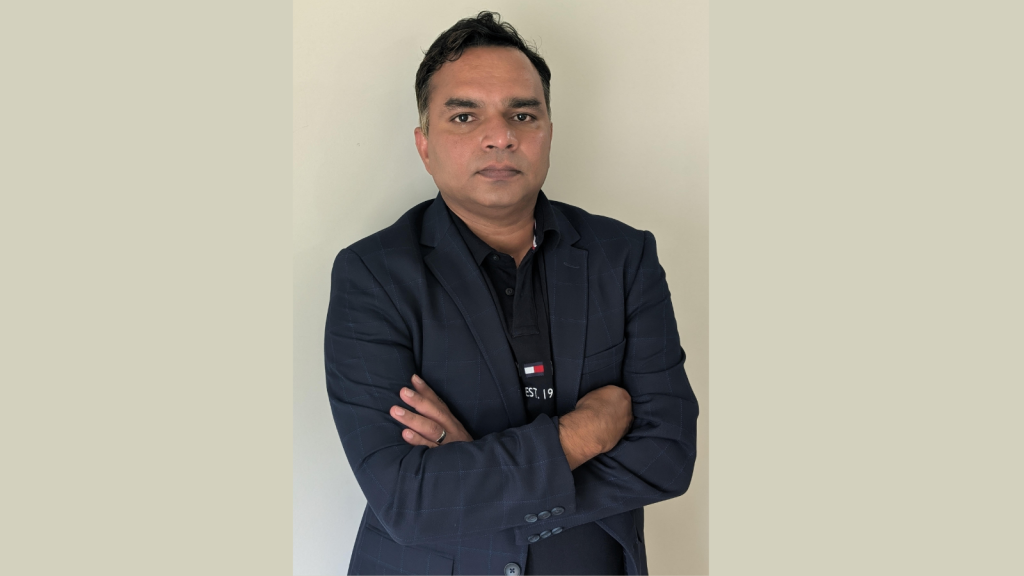
Opinions expressed by Digital Journal contributors are their own.
Umang Singh has spent 24 years at the intersection of technology and transformation. Now, as AI reshapes enterprise strategy, he is making the case that the leaders best equipped to guide that shift are the ones who never stopped doing the work.
There is a version of the modern technology executive that Umang Singh has spent two decades refusing to become. It is the version that speaks confidently about artificial intelligence from a boardroom, issues mandates to engineering teams and considers the job done.
Singh, who currently serves as Chief Architect at Humana, has a different operating philosophy. Strategy, he believes, means nothing if the person articulating it cannot understand why it might fail.
“If you don’t understand the architecture, your strategy and vision is just a paper,” Singh said.
Singh’s career has taken him through some of the most consequential technological transitions of the past quarter century. He entered the field during the early internet era, drawn by what he describes as a lifelong passion for emerging technology. His path ran through communications, high-tech, retail, financial services and, most recently, healthcare.
Each industry handed him a different lens. Comms moved fast and linearly. Retail demanded real-time responsiveness and deep user focus. Finance moved slowly but taught him the weight of risk and regulatory compliance. Healthcare introduced him to something new: data that arrives in dozens of formats, governed by relationships that are less contract and more agreement.
Singh architected and led one of the more demanding retail transformations of that era, overseeing more than 350 engineers and architects across three continents. The initiative was scoped as a multi-year program and reached into the billions in enterprise value, yet delivered its first measurable results within six months of launch.
The scale of that project required more than technical fluency. It required navigating organizational politics, aligning stakeholders with competing interests and making the business case for adoption to leaders who had built careers defending the systems they already owned.
“You have to make them understand,” Singh said of the resistance that often accompanies large-scale transformation. “There are always conflicts. You might be seeing it from a technical lens while they are embedded in the political system.”
At Humana, one of the country’s largest health enterprises with revenues exceeding $100 billion, Singh leads enterprise architecture and AI strategy across clinical, operational and partnership systems at national scale.
His transition into AI followed a familiar pattern. He arrived early, built expertise before demand for it peaked and positioned himself at the pivot from virtualization to data-driven strategy. The conference circuit has taken notice. Singh has delivered keynotes at KubeCon and API Days, two of the most prominent venues in enterprise technology, speaking on AI governance and agentic platforms to audiences of practitioners and senior leaders.
That platform did not arrive by accident. Singh has also invested in what he calls the other side of leadership, mentoring more than 50 emerging technology professionals over the course of his career. For Singh, developing the next generation of architects is not a peripheral responsibility. It is part of the job.
Singh recently extended that builder mentality beyond the enterprise, launching Ragyn.ai, an AI Agent platform built on graph-native retrieval architecture, designed to surface connected intelligence across enterprise knowledge systems.
That experience has made him a measured critic of how most enterprises are currently approaching artificial intelligence. His central concern is not that organizations are moving too slowly. It is that they are moving without discipline.
“Most leaders just say ‘we have to adopt AI.’ There is no comparison metrics, no return on investment tracking, no KPIs that are properly laid down,” Singh said. “Nobody is asking whether this is the right use case to solve a problem or whether it will create more problems.”
He points to AI-powered customer service tools as a case in point. Enterprises deploy conversational agents because the technology exists and the pressure to modernize is real. But when a customer calls with a problem, they want it resolved. A poorly scoped implementation does not accelerate that resolution. It adds friction to it.
The consequences of that misalignment are starting to surface across the industry. Some organizations are scaling back AI programs, not because the technology failed, but because the underlying business case was never clearly defined to begin with.
“Leaders have spent so much money they cannot admit the strategy failed,” he said. “So they cut people instead.”
His prescription is direct: start with the business problem, not the technology. Define what you are trying to optimize. Establish how you will measure it. Then select the tool that fits the problem, which is not always the most sophisticated one available.
“A normal workflow can solve your purpose,” Singh said. “Agentic AI is probabilistic. Don’t try to be shiny with your solutions. Be tactful and analytical.”
Singh raises a concern that cuts deeper than implementation strategy. He believes much of the current executive class has lost its connection to the actual work. Leaders who cannot engage with architecture, he argues, cannot build credible vision.
“If you have been an architect at a good level and you understand the core problems around how a system fails, you will be able to build a strong vision and strategy,” he said. “If you don’t, your strategy is just a paper.”
For Singh, the path forward runs through the same principle he has applied across every industry he has worked in. Understand the business problem first. Apply technology in service of that problem. And never get so far from the work that you forget what it takes to do it.
“It should be business to technology,” he said. “Not technology to business.”
As AI widens the gap between leaders who understand the work and those who only direct it, Singh represents something increasingly rare: an executive who has never had to choose between vision and execution because he has always insisted on both.
Umang Singh: The executive who builds what he strategizes
#Umang #Singh #executive #builds #strategizes