Caltech’s Deep Synoptic Array Set to Uncover a Billion Cosmic Sources in Its First Years
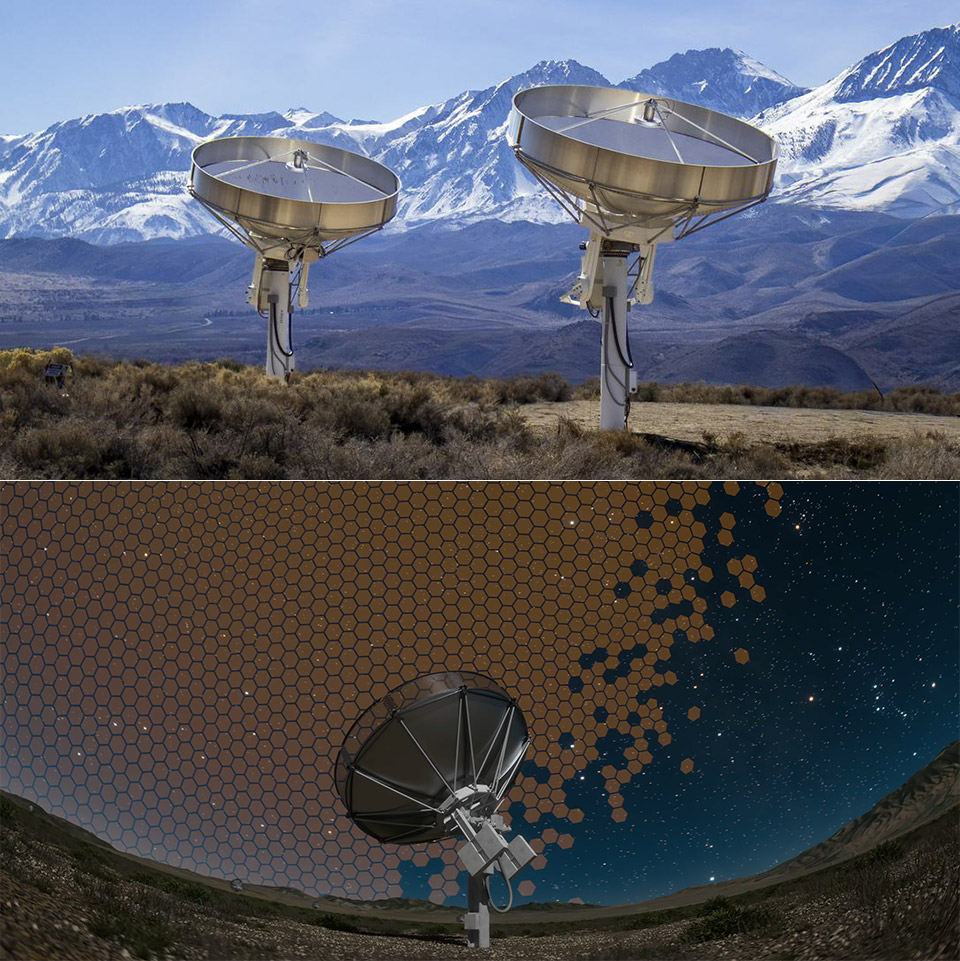
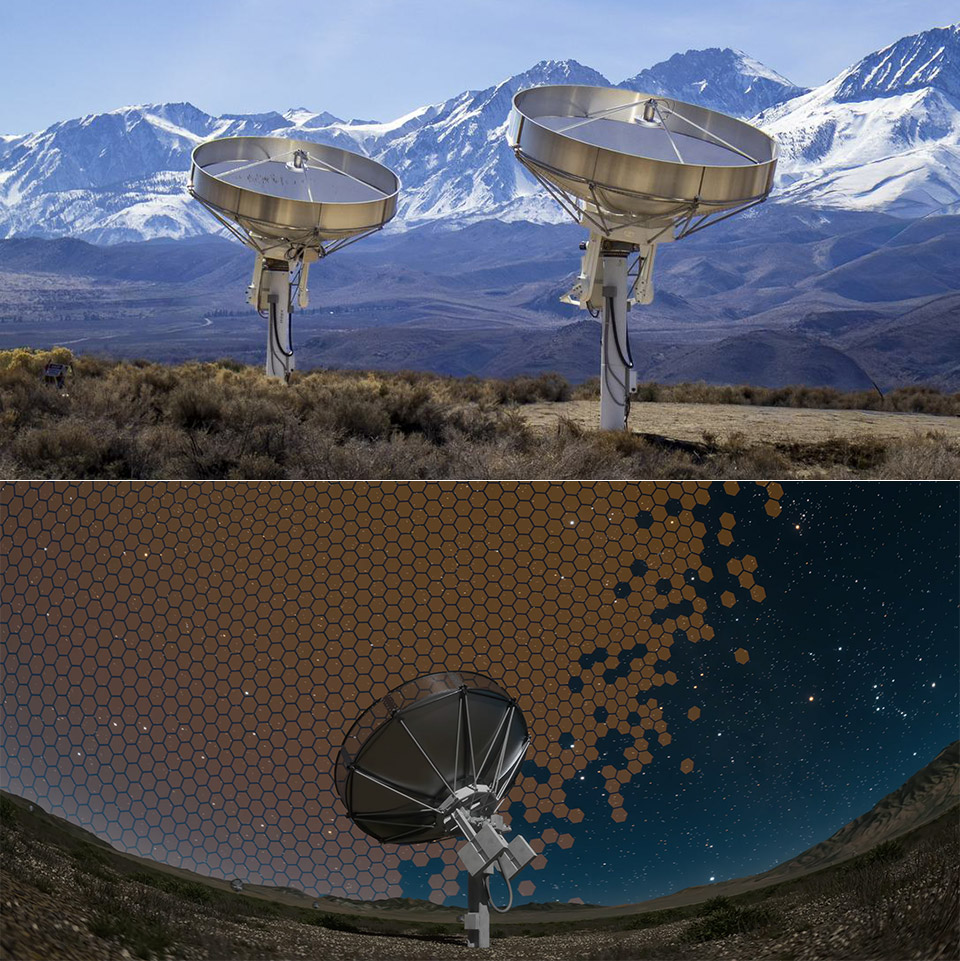
Photo credit: Katie Jameson/Caltech/DSA Project
Construction crews will soon start work on a remote valley floor in Nevada. Caltech astronomers intend to place 1,650 radio dishes across a rectangle roughly 20 kilometers long and 16 kilometers wide. The finished array will sweep the visible sky several times during its first five years of operation and move 100 times faster than any radio telescope now in use.
This new project, known as the Deep Synoptic Array, consists of a constellation of dishes that will catch radio waves with wavelengths thousands of times longer than light from visible stars. These waves include crucial information about pulsars, strange celestial bodies, rapid radio bursts that we don’t yet understand, distant galaxies, and black hole events. The truth is that no other instrument we know of has the same catching area or ability to produce clear images over a wide field of vision as this one.
Sale

MEEZAA Telescope, Telescope for Adults High Powered Professional, 90mm Aperture 800mm Refractor…
- Professional Astronomical Refractor Telescope: If you are interested in astronomy or like to explore the night sky, the MEEZAA astronomical telescope…
- 90mm Large Aperture: The astronomy telescope has an 800mm(f/8.88) focal length and 90mm aperture. The 90mm aperture captures more light pictures…
- Optimum Magnification (32X-240X): Our telescope for adults high powered is equipped with two eyepieces(10 mm and 25 mm) and a 3X Barlow lens. The 3X…
Each dish has a diameter of approximately 6.1 metres, and one of the prototypes may be seen at Caltech’s Owens Valley Radio Observatory in California, where engineers have been working on the concept for years. When everything is ready, it will just sit on some basic mounts and be linked to a supercomputer situated elsewhere via fiber-optic links. The computer will subsequently be able to integrate the signals from all 1,650 dishes in real time.
So, in theory, the raw data would be too large for most storage devices to handle. That is why the team developed the idea of a ‘radio camera’ that eliminates all superfluous data while maintaining only the cleaned photos. That wizardry is made possible by software that runs on a bank of NVIDIA GPUs and quickly turns incoming waves into finished visuals. Only the final, clean photographs are kept in storage. The system is still processing massive amounts of data, more than all of the internet traffic in the United States, but it only requires tens of petabytes of storage per year, rather than the 100 exabytes expected.
Because the DSArray was meant to be fast, it is unsurprising that it will have a large impact on the number of sources that we can catalog in a short amount of time. The previous generation of telescopes were only able to catalog around 20 million sources over their operational lifetime. The new array is intended to function on the first day of operation, which is an excellent idea. Over the next five years, it plans to discover more than 1 billion previously undisclosed radio sources. The list of scientific goals that this data will help astronomers achieve is extensive, but it includes over 100,000 fast radio bursts that can be traced back to the galaxy from whence they originated. They also hope to find over 20,000 new pulsars and maps of star and gas forms within galaxies that are far more detailed than previous optical and infrared surveys.
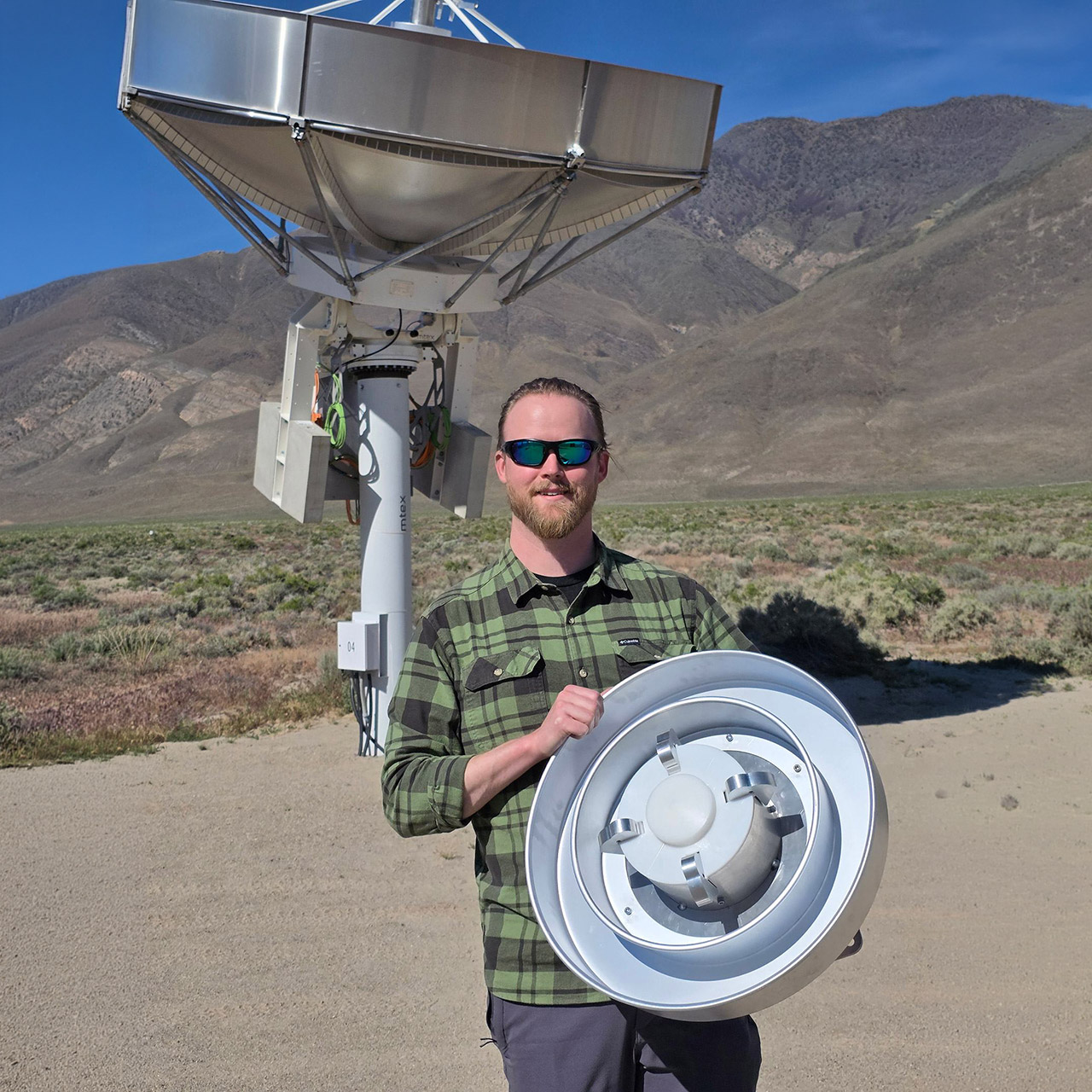
Photo credit: Francois Kapp/Caltech/DSA Project
The fact that the receivers function perfectly at room temperature keeps the electronics simple, so we don’t have to worry about them breaking every five minutes, and the special parts that convert radio waves into electrical signals don’t need to be overly complicated, as they simply use ordinary metal parts inspired by baking pans or something, which makes sense when you think about it. All of this low-cost, low-complexity technology has been tried in previous pathfinder arrays of 110 dishes and has proven to be effective.
[Source]
Caltech’s Deep Synoptic Array Set to Uncover a Billion Cosmic Sources in Its First Years
#Caltechs #Deep #Synoptic #Array #Set #Uncover #Billion #Cosmic #Sources #Years