NYPD will be out ‘in full force’ to bust sex trafficking, prostitution during FIFA World Cup: officials
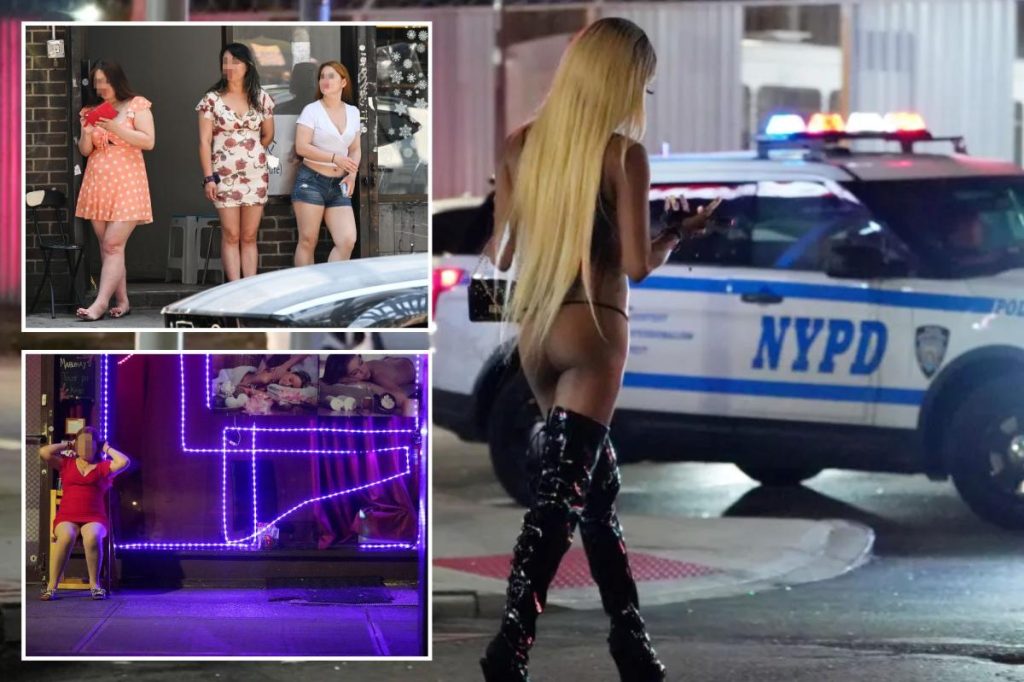
The NYPD will tackle prostitution “in full force” during the World Cup, officials told The Post this week.
“Part of the plan will be to go to areas where prostitution flourishes, like Penn Station and the Port Authority Bus Terminal, as well as Times Square hotels,” said Inspector Gary Marcus, commanding officer of the NYPD’s Special Victims Unit.
Marcus was among the NYPD officials who sat down with the The Post Friday, a day after the first match of the massive 104-game tournament taking place around North America, including eight at MetLife Stadium in East Rutherford, New Jersey, until the final on July 19.
NYPD teams also plan to carefully monitor notorious hot spots for commercial sex, such as Penn Track in East New York, Brooklyn, and Roosevelt Avenue in Corona and Jackson Heights, Queens, he said.
“The expectation is that around large scale events, be it sporting events or any other really, that there is an influx of demand, and so sex traffickers tend to exploit those opportunities and try and increase the availability,” Marcus said.
The NYPD has also been working with people who may come into contact with trafficking, like employees in the hospitality industry and at hospitals.
“It does not look like what you would expect to see in the movies,” Marcus said. “So we prepare them for what those indicators might be, and what to do when you encounter a potential victim.”
Trafficking victims might include people who are “not dressed appropriately for the weather, or they have untreated injuries, or they look to someone else when they have to answer very basic questions,” he said.
Kathleen Baer, the NYPD’s assistant commissioner for Gender-Based Violence Policy and Planning, works with aid agencies in the city to make sure there’s help for anyone who’s being trafficked — and with local prosecutors to build a case against the criminals responsible, she said.
“We’ve seen throughout history and it will be no different with FIFA, when you have a large influx of people, the demand rises,” said Baer, who led anti-trafficking efforts when she was a prosecutor at the Brooklyn District Attorney’s Office.
“We’re going to be out there in full force conducting these operations and ensuring that we have the backup support from our advocates and our district attorneys where cases do come up.”
Trafficking victims “run the gamut,” she said.
“So we have girls that are homegrown in Brooklyn,” she said.
“We see people being brought here from South America, and then they end up in a trafficking situation,” she continued. “Their documents are taken from them, they don’t have money, they don’t have a way to survive.”
The cases are difficult because victims are scared of their handlers or don’t want to get them in trouble.
Making things even more difficult, the women are often reluctant to talk to cops, she said.
“So, when we go and we try to conduct one of these rescues, they’re often very mistrustful of law enforcement,” she said.
She recalled cases with girls as young as 11 being trafficked and stressed the need for tips from the public.
“But we have to get the tips and be able to identify it,” she said.
“That one phone call can really save a life,” Marcus added.
Tips can be called into the NYPD human trafficking hotline at 646-610-7272 or NYPD Crime Stoppers anonymously at 1-800-577-TIPS (8477) or 1-888-57-PISTA (74782) for Spanish.
Source link