From semiconductor verification to AI infrastructure: Muthukumaran Vaithianathan on engineering at global scale
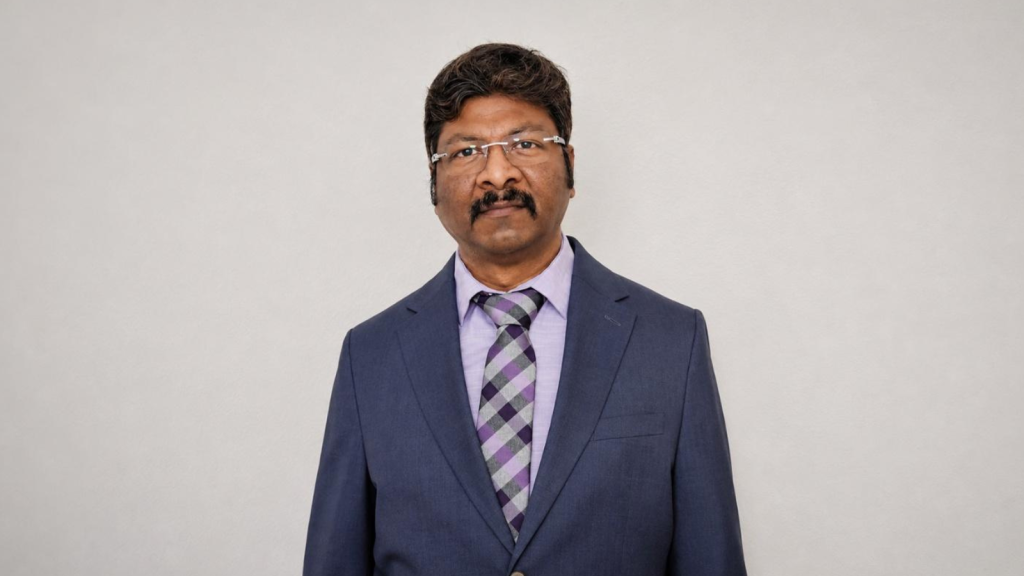
Opinions expressed by Digital Journal contributors are their own.
At the intersection of AI, semiconductors, and global networks
As artificial intelligence, high-performance computing, and next-generation communication networks converge, the complexity of underlying systems has increased dramatically. At the center of this evolution are engineers whose work operates quietly but decisively at scale.
Muthukumaran Vaithianathan is one such figure. Google Scholar rankings place him among the top 0.01% of researchers in Digital Design Verification and Universal Verification Methodology, and his work has become part of the technical foundation relied on by chip design engineers and semiconductor researchers worldwide.
In a recent conversation, Vaithianathan discussed the trajectory of his work, the growing role of AI in hardware systems, and what it takes to build technologies that scale across industries.
Q: How did your journey into semiconductor engineering begin, and how has your focus evolved over time?
Vaithianathan recalls that he started with a strong interest in how complex systems behave at the hardware level, particularly in semiconductor verification. That area, he notes, is fundamental because it ensures increasingly sophisticated chip designs function reliably.
As systems became more interconnected, he explains, his work naturally expanded into areas like AI-driven verification, FPGA-based computing, and cellular network systems. Today, his focus sits at the intersection of these domains, where hardware, intelligence, and large-scale infrastructure converge.
Q: You are ranked among the top researchers globally in multiple domains. What does that recognition represent in practical terms?
Those rankings, Vaithianathan points out, are entirely based on citation impact, which reflects how often other researchers rely on the work.
In his view, being ranked at that level indicates that the methodologies and frameworks he has worked on are being used as reference points across the field. He emphasizes that it is less about recognition and more about the fact that the work is actively contributing to how systems are designed and built at scale.
Q: Which of your contributions has had the most significant real-world impact so far?
One area that has seen strong adoption, Vaithianathan notes, is his work comparing FPGA and GPU architectures for AI and high-performance computing.
That research, he explains, provides a structured way to evaluate trade-offs between performance, efficiency, and scalability. It is now being applied across industries, from cloud infrastructure to autonomous systems, because those decisions are critical for deploying AI effectively.
Q: Your work is cited by global companies and institutions. What does that level of adoption indicate?
What is important, Vaithianathan observes, is that the adoption comes from independent organizations, including companies that operate in competitive spaces.
When research is used across different companies and academic institutions, he adds, it suggests that the underlying ideas are broadly applicable and solving real-world problems. That kind of validation matters because it shows the work extends beyond a single environment or use case.
Q: How has your work translated into measurable impact within industry environments?
A key focus for him, Vaithianathan says, has been ensuring research translates into practical improvements.
He has developed automation frameworks that significantly reduce manual effort in engineering workflows. In some cases, he notes, processes that previously took hours can now be completed in seconds, and certain integration tasks have become multiple times faster.
These kinds of improvements, in his view, change how teams operate, especially when applied across large, distributed engineering environments.
Q: You have also reviewed and evaluated a large volume of research. How does that influence your perspective on innovation?
Reviewing over a hundred research papers across IEEE conferences and journals, Vaithianathan explains, provides a broad view of how the field is evolving.
It also reinforces, he adds, the importance of maintaining strong standards by evaluating originality, technical depth, and real-world applicability. That perspective, he says, helps in both assessing other work and refining his own approach to research and development.
Q: What are you currently most focused on in your work?
Right now, Vaithianathan shares, he is particularly interested in integrating AI into hardware design and verification workflows.
As systems become more complex, he notes, traditional approaches are reaching their limits. AI-driven methods, in his assessment, can improve efficiency and accuracy, especially in large-scale systems where manual processes are no longer practical.
Q: Looking ahead, what kind of impact do you hope your work will continue to have?
The focus, Vaithianathan says, is on building systems and methodologies that can scale globally.
Whether it is in semiconductors, AI infrastructure, or communication networks, he explains, the goal is to contribute to technologies that are more efficient, reliable, and adaptable.
If the work helps accelerate innovation and improves how complex systems are designed and deployed, he concludes, that is the outcome he is aiming for.
Closing narrative
As industries continue to push the boundaries of AI and connected systems, the importance of foundational engineering work becomes increasingly clear.
Through a combination of research impact, cross-industry adoption, and practical implementation, Muthukumaran Vaithianathan’s contributions illustrate how technical depth and scalability can converge to shape the infrastructure behind modern technology.
From semiconductor verification to AI infrastructure: Muthukumaran Vaithianathan on engineering at global scale
#semiconductor #verification #infrastructure #Muthukumaran #Vaithianathan #engineering #global #scale