Canada’s Gripen vs. F-35 dilemma is a much tougher logistics call than it looks
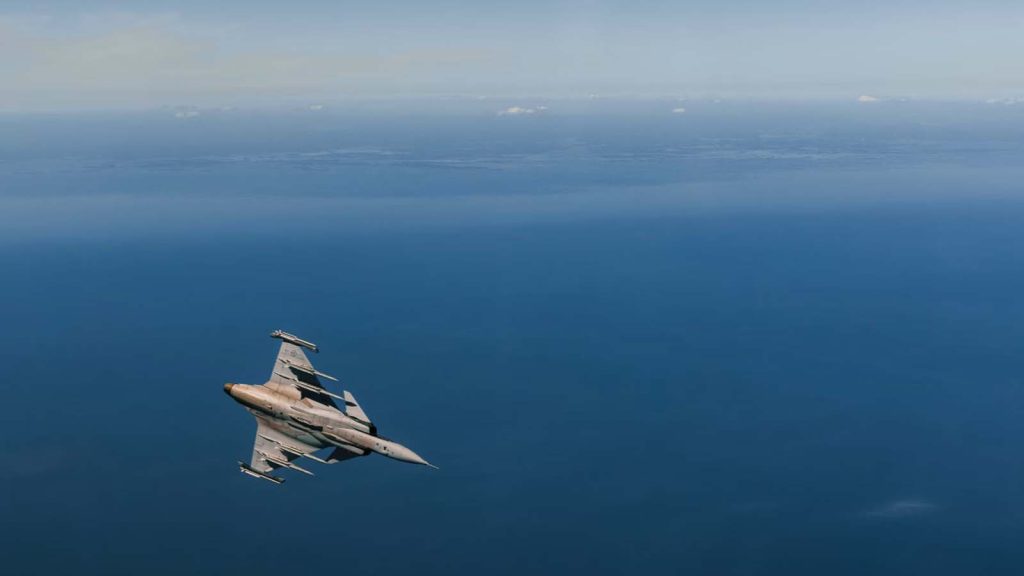
The much-vexed issue of Canada’s acquisition of Sweden’s new SAAB Gripen vs US F-35s includes a huge contrast in technologies and capabilities. Gripen is essentially an advanced conventional fighting platform, while F35 is a dedicated stealth multi-role plane.
The current proposal is that Canada will acquire 60 Gripens and 30 F-35s. New Gripens are to be built in Canada, including the supply of Gripens to Ukraine. It’s a massive and extremely controversial upheaval in Canadian defence procurement.
Canada and the new defence realities
The new acquisition proposals are driven to a large extent by US, European, and Canadian geopolitical relations issues. Canada and Europe are coming together as the US relationships between parties unravel. The Gripen proposal is a natural extension of the new realities.
The choices between platforms are stark, regardless of any political or other considerations. There’s even a mid-generational issue between the two planes. Conventional aircraft have caught up with stealth aircraft in many ways, but are still poles apart in others.
The current E-series Gripen is a newer design, with additional capabilities like the advanced Meteor missile. The F-35 was built for a very different big-league peer-adversary macro-strategic context.
The whole idea of air warfare has reconfigured itself almost completely since the Ukraine war. The advent of a far more complex drone swarm environment and new requirements for strike and defence capabilities is a game-changer.
These new aircraft will be up against multiple target and threat classes. This has blurred the neat and largely inaccurate stealth vs non-stealth categorizations.
Canada’s acquisitions must therefore address an erratic mix of advanced combat scenarios. The simplistic military issue for Canada is now, theoretically, raw strike capacity and the types of jobs each plane can do. These issues apply from the factory to the front line.
Defence logistics and the two-system problem
Controlling logistics is the make-or-break of any military system.
Military aircraft acquisitions can never be and never have been that simple. The technological and logistics trails for these two systems add many degrees of difficulty.
Defence experts have already pointed out that Canada may now have to operate two major new and very different logistics trails if acquiring both planes. This includes multiple classes of technologies, maintenance, training, parts, deployment logistics, and the inevitable horde of upgrades. There’s also a very likely scenario for “loyal wingmen” or manned and unmanned UAVs operating with fighters. That added dimension further blows out logistics capacity demands.
The entire supply chain of systems, parts, and everything else also has to tag along with these requirements wherever they deploy. Support has to be deployed, people have to train on the systems, and the entire entourage has to function flawlessly just to get a plane into the air.
One system is quite difficult enough. Two systems, and it’s a potential circus in progress if anything doesn’t work. It can be a lethal mix if planes are grounded due to logistical realities in a war zone.
The future of air warfare is in play
AI and emerging technologies will also have a say in the realities of future RCAF operations. That unavoidable issue will necessarily impact logistics within any projection over 5 years. AGI, when it arrives, will rewrite the entire technological environment.
Now, try to script the future for logistics in this “dance of the imponderables”. It’s not easy. It’s more than likely that automated warfare will be the future, and the technical requirements will have to follow.
Flexibility in conceptualization and operational scope is the new currency for air warfare. The world may find itself following Ukraine into DIY onsite fixes for tactical situations across a vast range of new tactical idioms. Adaptability is likely to be the key to military success.
A tough call that has to be made
Canada can hardly sit on the fence in the face of both volatile geopolitical problems and serious new military needs. Waiting for the sixth generation of planes and/or UAVs creates a gap in both technological scope and military capacity. It’s out of the question.
It’s a pitiless fact that technological superiority wins wars, particularly in the air, since World War I. RCAF shouldn’t have to try to catch up with core technologies in such a flux of new military realities.
Stealth capability, in whatever form and from whatever source, is a must. A reliable and easily manageable workhorse for Ukraine-like operations is equally critical. Stealth fighters aren’t designed or in any way suitable for that work.
Canada may well have dodged a hail of logistical magnum bullets with the idea of building Gripens in Canada. That at least solves the parts, maintenance. and supply issues, as well as ensuring a smoother and far more cost-efficient production framework. More importantly, it realigns the Canadian defence industry to a stronger base for its own work.
The same fix can’t be applied to F35s. It’s against core US policy and would involve a range of proprietary technologies from multiple sources. The Canadian Gripens would be in the air before the paperwork for the F35s could even be acceptably drafted. It’s just not an option.
The decision to mix planes and capabilities isn’t even the toughest call in this scenario. The tough call is what is effectively a complete realignment of defence acquisitions and defence industry culture.
It’s a call that must be made.
Canada’s Gripen vs. F-35 dilemma is a much tougher logistics call than it looks
#Canadas #Gripen #F35 #dilemma #tougher #logistics #call