When food exists but cannot move: The digital fragility of the global food system
Modern food systems appear stable on the surface, yet they are increasingly dependent on digital systems that can quietly become a major point of failure.
Today, food must be “recognised” by databases and then by automated platforms to be transported, sold, or even released, meaning that if systems go down, food can effectively become unusable—even when it’s physically available.
This system is a contributor to food waste and a further contributor to poverty. In a world facing climate instability, digital fragility, and persistent inequality, rebalancing is not just desirable—it is essential.
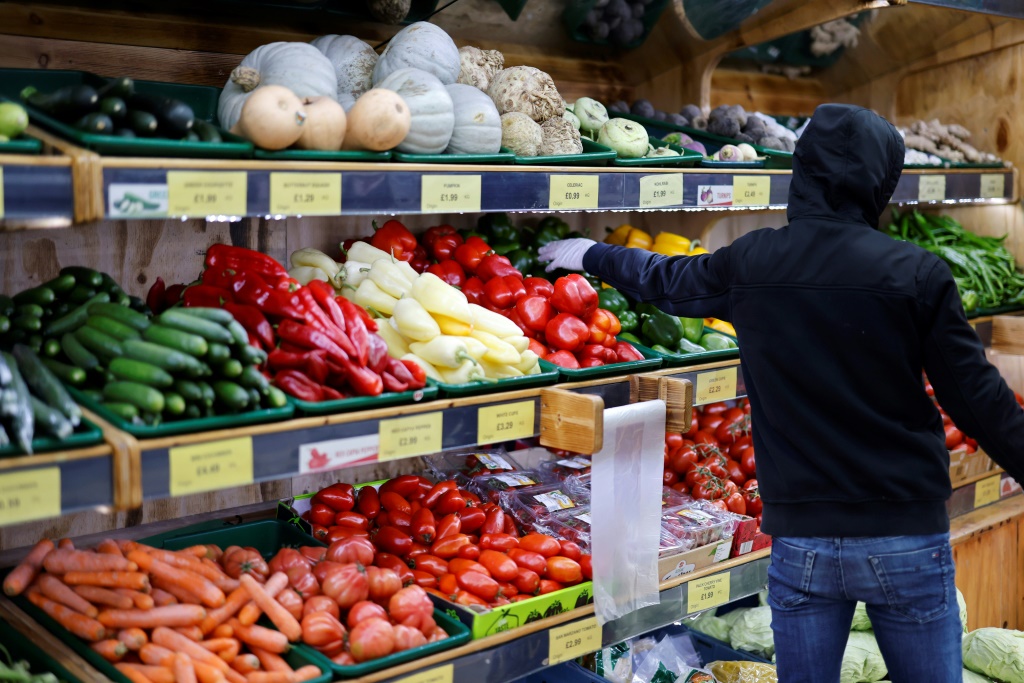
Supermarket shelves, whether in London or Los Angeles, still offer the reassuring illusion of abundance: fruit stacked in geometric order, refrigerated aisles full, supply seemingly uninterrupted. Yet beneath this visible stability lies a system increasingly dependent not just on farms, transport or labour—but on digital authorization. When that digital layer fails, food can exist physically yet become economically and socially inaccessible.
From the perspective of a green economist, this is more than a technical vulnerability. It is a warning about how modern food systems—already strained by climate change, inequality and resource depletion—are becoming fragile in new, less visible ways, with consequences that extend directly to poverty and food security.
The Rise of “Invisible Food”
Today’s food system operates through complex digital infrastructures: inventory platforms, logistics algorithms, certification databases, and insurance systems. Food is not simply grown and transported; it must also be recognized, validated and approved electronically.
If that recognition fails, the consequences are immediate. Shipments cannot be released, goods cannot be sold, and transport networks stall—even when warehouses are full. In effect, food that cannot be “seen” by digital systems becomes unusable.
This creates a paradox: abundance without access, a condition that economists normally associate with poverty in physical scarcity contexts. Now, digital failure can replicate that outcome in wealthy economies.
Efficiency at the Cost of Resilience
Over the past two decades, supply chains have been optimised for efficiency. Just-in-time logistics, predictive algorithms and automated approvals have reduced waste and costs. Yet efficiency has a trade-off: reduced resilience.
From a sustainability perspective, resilience means the capacity to withstand shocks—whether ecological, economic or technological. But many modern food systems have systematically removed redundancy:
- Manual systems have been phased out
- Human oversight has been reduced
- Inventory buffers have been minimised
The result is a system that works remarkably well—until it doesn’t.
Recent disruptions, including cyberattacks on food distribution networks, have demonstrated how quickly operations can stall. Trucks remain loaded but immobile. Online systems crash. Deliveries halt. Meanwhile, food continues to exist—but cannot circulate.
This is not merely a technical glitch; it reflects a structural weakness in the way we have chosen to organise food systems.

Automation and the Displacement of Human Agency
Artificial intelligence now shapes decisions across the food chain: from planting schedules and crop selection to distribution routes and retail pricing. These tools can improve efficiency and reduce waste, contributing to environmental goals.
However, they also shift decision-making authority away from humans and into opaque systems.
In many cases:
- Algorithms prioritise shipments based on cost and demand forecasts
- Supermarket logistics platforms determine allocation
- Access to markets depends on digital compliance
When these systems are not transparent or accountable, they can unintentionally reinforce inequalities. Small farmers, particularly in the Global South, may struggle to meet digital standards or gain visibility in supply chains. Meanwhile, large, integrated firms are better positioned to navigate—or control—these digital infrastructures.
This creates a new dimension of exclusion: digital marginalisation in food systems.
Poverty in a Digitised Food Economy
From a green economic perspective, the concern is not only system failure but distributional impact.
When food movement is disrupted:
- High-income consumers may experience temporary shortages
- Low-income populations face disproportionate risk
In urban areas, food deserts can re-emerge quickly when distribution slows. In developing economies, where supply chains are already fragile, digital disruption can compound existing vulnerabilities.
More broadly, the increasing dependence on digital systems raises questions about who controls access to food:
- Is it governed by markets alone?
- By algorithms designed for efficiency?
- Or by systems that incorporate social and environmental goals?
Without deliberate design, technological systems tend to prioritise profit and speed over equity and sustainability.
Environmental Sustainability and System Fragility
The environmental implications are equally significant. When supply chains fail:
- Food waste increases
- Transport inefficiencies rise
- Emergency sourcing places additional pressure on land and resources
Moreover, highly optimised global supply chains often rely on long-distance transport, contributing to greenhouse gas emissions. A system that is both carbon-intensive and digitally fragile is unlikely to be sustainable in the long term.
A greener alternative requires:
- Shorter, regional supply chains
- Greater local production capacity
- Systems designed for resilience, not just efficiency
Such approaches not only reduce emissions but also strengthen food security—particularly for vulnerable populations.
Reintroducing Resilience: Humans, Redundancy and Governance
The solution is not to abandon digital systems. AI, data analytics and automation have clear benefits for reducing waste and improving productivity. But they must be embedded within a framework that prioritises resilience and equity.
Three principles are critical:
1. Human-in-the-loop systems
Food systems must retain human oversight, with trained personnel capable of intervening when digital systems fail. Regular drills and fallback procedures should be standard practice.
2. Redundancy as a public good
Manual processes, alternative logistics pathways, and local supply networks should be maintained—even if they appear less efficient. In sustainability terms, redundancy is not waste; it is resilience.
3. Transparent and accountable algorithms
Decision-making systems must be auditable. Allocation models should incorporate social goals, such as equitable access and support for small producers, rather than focusing purely on cost optimisation.
A Broader Question of Food Governance
Ultimately, the issue is not just technological but political and economic. Food systems are increasingly governed by data, yet the governance of that data remains uneven.
If digital platforms become gatekeepers, then control over food moves away from communities and into systems shaped by commercial interests.
For a green economist, the priority is clear: food systems must be designed not only to function efficiently, but to:
- Reduce environmental impact
- Support livelihoods
- Protect vulnerable populations
- Remain resilient in the face of disruption
Beyond Efficiency
The modern food system has achieved remarkable efficiency, but at the cost of increased fragility. The growing reliance on digital infrastructure introduces a new kind of risk—one that can disconnect physical supply from human need.
The challenge is not whether failures will occur—they will. The question is whether we build systems capable of absorbing those failures without translating them into hunger, inequality and waste.
In a world already grappling with climate change and persistent poverty, that is no longer a technical issue. It is an economic and moral imperative.
When food exists but cannot move: The digital fragility of the global food system
#food #exists #move #digital #fragility #global #food #system