Napa Valley wineries face water crisis as experts warn industry is ‘unsustainable’
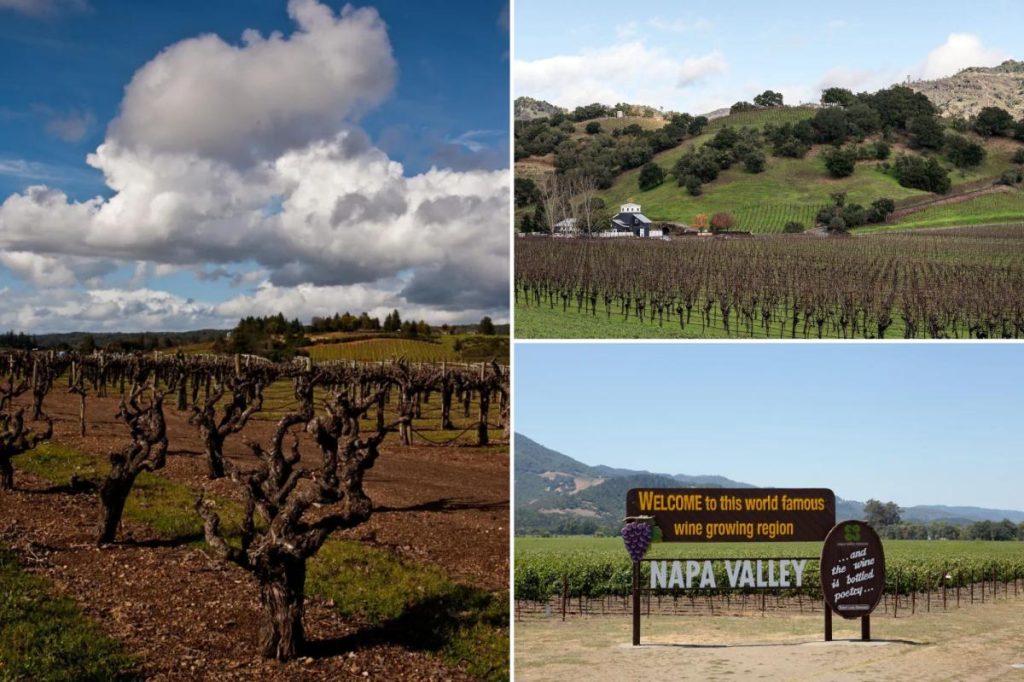
Napa Valley, home to some of the most prestigious wineries in the world, is facing a water crisis that experts warn is unsustainable.
The region pumped about 16,580 acre-feet of groundwater in 2025 — more than 1,500 acre-feet than what the county deems sustainable for the area, according to The Press Democrat, citing a county water report.
During that same year, the Napa Valley subbasin received a “below average” amount of rainfall, representing about 21.59 inches.
Over the past seven years, Napa Valley on average has consistently used more groundwater than the 15,000 acre-feet than the county recommends, pumping nearly 18,000 acre-feet.
The country report labeled the excessive pumping an “undesirable result” under the state-approved groundwater sustainability plan, which aims to reduce its groundwater use by 10%.
The county has failed the past six years to meet its recommended 15,000 acre-feet guideline, surpassing 19,000 acre-feet in 2022 and more than 22,000 in 2021, the outlet reported.
In an effort to mitigate groundwater use, the Napa County Board of Supervisors plans on introducing an update to the county’s Water Availability Analysis and provide incentives that will motivate groundwater users to preserve the natural resource.
Natural resources manager Jamison Crosby said during the board meeting last week that other efforts include “an irrigation system to determine if the amount of water it’s applying is the same it was designed to apply,” as well as a certification program tied to conservation efforts and possible incentives to delay vineyards from replanting vines one they’ve been removed to let the groundwater replenish, according to The Press Democrat.
“We’re in that phase of GSP (groundwater sustainability programs) implementation where we’re stressing voluntary participation,” Crosby said according to the outlet.
The Board of Supervisors are also seeking information from the wine industry about what water conservation measures make the most sense.
Board chair Amber Manfree called the situation concerning, but yet to reach the level of “extreme concern,” the paper reported.
“Now that we have more data we see that it’s very clear we actually have things of concern, not extreme concern, but not no concern,” she said.
The county report highlights the ongoing battle to create longterm water stability in the region, despite the state as a whole officially becoming drought-free back in January for the first time in 25 years.
While Napa Valley is considered one of the finest wine regions in the world, it is relatively small — making up only about 45,342 acres and accounts for just 4% of California’s total wine production, according to Capstone California, a comprehensive industry resource for wine education.
As of 2019, there are roughly 700 grape growers in Napa County, with about 475 physical wineries.
Navigating water conservation is just one challenge, the industry is also grappling with a decline in wine consumption and a regulatory framework that can cost vineyards more than $1,700 per acre each year to comply.
The 2025 annual report on the state of the US wine industry by Silicon Valley Bank notes that “the older, wine-focused cohort is aging out, and younger adults aren’t replacing them at the same rate.”
At the same time, a recent study conducted by researchers at Cal Poly San Luis Obispo broke down what it costs a vineyard to comply with federal, state, and local rules.
Compliance costs alone can run more than $1,700 per acre each year for large vineyards and upward of $1,100 per acre for smaller operations.
For a 1,000-acre vineyard, that translates to roughly $1.7 million annually just to meet regulatory requirements. Even a modest 200-acre farm is looking at costs exceeding $200,000 a year.
“It shows how much work we need to do at the federal, state and local level to support agriculture,” Peter Rumble, CEO of the Napa County Farm Bureau, which supported the research, told The Press Democrat back in April. “Without change, we might not have viable agriculture as we know it now in Napa, which threatens the Ag Preserve, something that defines us in many ways.”
Researchers found the expenses make up between 8% and 12% of total production costs in Napa — a massive slice of an already expensive business, where per-acre costs hover around $14,000.
Mounting financial strain, shrinking wine demand and scarce water supplies are squeezing producers and casting uncertainty over the industry’s future.
Source link